


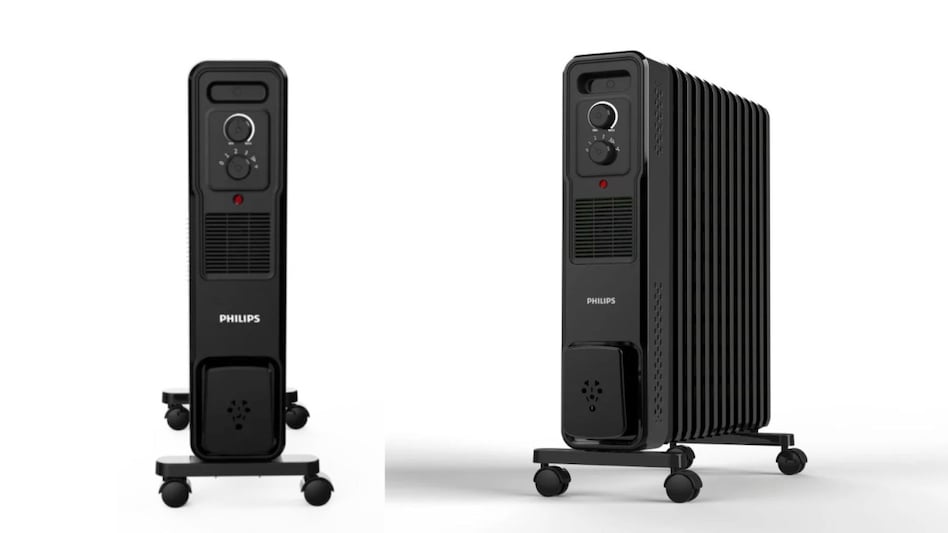
 Philips Oil Filled Radiator 3000 Series
Winter appliances rarely get the spotlight, but after living with the 13-fin Philips Oil Filled Radiator 3000 Series (CX3013/01) through real Indian winter conditions, I’m convinced this is one of those products you stop reviewing and simply start relying on.
Oil-filled radiators are not about instant gratification. They are about staying warm without thinking about it. Philips understands that, and the 3000 Series leans hard into safety, consistency, and comfort rather than gimmicks or inflated promises.
Unboxing and first impressions
The box is big, heavy, and reassuring in the way a serious home appliance should be. Setup is refreshingly simple. Attach the wheels, unwrap the cord, and you’re ready. No loose accessories, no confusing inserts, and no “why does this feel flimsy” moment.
At 17.2 kg, this is not something you casually lift one-handed, but it feels intentional. The weight gives it stability, and once the castor wheels are on, moving it from room to room is surprisingly painless.
Design that prioritises function over flair
The Philips 3000 Series doesn’t try to look futuristic. It looks like a heater. The matte, high-temperature resistant finish feels premium and practical, and the wide stance keeps it planted even on slightly uneven floors.
The star of the design is the M-shaped fin layout, which Philips claims distributes heat faster than traditional straight fins. In practice, what you notice is not speed but evenness. Heat spreads across the room without hot spots or aggressive bursts of air.
The control knob is old-school, and that’s a compliment. You can adjust settings half-asleep without looking, something touch panels still struggle with.
Heating performance: steady, not showy
This is not a heater that blasts hot air at you. Instead, it warms the room gradually and then holds that temperature with impressive consistency.
In a medium-sized bedroom, the radiator takes about 10 to 15 minutes to feel properly effective, but once it does, the warmth feels natural and non-drying. That’s the key difference between oil-filled radiators and fan heaters. The heat lingers even after the unit cycles down.
The five heat settings, ranging from 400W to 2800W, give you genuine control. Lower settings work well for background warmth, while the higher modes are better for cold mornings or larger spaces.
Quiet comfort that actually matters
There is a tiny fan that can blow hot air as needed, but barely any noise. You can just choose the non-fan speed setting for even quieter operation.
That makes it ideal for bedrooms, work-from-home setups, and late-night use. You forget it’s running, which is exactly the point.
Safety is where Philips earns its reputation
This is where the 3000 Series stands out. It’s loaded with safety features that feel designed for real homes, not lab conditions.
Tilt protection shuts the heater off if it tips beyond 40 degrees. Overheat protection cuts power if internal temperatures rise too high. There’s also a safety plug and a rear safety cover that reduces accidental contact.
If you have pets, children, or both, this matters. You can leave the heater running without that low-level anxiety cheaper heaters tend to create.
Mobility and storage are better than expected
Despite its weight, the smooth 360-degree wheels make it easy to reposition. Rolling it from bedroom to living room doesn’t feel like a chore, and the integrated handle is well placed.
When winter ends, the built-in cord winder keeps everything neat. It stores cleanly without looking like a tangled mess pulled out once a year.
Energy use and real-world efficiency
Philips doesn’t make exaggerated energy-saving claims here, which is refreshing. What you do get is predictable consumption based on your selected wattage. Using lower settings for longer periods feels more efficient than short bursts at full power, especially in insulated rooms.
The heater cycles intelligently, maintaining warmth instead of constantly drawing peak power.
Verdict
The 13-fin model I tested is priced at ₹17,495, while the 11-fin version costs ₹15,495 in India. That places it firmly in the premium category, but the pricing feels justified once you factor in build quality, safety features, and Philips’ service network.
It doesn’t chase instant heat or flashy features. Instead, it delivers steady warmth, near-silent operation, and a level of safety that lets you stop worrying and start feeling comfortable.
If you want something cheap and loud, this isn’t it. If you want a heater you can leave on overnight, move around your home easily, and trust year after year, the 3000 Series quietly earns its place.
For Unparalleled coverage of India's Businesses and Economy – Subscribe to Business Today Magazine

 Exam reforms: Tech titan Nandan Nilekani picked by PM Modi to fix national public examination system
  'Tax officers struggled for own land': Nirmala Sitharaman slams laidback attitude of govt depts
 CBDT issues new crypto reporting guidance: No new tax, but exchanges must track and report all transactions
 Did Cockroach Janta Party's 'Chalo Sansad' 2.0 threat trigger Dharmendra Pradhan's resignation? What we know so far
 'Will discharge my responsibilities with complete humility': Pralhad Joshi after being appointed Education Minister
 AI Data Centers, Aerospace & Gas Turbines: What's Powering Indo-MIM's Future Growth?
 Best Healthcare Stocks: Gaurang Shah's Outlook On Apollo Hospitals, Fortis & The Manipal Health IPO
 Is Indo-MIM's IPO Valuation Justified? Here's Why The Company Sees Strong Growth Ahead
 Treasury Bills Explained: Why T-Bills Are One Of The Safest Short-Term Investment Options
 FDs vs Markets: Where Should You Keep Your Short-Term Money?
 Gland Pharma stock: Price target of Rs 3,250 likely in medium term, says analyst
  Metal recycling stocks to buy: Gravita, Pondy Oxides, Jain Resource among top picks
 TRIL shares: Should you average the falling stock? Here's 'fixed and final' stop loss
 Adani Power: 45 GW target, Rs 2 lakh crore capex plan among conference call highlights
  ITC Hotels, Chalet, Ventive, IHCL, SAMHI: Hotel stocks to buy despite travel disruptions
 Beyond mutual funds: Why analysts see SBI Funds' alternative asset business as a long-term growth engine
 'Ashamed of it...': Manoj Muntashir calls Adipurush his biggest mistake, seeks country's forgiveness Exam reforms: Tech titan Nandan Nilekani picked by PM Modi to fix national public examination system 'Tax officers struggled for own land': Nirmala Sitharaman slams laidback attitude of govt depts
 Delhi targets traffic bottlenecks on Aruna Asaf Ali Marg with ₹1.97 crore elevated road study









