


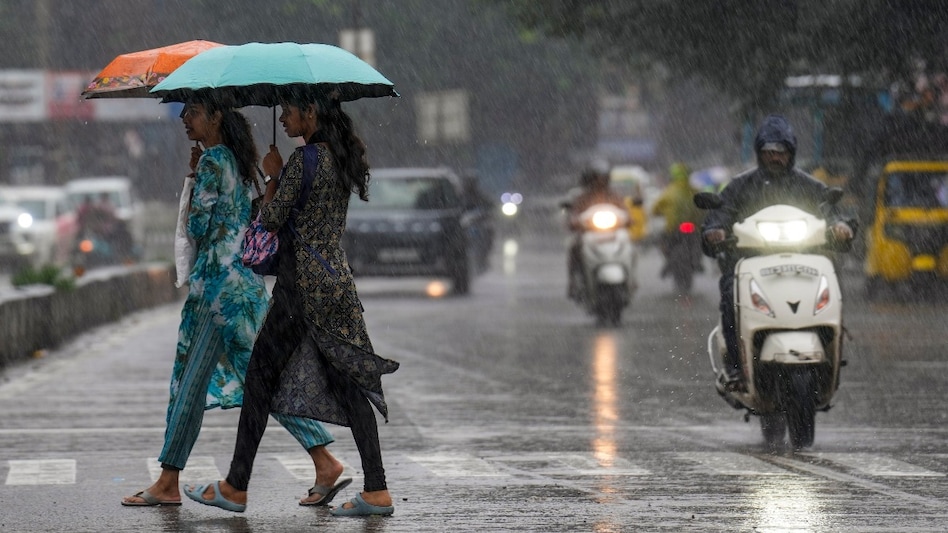
 Urban informality is becoming structural, the Survey warns, as cities absorb labour without integrating workers into formal housing, transport and service networks.
India's cities are central to the nation's growing economic output, yet the Economic Survey 2025-26 warns that ineffective city governance is undermining productivity for workers and firms. The report identifies regulatory practices and administrative shortcomings as key obstacles, indicating that current approaches constrain urban efficiency and economic advancement. The Survey states that 'the Survey notes that Indian cities struggle to convert scale into efficiency.'
A major concern highlighted in the Survey is the prevalence of uniform, inspection-led regulations across cities, regardless of differences in density, risk, or local capacity. The Survey explicitly calls for 'contextual compliance based on risk, scale and capacity', noting that 'one-size-fits-all regulation raises transaction costs without improving outcomes.' This approach often delays projects, increases operating costs, and leads to underutilised land, particularly impacting businesses that depend on speed and flexibility.
Regulatory systems are criticised for relying on rigid, uniform frameworks instead of tailoring rules to the realities of modern cities. The Survey notes, "the core of this problem is a regulatory system that relies on uniform, one-size-fits-all compliance, instead of contextual, risk-based regulation suited to the realities of modern cities". As a result, regulatory scrutiny is often misallocated, with low-risk activities facing disproportionate oversight while high-impact risks may be neglected.
The Survey attributes these outcomes to fragmented governance structures and limited economic agency at the urban local body level. It states that, 'it argues, lies in fragmented governance and limited economic agency.' Urban local bodies often lack real control over land use, taxation, infrastructure planning, and service delivery, limiting their ability to manage urban growth effectively.
This governance deficit has tangible consequences for productivity. Ineffective land-use planning results in higher housing costs and urban sprawl, which in turn causes longer commutes and more congestion. Poor coordination between transport, housing, and employment centres diminishes effective working hours, eroding the productivity benefits typically linked to urban density.
The Survey also discusses the impact of non-contextual compliance, pointing out that excessive regulatory burdens can delay project approvals and discourage formalisation of businesses. This system creates an environment where small enterprises and service providers, which rely on rapid adaptation, are especially affected by increased operating costs and administrative delays.
Urban informality is becoming increasingly entrenched, the Survey indicates, noting that urban informality is becoming structural. Cities absorb labour but often fail to integrate workers into formal housing, transport, and service networks, while heavy compliance requirements dissuade formalisation and limit investment in productivity-enhancing infrastructure.
Institutional trust is another area of concern. The Survey observes that, 'the Survey argues that Indian cities lack the trust-based relationship between citizens and urban governments that underpins efficient service delivery.' Limited accountability and substandard services weaken compliance and civic engagement, adding to the challenges in building productive urban systems.
Beyond mobility, the Survey stresses the importance of creative density, alongside economic density. Globally engaging cities actively nurture art, music, food and street culture as part of urban policy. Indian cities, despite their cultural depth, often constrain creativity through restrictive licensing, blunt noise regulations and lack of affordable inner-city spaces. The Survey calls for low-rent creative zones in city cores, using public or underutilised land, supported by single-window approvals for studios, theatres, rehearsal spaces and galleries.
On informality, the Survey argues against eviction-led urban development. Instead, it favours in-situ upgrading of informal settlements, with secure tenure, basic services and gradual formalisation. Streets, it adds, should be explicitly designed to accommodate vendors, building on the Street Vendors Act, 2014 and schemes such as PM SVANidhi that have helped formalise vending zones in several states.

 US-Iran pause attacks for second day; Trump 'giving talks some space' as Hormuz deal discussed
 New paper leak bill in Lok Sabha today, proposes harsher punishment; MPs given draft
 US-Iran war: Red Sea shipping traffic falls, Hormuz traffic remains low amid security concerns
 BEL Q1 results today: What consensus estimates, target prices suggest
 Zen Technologies: High altitude anti-drone system's launch puts defence stock in focus
  AI Data Centers, Aerospace & Gas Turbines: What's Powering Indo-MIM's Future Growth?
 Best Healthcare Stocks: Gaurang Shah's Outlook On Apollo Hospitals, Fortis & The Manipal Health IPO
 Is Indo-MIM's IPO Valuation Justified? Here's Why The Company Sees Strong Growth Ahead
 Treasury Bills Explained: Why T-Bills Are One Of The Safest Short-Term Investment Options
 FDs vs Markets: Where Should You Keep Your Short-Term Money?
 Market opens higher after four days, investor wealth up by Rs 4 lakh crore; here's why
  REC, JK Cements, HAL among top trading picks for short-term gains; check targets & more
 Coforge shares gain ahead of Q1 results: Profit may rise 80-90%; Encore integration eyed
 Nifty, Bank Nifty outlook: Avoid fresh longs; check key support & resistance levels
 YES Bank, Inox Wind, MCX: Top stocks to trade— Key levels, target price, stop loss & moreMarket opens higher after four days, investor wealth up by Rs 4 lakh crore; here's why REC, JK Cements, HAL among top trading picks for short-term gains; check targets & moreCoforge shares gain ahead of Q1 results: Profit may rise 80-90%; Encore integration eyed
 India's first hydrogen train covers 900 km in 5 days — tickets still Rs 10–25, zero emissions, water vapour onlyNifty, Bank Nifty outlook: Avoid fresh longs; check key support & resistance levels









