


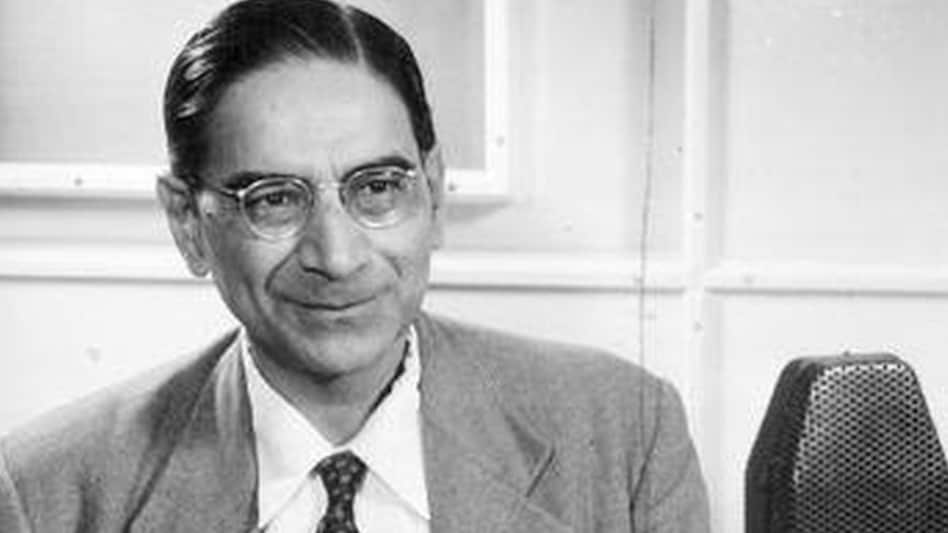
 Union Budget 2026: Mahalanobis founded the Indian Statistical Institute (ISI) and helped establish the Central Statistical Organisation (CSO), strengthening India’s capacity for reliable data collection and analysis.
 Budget 2026 | Union Finance Minister Nirmala Sitharaman’s presented her ninth consecutive Budget in the Parliament on February 1 2026. The Finance Minister emphasised that the government has consistently chosen reform over rhetoric and addressed global uncertainty.
The title “Father of the Indian Budget” is often attributed to different figures, depending on whether one looks at India’s colonial past, its early years of Independence, or the intellectual foundations of modern economic planning. While Sir James Wilson introduced the Budget system in India during British rule, many economists and scholars regard Professor Prasanta Chandra Mahalanobis as the father of the Union Budget in its modern, data-driven sense.
Key figures in Indian Budget
India’s budgeting framework has evolved through the contributions of several key personalities, each shaping a distinct phase of its history.
James Wilson, a British economist and founder of The Economist magazine, presented India’s first budget in 1860 as Finance Member of the Viceroy’s Council. Introduced on the English model, his budget aimed to stabilise colonial finances in the aftermath of the 1857 Revolt. Wilson’s reforms included the introduction of income tax, customs duty rationalisation, and systematic public accounting — laying the institutional foundation of budgeting in India.
RK Shanmukham Chetty, independent India’s first Finance Minister, presented the first Union Budget of a sovereign India in November 1947. His budget focused on economic stability, revenue mobilisation, and managing the challenges of Partition, setting the financial tone for the newly formed nation.
PC Mahalanobis, an eminent Indian scientist and statistician, played a transformative role in shaping India’s economic planning after Independence. Though he never presented a budget, his influence on how budgets were conceived and structured was profound.
Legacy shared across eras
In essence, India’s budgeting tradition rests on a shared legacy:
Why PC Mahalanobis is called the 'Father of the Indian Budget'
Mahalanobis is widely known as the Father of Indian Statistics, and his statistical innovations became central to India’s budgeting and planning process. He founded the Indian Statistical Institute (ISI) and helped establish the Central Statistical Organisation (CSO), strengthening India’s capacity for reliable data collection and analysis.
His most significant contribution came through the Mahalanobis Model, which shaped the Second Five-Year Plan (1956-61). The model prioritised heavy industrialisation and capital goods production, arguing that long-term economic growth required strong industrial foundations.
Crucially, Mahalanobis integrated rigorous statistical analysis into economic planning and budgeting. His work on large-scale sample surveys provided essential data for government policies, enabling evidence-based allocation of resources. Budgets during this period closely mirrored Five-Year Plan objectives, making statistics and planning inseparable from fiscal decision-making.
It is this data-driven, scientific approach to budgeting — rather than the act of presenting the budget itself — that has earned Mahalanobis the title “Father of the Indian Budget” in academic and policy circles.

 Exam reforms: Tech titan Nandan Nilekani picked by PM Modi to fix national public examination system
  'Tax officers struggled for own land': Nirmala Sitharaman slams laidback attitude of govt depts
 CBDT issues new crypto reporting guidance: No new tax, but exchanges must track and report all transactions
 Did Cockroach Janta Party's 'Chalo Sansad' 2.0 threat trigger Dharmendra Pradhan's resignation? What we know so far
 'Will discharge my responsibilities with complete humility': Pralhad Joshi after being appointed Education Minister
 AI Data Centers, Aerospace & Gas Turbines: What's Powering Indo-MIM's Future Growth?
 Best Healthcare Stocks: Gaurang Shah's Outlook On Apollo Hospitals, Fortis & The Manipal Health IPO
 Is Indo-MIM's IPO Valuation Justified? Here's Why The Company Sees Strong Growth Ahead
 Treasury Bills Explained: Why T-Bills Are One Of The Safest Short-Term Investment Options
 FDs vs Markets: Where Should You Keep Your Short-Term Money?
 Gland Pharma stock: Price target of Rs 3,250 likely in medium term, says analyst
  Metal recycling stocks to buy: Gravita, Pondy Oxides, Jain Resource among top picks
 TRIL shares: Should you average the falling stock? Here's 'fixed and final' stop loss
 Adani Power: 45 GW target, Rs 2 lakh crore capex plan among conference call highlights
  ITC Hotels, Chalet, Ventive, IHCL, SAMHI: Hotel stocks to buy despite travel disruptions
 'Ashamed of it...': Manoj Muntashir calls Adipurush his biggest mistake, seeks country's forgiveness Exam reforms: Tech titan Nandan Nilekani picked by PM Modi to fix national public examination system 'Tax officers struggled for own land': Nirmala Sitharaman slams laidback attitude of govt depts
 Delhi targets traffic bottlenecks on Aruna Asaf Ali Marg with ₹1.97 crore elevated road studyAI Data Centers, Aerospace & Gas Turbines: What's Powering Indo-MIM's Future Growth?









