Rising disease burden drives higher health spending
Presenting the Budget in Parliament on Sunday, Finance Minister Nirmala Sitharaman indicated the government would continue to increase spending on healthcare infrastructure, research and regulation, particularly as disease patterns shift and long-term care needs expand.
Follow live coverage of Union Budget 2026 here
India is estimated to have over 10 crore people living with diabetes, with another 13.6 crore classified as pre-diabetic, according to the ICMR-INDIAB study, while cancer incidence continues to rise. Data from the National Cancer Registry Programme show that India records over 14 lakh new cancer cases every year, with projections indicating a sharp increase over the next decade.
Beyond infrastructure and workforce measures, the Budget has also raised allocations across ongoing public health programmes. Funding for the National Health Mission has been increased to ₹39,390 crore for 2026–27, while the Pradhan Mantri Jan Arogya Yojana has been allocated ₹9,500 crore to support hospital networks and beneficiary coverage. Spending on disease control has also gone up, with the National AIDS and STD Control Programme receiving ₹3,477 crore, including ₹275 crore earmarked for blood transfusion services. Medical research funding has been strengthened, with the Department of Health Research allocated ₹4,821 crore and the Indian Council of Medical Research receiving ₹4,000 crore, reflecting higher emphasis on trials, surveillance and innovation.
District hospitals and emergency care get larger share
A substantial share of the additional funding has gone towards health infrastructure. The Pradhan Mantri Ayushman Bharat Health Infrastructure Mission (PM-ABHIM) has been allocated ₹4,770 crore, up 67.66 per cent from last year’s revised estimates, for critical care blocks, public health laboratories and district-level facilities.
The Budget also provides for Emergency and Trauma Care Centres in every district hospital. District hospitals account for over 60 per cent of inpatient admissions in the public health system, according to health ministry data, but many lack dedicated trauma and emergency infrastructure, particularly outside urban centres.
Insurance outlay rises as household spending stays high
Health insurance coverage under the Pradhan Mantri Jan Arogya Yojana (PM-JAY) has been allocated ₹9,500 crore, an increase of ₹500 crore, to support empanelled hospitals and beneficiary coverage. Despite expanding insurance coverage, out-of-pocket expenditure still accounts for around 40 per cent of India’s total health spending, according to National Health Accounts estimates.
“From an operational perspective, the Budget enables hospitals to plan capacity expansion, technology adoption and patient-centric care delivery with greater certainty and affordability at the core,” said Joy Chakraborty, COO, P.D. Hinduja Hospital & Medical Research Centre, Mumbai.
He added that investments in emergency and trauma care, regional medical hubs and specialised institutions could ease pressure on tertiary hospitals while strengthening last-mile care.
More funds for medical education and care workers
Spending on medical education and workforce expansion has also been increased. Under the Pradhan Mantri Swasthya Suraksha Yojana (PMSSY), including new AIIMS and the upgradation of government medical colleges, the allocation for 2026–27 stands at ₹11,307 crore.
The Budget sets out a phased outlay of ₹980 crore over three years to expand allied health education. Allied Health Professional Institutes across 10 disciplines will be set up or upgraded through public and private sector participation, with the aim of creating nearly one lakh professionals over five years. In addition, 1.5 lakh caregivers are to be trained to support geriatric and long-term care.
India’s ageing population is adding to this pressure. Government projections show that nearly 15 crore people are aged 60 years and above, a number expected to rise steadily, increasing demand for diagnostics, rehabilitation and long-term care services.
“The focus on allied health professionals is critical because India faces a severe structural workforce shortage,” said Dhruv Sukhrani, Partner – Healthcare Practice, Bain & Company, noting that demand for such professionals is estimated to be several million positions higher than current supply.
Regulation and research receive higher allocations
Medical research funding has been raised, with the Department of Health Research receiving ₹4,821 crore, including ₹4,000 crore for the Indian Council of Medical Research. Despite having one of the world’s largest patient pools, India currently accounts for less than 3 per cent of global clinical trials, according to health ministry data.
The Budget also provides for strengthening the Central Drugs Standard Control Organisation (CDSCO) by augmenting its scientific capacity, a move intended to improve regulatory oversight and support pharmaceutical research and development.
“Strengthening CDSCO with a dedicated scientific cadre is a clear step towards improving approval timelines and aligning India with global regulatory standards,” said Joydeep Ghosh, Partner and Life Sciences & Health Care Industry Leader, Deloitte India.
Biopharma funding and patient relief measures
The Budget reiterates support for the biopharma sector through the ₹10,000-crore Bio Pharma Shakti programme, aimed at supporting domestic production of biologics and biosimilars through research and manufacturing incentives.
“Biopharma SHAKTI fills a long-standing gap by combining regulatory capacity, clinical trial scale and specialised training,” said Dhruv Sukhrani, adding that the real test would be whether it accelerates approvals and attracts sustained private investment.
On the patient side, the government has removed basic customs duty on 17 life-saving cancer drugs and extended duty exemptions to seven additional rare diseases. Advanced cancer medicines can cost ₹2 lakh to ₹10 lakh per month, according to hospital estimates, making medicines the single largest component of treatment costs for many families.
“The exemption of basic customs duty on cancer and rare disease drugs is a direct step towards easing access to essential treatment,” said Hitesh Sharma, Partner and National Health Sciences Tax Leader, EY India, while noting that overall affordability will still depend on pricing decisions by manufacturers and hospitals.



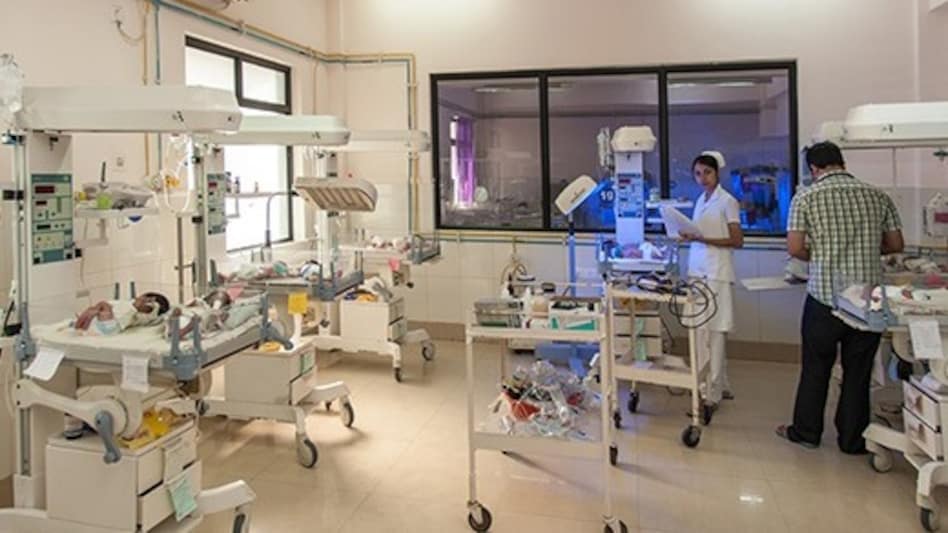 Union Budget 2026: A substantial share of the additional funding has gone towards health infrastructure.
 TCS to acquire Porsche’s IT consulting arm MHP for €320 million, signs five-year strategic deal
 Tata Sons board likely to meet on September 17, Chandrasekaran exit may take center stage
 'Our trade is growing again, thanks to PM Modi': Putin tells EAM Jaishankar
 Trade war escalates: Trump announces 50% tariffs on Canadian autos & steel from Jan 1
 Saudi attacked by Houthis, Turkey targeted by Israel: So what is the Mecca Pact doing?
 Market Masters | Aniruddha Sarkar On Top Sectors, Market Outlook & Where To Invest
 Daily Calls: Ask Your STOCK MARKET TODAY QUERIES | Market Update | Share Market News Today
 All About Debt Funds: Types Of Debt Funds & How To Invest | Mutual Fund Guide | Money Today
 “India Can Attract Global Space Talent Like A Magnet”: PM Modi To Startup CEOs
 CM Yogi Responds To Rahul Gandhi Over Manusmriti Remarks, India's Youth, And Heritage
 Tempsens Instruments IPO: Issue subscribed over 184 times on final day; check latest GMP
 Cupid's Aditya Kumar Halwasiya ups stake to 33.53%; buys 11 lakh shares
 Auto, auto ancillary stocks: Is it time to book profits? What Centrum's Nilesh Jain says
 This mid-cap metal stock zooms 15% on Rs 2,700 crore order announcement; do you own?
 RVNL shares a buy? Accumulate railway stock as valuations cool, says Kranthi Bathini
 ₹5 lakh crore flexi-cap universe reveals wide risk gap: Here’s how 22 funds are positioned
 Gurugram issues work-from-home advisory for Tuesday following heavy rain and flooding
 Tarique Rahman's Bangladesh is returning to BNP's Islamist roots, warns Brahma Chellaney
 ‘The real life batman’: Rahul Gandhi posters featuring LoP & caped crusader put up near Congress HQ
 'What about Sharia?' Himanta hits out at Rahul Gandhi over 'Manusmriti mindset'












