


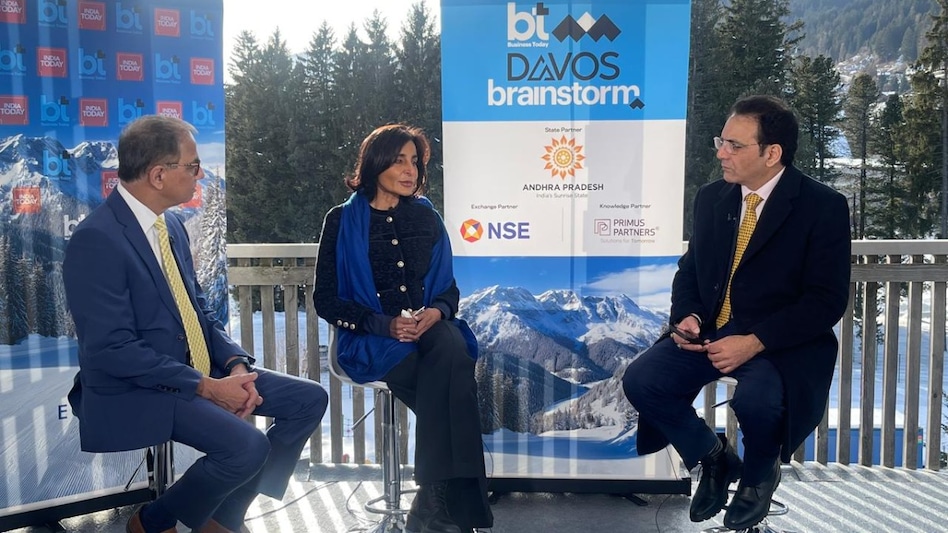
 WEF Summit 2026: The speakers advocated for co‑ownership between governments and private sector partners, backed by clear regulations that protect patients while enabling innovation in healthcare.
 Global healthcare is entering a new era defined by technological breakthroughs, mounting climate threats and shifting geopolitical priorities — even as financial support for health systems stagnates or declines. That was the broad takeaway from a wide‑ranging discussion with Dr Shyam Bishen, Head of Health & Healthcare at the World Economic Forum, and Suneeta Reddy, Managing Director of Apollo Hospitals with Business Today TV at the WEF Davos 2026 Summit.
From pandemic response to digital transformation

 India to overtake Japan as world’s fourth-largest economy in 2027: IMF projections
 BT Explainer: What the SC verdict on Yes Bank’s AT-1 bonds means for the lender and will it alter AT1 bonds as such?
 Stock market: India back on investors’ radar as they warm to ‘non-AI stories’, says HSBC
 India’s FY27 growth seen at 7.1–7.3%, but private investment must pick up: Deloitte
 85% of housing loans now carry 7-9% interest rates, down from higher bands in 2023; what does this mean
 Market Recovery: Gaurang Shah Picks Banking, Defence, Power And Cement Stocks For Fresh Bets
 Will IDBI Employees Lose Jobs? DIPAM Secretary Arunish Chawla Clears The Air On Pension & Benefit
 Yes Bank AT1 Bond Verdict: What It Means For Bondholders, Lenders And Shareholders
 Can Goa Become India’s Next Tech Hub? Rohan Khaunte On AI, Jobs & Investment
 What’s Hot: Stocks, Gold & Big Money Moves | Daily Markets Show | October 16 | Business Today
 CCL Products shares fall 9% on Q2 results; brokerages see up to 30% upside
 PNB Q2 earnings: Net profit rises 13%, asset quality improves
  BT Explainer: What changes for investors post revision of new Closing Auction System
  PC Jeweller shares hit 52-week high; stock jumps 75% YTD; what analysts say
 Federal Bank Q2 earnings: Net profit at record high, asset quality improves
  Before Jio's 2016 launch, a failed assignment triggered a digital ambition, Isha Ambani says
 Shankar Mahadevan opens 'Malgudi' South Indian restaurant in Delhi, fulfils childhood dreamIndia to overtake Japan as world’s fourth-largest economy in 2027: IMF projections85% of housing loans now carry 7-9% interest rates, down from higher bands in 2023; what does this meanMarket Recovery: Gaurang Shah Picks Banking, Defence, Power And Cement Stocks For Fresh Bets












