


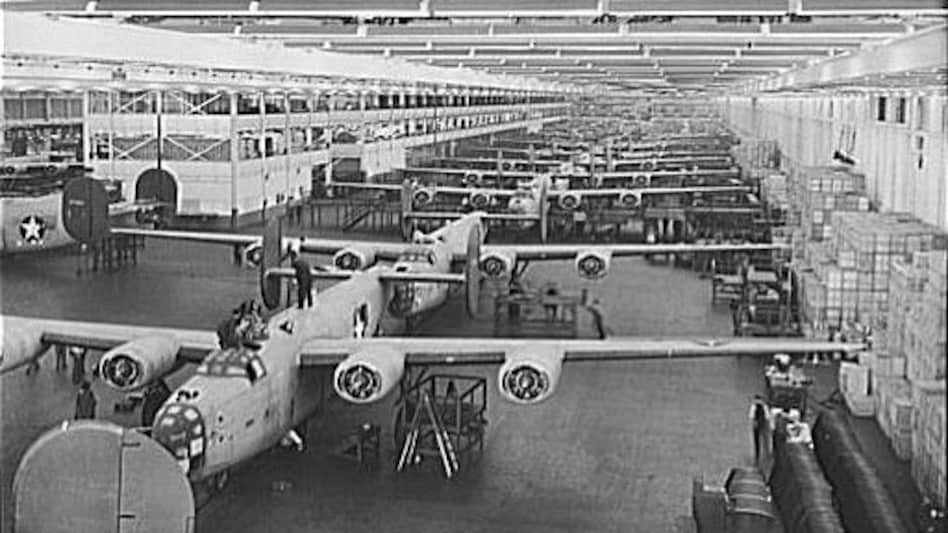
 At its peak, Ford Motor Company operated the Willow Run facility in Michigan, producing one B-24 Liberator bomber every hour. It became one of the most efficient aircraft assembly lines in history.
 In a move that signals a dramatic shift toward wartime-style industrial mobilisation, the Pentagon has reportedly approached major American automakers General Motors and Ford Motor Company to explore producing military equipment — reviving a model last seen during World War II.
Return to the 'Arsenal of Democracy'

 'RBI letter does not mention listing': Noel Tata seeks full briefing on Tata Sons-RBI talks
 Tata Trusts asks Tata Sons to explore options other than listing, says ‘Tata Model has to be saved’
 Tata Trusts proposes ₹25,000 crore plan for SP Group, says Tata Sons listing is not an option
 Chandrasekaran had assured all necessary steps were being taken to remain private: Noel Tata
 'We cannot put the cart before...': Noel Tata's argument against N Chandrasekaran's reappointment
 Corporate Health Insurance Vs Retail Policy: Why You Need Personal Health Cover Too
 How India Changed In 12 Years: PM Modi’s Journey From Economic Reforms To Viksit Bharat
 Modi @76: From Twitter To Instagram, How His Digital Outreach Has Evolved
 Stock Picks To Watch: Shibani Kurian Reveals Kotak AMC’s Market Bets
 Gold ETF vs Physical Gold: Know the Tax Rules, Charges and Key Differences
 Hero Motors IPO subscribed 3.37 times on Day 2; retail portion subscribed over 5 times
 NSE IPO: India's largest exchange gets 43% subscription on Day 1; NIIs, retail see strong demand
 Rentomojo shares settle maiden trade nearly 32% above IPO price; what should investors do now?
 Sensex slips, Nifty settles higher; Tata stocks gain after N Chandrasekaran reappointment
 Cochin Shipyard, KRBL, RITES, Ramky Infrastructure among stocks to turn ex-dividend on September 18
 Venezuela introduces new PRO-V-90 visa for foreign professionals; key details for Indians
 iPhone Duo won’t go on sale on Sept 18: Here’s when you can buy Apple’s first foldable
 Moon took a massive hit: Why nobody noticed this giant crater at first
 Not clay, but pani puri: Pune's 13-foot Ganpati is made from 21,000 shells
 Fireballs after dark: 5 autumn sky events you won't want to sleep through












