


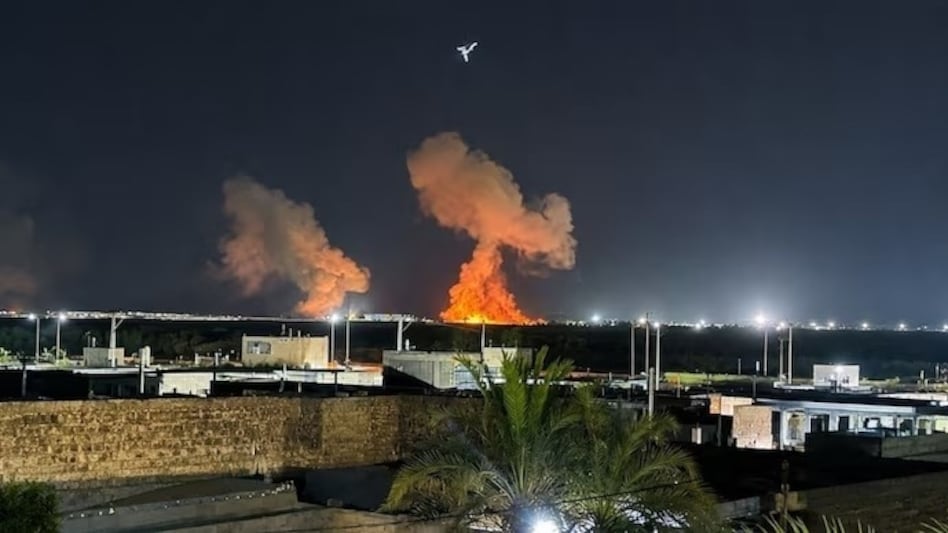
 Bandar Abbas struck again: US extends Iran campaign to sixth night, targets naval and IRGC facilities
The United States struck Iran for the sixth consecutive night on Thursday, targeting military capabilities near Bandar Abbas and Qeshm Island, even as the White House said Iran remained engaged in negotiations and still wanted to reach a deal.

 Trump made 1,000-plus trades in June: Here's what he bought and sold
 ‘F&O trading is bad for almost 99% of retail traders’: Nikhil Kamath draws ITC parallel, says brokers need to diversify
 NDA explores holding joint polls in 22 states, UTs in 2029: Report
 'IAF is not against theaterisation': Air Force chief AP Singh cautions against copying foreign models
 ABH Healthcare IPO: Check key dates, price band, issue size, latest GMP, listing details & more
 Commuted Vs Uncommuted Pension: Know The Difference And How Each Is Taxed After Retirement
 Motor Insurance Add-Ons You Actually Need Explained: Zero Depreciation, RSA & Return-To-Invoice
 No Claim Bonus Explained: When Should You Claim Or Pay For Repairs Yourself?
 Motor Insurance Premium: What Factors Determine How Much You Pay?
 How Is Retirement Income Taxed For Senior Citizens? Key Rules Explained
 Hold YES Bank, Federal Bank; buy HDFC Bank, Kotak Mahindra, Axis: ICICI SecuritiesTrump made 1,000-plus trades in June: Here's what he bought and soldABH Healthcare IPO: Check key dates, price band, issue size, latest GMP, listing details & more
 India stocks lag global markets in 2026: BofA data shows 9.1% decline in USD terms
 'FOMO, fixed return': SEBI proposes revamped ad code for bond portals from misleading investors
 He left Bihar with ₹1,000. Six years later, he won a ₹3.5 crore Georgetown scholarship
 Landmark hit: Iranian hackers pull off historic cyber attack to paralyze British power plant Commuted Vs Uncommuted Pension: Know The Difference And How Each Is Taxed After Retirement
 'Kolkata has become a city of old age pensioners': FM Swapan Dasgupta on Bengal's decline and skill shortageHold YES Bank, Federal Bank; buy HDFC Bank, Kotak Mahindra, Axis: ICICI Securities












