


 Some officials have claimed that Israel was preparing to strike Iran regardless, making US involvement inevitable.
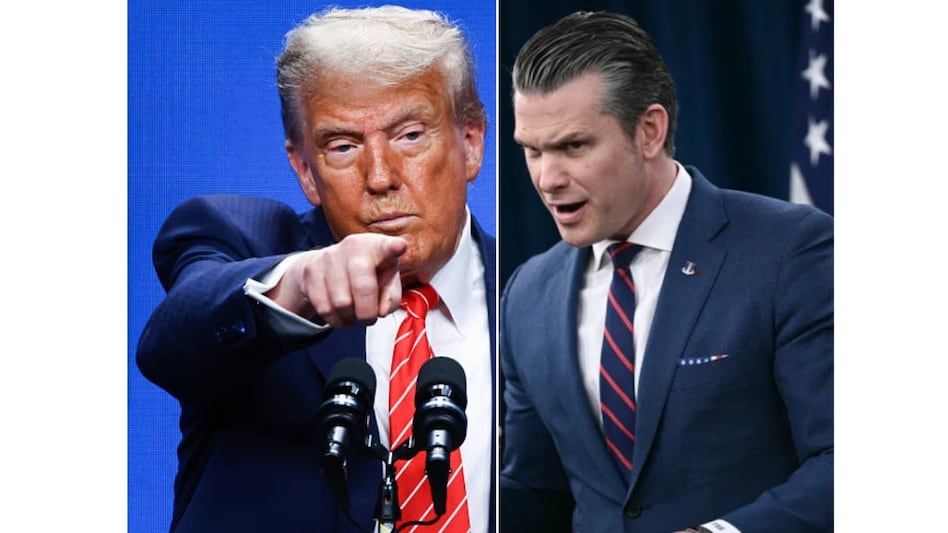
The Iran war has entered its fourth week, with growing questions about why and how the US initiated military action. At a roundtable in Tennessee, President Donald Trump suggested Defence Secretary Pete Hegseth was the first to advocate for military intervention.
Trump said, "Pete, I think you were the first one to speak up, and you said, 'Let's do it because you can't let them have a nuclear weapon.'"
This statement adds to the multiple accounts within the Trump administration about who favoured offensive action against Iran. The reasons for going to war appear inconsistent depending on the source.
Some officials have claimed that Israel was preparing to strike Iran regardless, making US involvement inevitable. Others have said Iran was close to deploying a nuclear weapon. Trump described the decision as a response to a Middle East problem, saying, "I called Pete. I called General Kane. I called a lot of our great people. We got a problem in the Middle East or we can take a stop and make a little journey into the Middle East and eliminate a big problem."
Despite the casual tone, the consequences of the war have been severe. Trump also stated that Iran’s retaliatory strikes across the Gulf were unexpected, saying, "Nobody was even thinking about it." However, this conflicts with reports that internal warnings about possible Iranian retaliation had been issued but not acted upon.
Defence Secretary Hegseth has remained a prominent figure in the administration's messaging. He has outlined goals such as dismantling Iran’s missile programme, drone production, and naval power. Hegseth has also challenged media coverage of the conflict, which has so far resulted in 13 American service members’ deaths and escalated into a regional crisis.
When asked about the operation’s timeline, Hegseth did not provide specific details but said the effort was "very much on track." Trump acknowledged that Vice President JD Vance was less enthusiastic about the war, though Vance has not publicly criticised it.
Reports suggest that Israeli Prime Minister Benjamin Netanyahu and media figure Rupert Murdoch supported military action, while others within the administration urged caution.
The conflict has caused internal tensions, leading to the resignation of Joe Kent, former head of the National Counterterrorism Centre, who stepped down over the war. Meanwhile, Trump mentioned possible negotiations with Iran to end hostilities and reopen the Strait of Hormuz, involving talks between an Iranian "top person," his son-in-law Jared Kushner, and envoy Steve Witkoff. Iran denies such discussions are taking place.
Trump initially set a Monday deadline for Iran to meet US demands or face further strikes, but this has been extended by five days. With shifting explanations, denied negotiations, and changing narratives about responsibility, uncertainty remains over how the war began, its direction, and who ultimately decided to start it.

 Exam reforms: Tech titan Nandan Nilekani picked by PM Modi to fix national public examination system
  'Tax officers struggled for own land': Nirmala Sitharaman slams laidback attitude of govt depts
 CBDT issues new crypto reporting guidance: No new tax, but exchanges must track and report all transactions
 Did Cockroach Janta Party's 'Chalo Sansad' 2.0 threat trigger Dharmendra Pradhan's resignation? What we know so far
 'Will discharge my responsibilities with complete humility': Pralhad Joshi after being appointed Education Minister
 AI Data Centers, Aerospace & Gas Turbines: What's Powering Indo-MIM's Future Growth?
 Best Healthcare Stocks: Gaurang Shah's Outlook On Apollo Hospitals, Fortis & The Manipal Health IPO
 Is Indo-MIM's IPO Valuation Justified? Here's Why The Company Sees Strong Growth Ahead
 Treasury Bills Explained: Why T-Bills Are One Of The Safest Short-Term Investment Options
 FDs vs Markets: Where Should You Keep Your Short-Term Money?
 Gland Pharma stock: Price target of Rs 3,250 likely in medium term, says analyst
  Metal recycling stocks to buy: Gravita, Pondy Oxides, Jain Resource among top picks
 TRIL shares: Should you average the falling stock? Here's 'fixed and final' stop loss
 Adani Power: 45 GW target, Rs 2 lakh crore capex plan among conference call highlights
  ITC Hotels, Chalet, Ventive, IHCL, SAMHI: Hotel stocks to buy despite travel disruptions
 Beyond mutual funds: Why analysts see SBI Funds' alternative asset business as a long-term growth engine
 'Ashamed of it...': Manoj Muntashir calls Adipurush his biggest mistake, seeks country's forgiveness Exam reforms: Tech titan Nandan Nilekani picked by PM Modi to fix national public examination system 'Tax officers struggled for own land': Nirmala Sitharaman slams laidback attitude of govt depts
 Delhi targets traffic bottlenecks on Aruna Asaf Ali Marg with ₹1.97 crore elevated road study









