


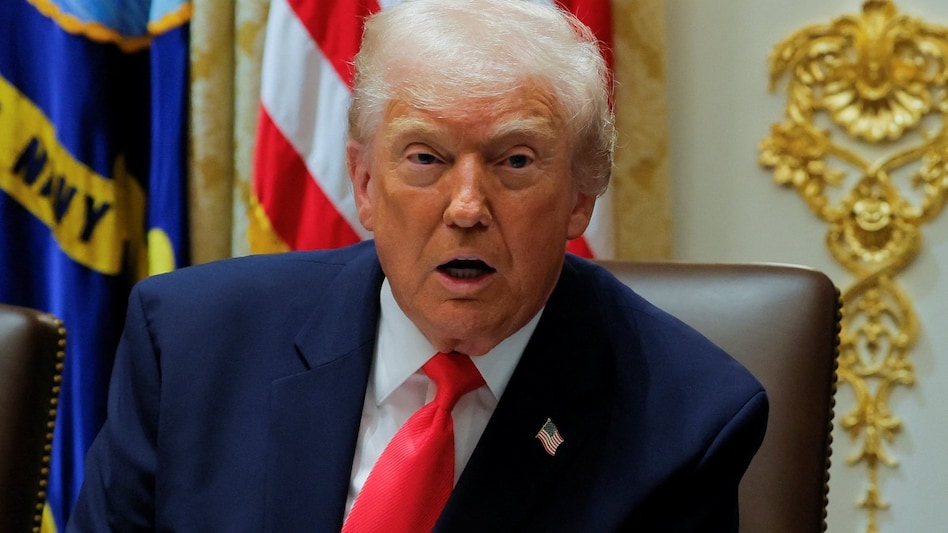
 Trump pitches 'no income tax for Americans' in the near future but is it even feasible? Details here
US President Donald Trump on Tuesday said that Americans might "not even have income tax to pay" in the near future. He noted that federal income tax could be eliminated under his administration because of the revenue from tariffs levied on other countries.
Speaking at a press gaggle after a cabinet meeting, he said that "at some point in the not too distant future you won't even have income tax to pay," adding that the revenue the government is collecting under his administration is "so great... so enormous."

 ICAI working out assurance standards for sustainability reporting by India Inc
 Saudi Arabia exits China-backed mBridge platform amid governance and compliance concerns
 US diesel price hits record $6.49: How much prices have surged since Hormuz crisis
 French fuel crisis deepens as one in nine stations run out of stock, diesel prices at record high
  Tata Motors or Ashok Leyland? Analyst reveals his preferred auto stock for near-term gains
 Gold Price Target 2026: Expert Sees MCX Gold At ₹1.8 Lakh By Year-End Amid Strong Demand
 Health Insurance: Why Pre-Existing Diseases And Waiting Periods Matter For Buyers
 Crude Oil Above $100: How High Energy Prices And Rupee Weakness Impact Gold Prices In India
 CEA On India’s Manufacturing Rise, Atmanirbhar Bharat And Modi’s Economic Policy
 Health Insurance Buying Guide: 7 Things First-Time Buyers Must Check Before Choosing A Policy
 SpaceX weight in Nasdaq 100 to jump to 2.82% following quarterly index rebalance: ReportTata Motors or Ashok Leyland? Analyst reveals his preferred auto stock for near-term gains
 Maharashtra Scooters, Dixon Tech, Bharat Dynamics, Jai Corp among stocks to turn ex-dividend on Monday
 Jindal Supreme, SS Retail, Hero Motors IPOs subscribed up to 181 times on final day; details here
 Sensex, Nifty post sixth weekly loss; TCS, Titan among top laggards, slip up to 4%
 'What are you other than English?' : Rishi Sunak reflects on growing up in Southampton and the debate over British identity
 Tata Trusts hires Abhishek Manu Singhvi as advocate. His first reaction: 'Having worked with Ratan Tata...'
 Moscow targeted in 'largest ever' barrage as 1,100 Ukrainian drones strike Russia
 West Asia tensions: Iran hands 7 terms to US via Qatar, warns of all-out war if Trump rejects deal
 Delhi-NCR all set for festive season events: Check dates, ticket prices, timings & locations












