


 Beyond tariffs themselves, the case could reshape how future presidents use emergency powers for economic policy.
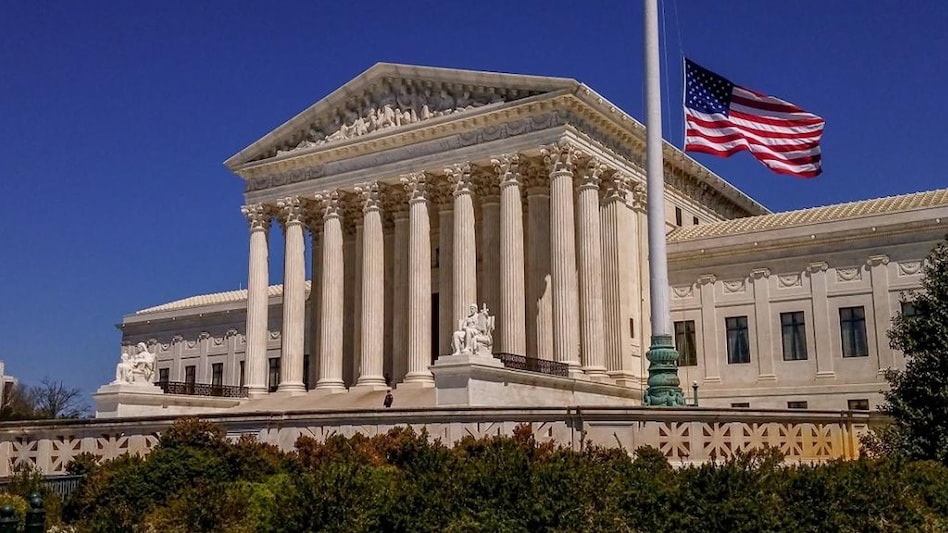
 The US Supreme Court is poised to rule on one of the most consequential trade cases in recent years: the legality of tariffs imposed by President Donald Trump using emergency powers. While the verdict may hinge on technical legal questions, its impact could ripple across global trade, US fiscal policy, markets, and corporate earnings. Here’s what’s at stake — and what different outcomes could mean.
What is the court deciding?
At the heart of the case are two closely linked questions:
1. Can the White House legally use emergency powers to impose tariffs?
The Trump administration relied on the International Emergency Economic Powers Act (IEEPA) to justify tariffs, framing them as a national security response — partly tied to halting fentanyl inflows into the U.S. The court will decide whether this law actually grants the president such broad tariff authority.
2. If the tariffs are ruled illegal, does the government owe refunds?
If the court finds the use of IEEPA improper, it must also decide whether importers, who already paid billions of dollars in duties are entitled to reimbursement. Crucially, the ruling does not have to be all-or-nothing. The court could narrow the scope of the emergency powers, limit repayment obligations, or restrict how tariffs can be used in the future without fully dismantling the current regime.
Why markets are watching closely
The case has drawn intense attention from Wall Street because of its potential knock-on effects:
What happens if the administration loses?
Even a loss may not mean the end of Trump-era tariffs. Treasury Secretary Scott Bessent has already signalled that the White House has other legal tools at its disposal, particularly under the 1962 Trade Act, to keep most tariffs in place without invoking emergency powers.
That’s why Bessent expects a “mishmash” outcome — one that limits presidential flexibility but does not dramatically reduce overall tariff revenues.
Prediction markets like Kalshi currently assign only a 28% probability that the court will fully uphold the tariffs as implemented, suggesting investors are bracing for a partial rollback rather than a clean win for the administration.
Why this ruling goes beyond trade
Beyond tariffs themselves, the case could reshape how future presidents use emergency powers for economic policy.
A restrictive ruling would:
At the same time, analysts at Morgan Stanley note the court has “significant room for nuance”, including options that preserve much of the current tariff structure while narrowing its legal foundation.
Tariffs haven’t played out as expected
Interestingly, the economic impact of the tariffs has defied early predictions:
That performance has complicated the narrative that tariffs would isolate the US or severely hurt consumers making the court’s decision even more consequential for future policy debates.
The Supreme Court’s ruling could redefine how far presidential power extends in trade policy — without necessarily dismantling the tariff wall itself. Whether through refunds, revised legal authority, or alternative trade laws, the decision is likely to reshape the rules of the game rather than end it outright.
Stock benchmarks Sensex and Nifty took their losing run to the fifth straight session on January 9 amid concerns over likely stalling of the India-US trade deal and amid fears over a likely fresh 500 per cent tariff on countries like India, which buys Russian oil. Stock investors were also cautious ahead of the US Supreme Court verdict on the legality of Trump tariffs. At 1.02 pm, the BSE Sensex was trading at 83,568.13, down 612.83 points or 0.73 per cent. Nifty fell 181 points or 0.71 per cent to 25,689.25.

 From 'Islamic Republic of Japan' to 'Putin': Trump's latest mix-ups spark fresh buzz as Iran tensions rise
 TCS share price, Q1 results: How IT stock reacted after its last 8 earnings announcements
 Delhi to Mumbai in just 12 hours? Nitin Gadkari shares big update on expressway
 Energy, aviation, insurance, automobile: What could be impacted as US-Iran war restarts
 US-Iran ceasefire ends: Crude supply resilient, but LNG, LPG face bigger Hormuz risk; Here's why
 Can India’s Market Absorb Jio & NSE IPOs? D-Street Liquidity Explained
 Kotak Midcap Fund Explained: How A ₹10,000 SIP Grew To ₹1.56 Crore | Atul Bhole Exclusive
 India Bond Market Sees $70 Billion FCNRB Inflow Boost: Bloomberg Index Inclusion Next?
 RBI Liquidity Outlook: FCNRB Deposits And ECB Measures Could Boost Banking System
 Growth Or Value Investing? What Could Outperform In India's Market Over The Next 18 Months
 Why market is rising today; what led Sensex, Nifty rebound despite renewed US-Iran tensions
 Vedanta, Vedanta Oil shares jump up to 8%; here's whyTCS share price, Q1 results: How IT stock reacted after its last 8 earnings announcements
 TCS dividend announcement amount, time today: Record date, March 2026 quarter details
 TCS Q1 FY27 results today: Announcement time, earnings call schedule, dividend decision, other key details









