








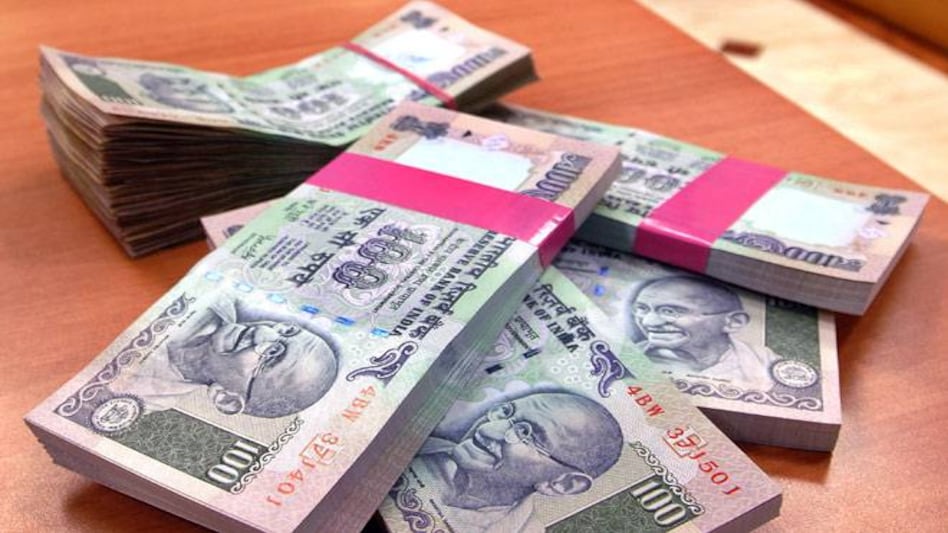
The rupee's recent recovery turned out to be rather short-lived. Since Monday, the domestic currency has plunged by 70 paise against the US dollar and is currently at a 19-month low of 68.54. This is the rupee's lowest level against the greenback since November 29, 2016.
The rupee today depreciated by 30 paise in early trade on strong month-end dollar demand from importers and banks amid sustained foreign capital outflows. Foreign investors pulled out Rs 538.40 crore from equity markets yesterday going by provisional exchange data and reports earlier this week pegged the total net withdrawal from the capital markets (equity and debt) at over Rs 46,600 crore in the year so far.
According to traders, the dollar's strength against some currencies overseas weighed on the local unit but a higher opening of the domestic equity markets capped the losses.
Brent crude was up 30 cents a barrel at $76.61 by 0800 GMT. U.S. light crude was 25 cents higher at $70.78. A major factor weighing down the rupee is the ongoing trade turmoil between the world's two largest economies, the US and China, which continues to roil forex market sentiments.
High oil prices will stoke inflation and widen the country's current account deficit, adding to more selling pressure on the fragile rupee that risks destabilising the broader economy. India imports more than two-thirds of its crude requirements.
Fears of an escalating trade conflict between US and China have ratcheted up another notch following US President Donald Trump's recent threat aimed at Chinese investments - a move which could have great long-term consequences on the US-Sino economic ties. The hawkish commentary by the US Federal Reserve does not help matters. Neither does the latest news on the oil front.
The US asked all countries, including India, to stop all oil imports from Iran by November or risk facing sanctions. And oil prices have reportedly spiked again in the bargain. Given that India is the world's third largest oil importer, any hike in global oil prices will inflate the import bill and disrupt the fiscal position.
India's current account deficit (CAD) has already widened 42 per cent year-on-year to $160 billion in FY18, and a high deficit means the country has to sell rupees and buy dollars to pay its bills.
This further reduces the value of the rupee. In the meantime, as per RBI data, the country's foreign exchange reserves declined by around $3 billion to $410 billion in the week to June 15 due to fall in foreign currency assets.
Back in early April, it had hit a life-time high of $424.864 billion, and was cited by Asian Development Bank's Chief Economist Yasuyuki Sawada as the reason why India doesn't need to worry much about currency fluctuations. Depleting reserves may or may not cause alarm but the fact that a depreciating rupee could put inflationary pressure on the economy certainly will. So India will be hoping for a much-needed break in the days ahead.
With PTI inputs
 'Strengthens supply chains against China, support Rupee stability': Amitabh Kant says tariff cut to 18% gives India edge in US market
 Inside the India-US interim trade agreement: Reciprocal tariffs on India to come down to 18%, 0% duty on generic pharma
 India-US interim trade pact: From diamonds to silk — Full list of products under 18% tariffs
 IDBI Bank stake sale: Kotak Mahindra Bank says ‘has not submitted a financial bid’
 BDL, Mazagon Dock, MRF, Hindustan Copper, RVNL, others to turn ex-dividend next week
 RBI Says Trade Deals With EU, US & Others Strengthen India’s External Sector Outlook
 Jeffrey Sachs Praises Modi On India-US Trade Deal: “Trump Blinked, India Must Not Depend On U.S.”
 Agra’s ₹127 Cr Housing Project In Ruins: Flats For Poor Rot Before Occupation
 RBI Credit Policy LIVE Analysis | Aditya Pagaria Explains Rate Pause Impact
 TeamLease Q3 Results: Profit Jumps 47% As Margins Improve Despite Headcount Loss
 IDBI Bank stake sale: Kotak Mahindra Bank says ‘has not submitted a financial bid’BDL, Mazagon Dock, MRF, Hindustan Copper, RVNL, others to turn ex-dividend next week
 Q3 results: HAL, Titan, M&M, HUL, ONGC, Lenskart to post earnings next week; check dates
 'Think about it': Deepak Shenoy warns indices mask stress as majority of Nifty 500 stocks lag
 Bitcoin avoids $60,000 breakdown, still down over 50% from record high