


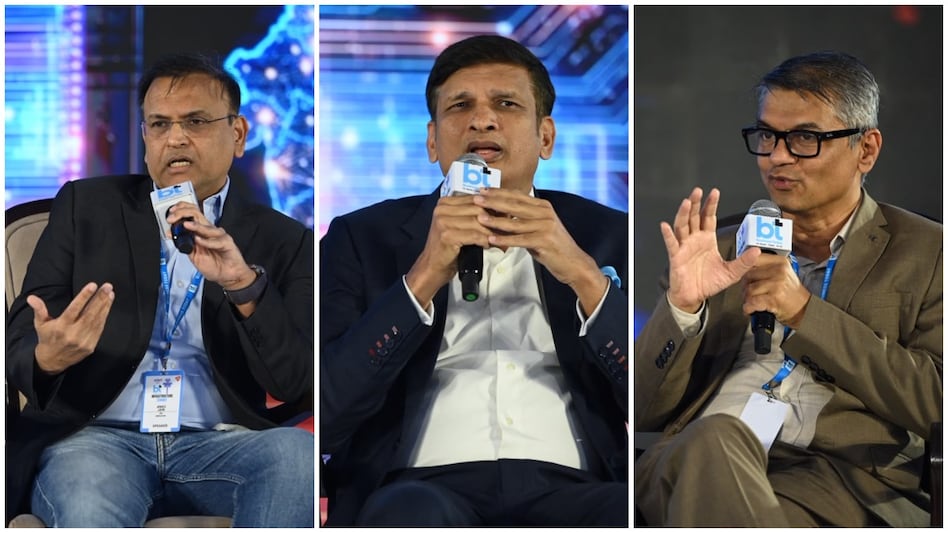
 (From left) Anku Jain, Managing Director, MediaTek India; Samar Mittal, India Country Business Leader, Nokia; and Vinayak Godse, CEO, Data Security Council of India (DSCI)
India's digital infrastructure is entering a new phase where the focus is shifting from expanding connectivity to building resilient, intelligent and secure digital systems capable of supporting Artificial Intelligence (AI), semiconductor manufacturing and the country's long-term economic ambitions, industry leaders said at the Business Today Infrastructure Summit 2026.
Speaking during a panel discussion on 'Building India's Digital Backbone', Anku Jain, Managing Director, MediaTek India; Samar Mittal, India Country Business Leader, Nokia; and Vinayak Godse, CEO, Data Security Council of India (DSCI), said India has already built a strong digital foundation through initiatives such as Aadhaar, UPI and nationwide 5G rollout.

 'Tremendous economic consequences': Amid ongoing US-Iran war, Donald Trump threatens countries backing Tehran
 Elon Musk’s Starlink reapplies for govt approval for satellite network in India: Report
 US debt crosses $40 trillion mark for the first time; more than doubled in 10 years
 'India either keeps pace or...': Zerodha's Nikhil Kamath invests ₹200 crore in CtrlS amid AI data centre push
 177% return within hours! Why Moderna stock rallied after cancer vaccine trial - Explained
 Did Frontier AI Models Just Break Out On The Live Internet? The Great AI Escape Explained | Tech Today
 Nifty Falls For 7th Straight Session: Is This A Buying Opportunity? Sharad Avasthi Explains
 “Invest In India, Invest In U.P”: Ashwini Vaishnaw’s Big Pitch For Japan At Business Conclave
 Empowering Conscious Enterprise Leadership
 Bonds, AAA Debt Provides Strong Cushion To Portfolio
 Aditya Infotech shares jump 4% on Rs 1,500 crore QIP; Buy stock, says MOFSL
  SEBI bans JPMorgan unit over alleged market manipulation
 Ceigall India shares jump 6% as JVs secure Rs 2,424 crore worth orders; key details
 KFin Tech shares rise as 8.75% stake worth Rs 1,400 crore changes hands in block deals
 Sensex rises over 500 pts: Key factors leading the market rally Aditya Infotech shares jump 4% on Rs 1,500 crore QIP; Buy stock, says MOFSL
  Future iPads likely to get iPhone’s Camera Control button; Here's how it could work
 Forget mosquito coils: China is mass-producing a laser that hunts mosquitoes in the airSEBI bans JPMorgan unit over alleged market manipulation'India either keeps pace or...': Zerodha's Nikhil Kamath invests ₹200 crore in CtrlS amid AI data centre push












