This old adage has never been more relevant than in India’s rapidly expanding digital financial ecosystem. As India leads global digital asset adoption — with participation spreading from metros to tier-3 towns — a critical question looms: can trust infrastructure scale as fast as adoption?
This moment is reminiscent of digital payments in 2016. When UPI launched, sceptics doubted that Indians would trust their phones to move money. Today, UPI processes 130 billion transactions annually — more than any payment system worldwide. What made that possible was not just technology. It was the systematic construction of trust: dispute resolution that worked, security standards that held, and user education that reached people in their own languages.
We are at a similar juncture with digital assets. The adoption is real and sustained. The question is whether we build the trust infrastructure to match.
When Systems Scale, Risks Evolve
As digital ecosystems grow, they become more complex. New users arrive with varying levels of digital literacy. More channels appear — apps, websites, messaging platforms, search ads, social media, and third-party communities — and that complexity creates room for modern fraud that targets people rather than systems.
Impersonation, lookalike domains, and high-pressure social engineering are among the most prevalent threats today.
This is not unique to digital assets. Banks, brokers, and payment apps have dealt with impersonation for years. Digital assets, however, face an additional challenge: the category is still new for many users, making it harder for them to recognise what “normal” looks like. First-time users of any new financial product don’t have that advantage.
The response cannot rely on one lever alone. More regulation helps, but does not remove fraud by itself. User education helps, but cannot outrun fast-changing tactics. Trust at scale requires a systems approach — controls, detection, response, and user clarity working in concert.
Trust Needs to Be Infrastructure
India already understands infrastructure thinking. Aadhaar strengthened digital identity. India Stack created interoperable building blocks. UPI made payments simple and reliable at massive scale. Digital assets now need a comparable trust layer, built around shared responsibilities:
• Platforms that design for prevention and fast response, not just access.
• Regulators that enable speed and coordination across the ecosystem.
• Users who can verify what is legitimate before taking irreversible actions.
• Intermediaries — including search and social platforms — that reduce the reach of impersonators.
This is less about “who is to blame” and more about how the system behaves when it is under pressure.
What Platforms Must Do
A resilient platform does three things well: it reduces the likelihood of a successful scam, it interrupts risky actions at the moment they matter, and it responds quickly when users ask for help.
• Prevention needs to be proactive. That includes threat hunting for fake websites, impersonator accounts, and malicious infrastructure, plus controls that block known bad destinations. The goal is to stop users from encountering scams in the first place.
• Intervention needs to happen at the transfer stage. In many scams, the critical moment is right before funds are sent. Platforms can reduce losses by showing clear, targeted risk warnings based on behavioural signals and known indicators — rather than generic pop-ups users click past.
• Response needs to be immediate and structured. When a user reports a suspected scam, response time matters. Platforms should have clear reporting flows, fast triage, and the ability to restrict accounts not just regionally but globally, linked to suspicious activity while reviewing evidence. Outcomes vary and recovery is not guaranteed — especially when stolen funds are moved quickly — but speed and coordination improve the chances of limiting harm.
• Support needs to acknowledge human behaviour. Many victims delay reporting due to embarrassment or a belief that nothing can be done. Platforms should make reporting simple, encourage it early, and provide clear guidance on next steps, including when and how to involve law enforcement.
• AI should be used defensively, with oversight. Attackers use automation to scale scams. Platforms need automated detection as well — including models that identify unusual behaviour patterns and signals of coercion in peer-to-peer contexts. Automation should be paired with human review for high-risk cases and transparent escalation processes.
What Users Can Do Today
Even the best platform controls work better when users have a few simple habits in place:
• Verify before trusting. Use official apps and verified links, not search results or forwarded messages. If in doubt, stop and cross-check.
• Never share passwords or OTPs. Legitimate support teams do not need them. Anyone asking is not acting in your interest.
• Slow down when you feel pressured. Artificial urgency is a common tactic. Pause, verify, and ask for a second channel of confirmation.
• Use security features. Two-factor authentication, withdrawal address whitelisting, and anti-phishing tools reduce the odds that a single mistake becomes a loss.
• Learn common patterns. Educational resources can help users recognise the most common scam playbooks. For example, Binance Academy (academy.binance.com) offers security explainers and guidance on identifying fraud patterns.
What Regulators Can Enable
Trust at scale is easier when the broader system supports speed. Regulators have a meaningful role to play:
• Faster takedowns of impersonation infrastructure. Fraudulent domains and fake apps can cause significant harm in a short period. Streamlined processes for takedowns and coordination with relevant agencies can reduce exposure time.
• Shared threat intelligence with privacy safeguards. Mechanisms that help legitimate platforms flag known scam domains, phone numbers, and tactics can improve industry-wide reaction time, while still respecting legal and privacy requirements.
• Clear, practical security baselines. Standards for incident reporting, user communication norms, customer support expectations, and risk controls help users understand what they should expect from legitimate providers.
• Capability building. Digital asset investigations can involve cross-border flows and rapid movement of funds. Training and resources for relevant institutions improves outcomes when action is needed quickly.
India’s digital finance story has been built on infrastructure that users can trust. Digital assets now need that same discipline. Trust will not come from a single app update or a single regulation. It will come from a coordinated approach — where platforms invest in prevention and fast response, regulators enable timely action, and users are equipped to verify before they act.
"Trust scales when it is designed to scale. Trust breaks when it is treated as optional."


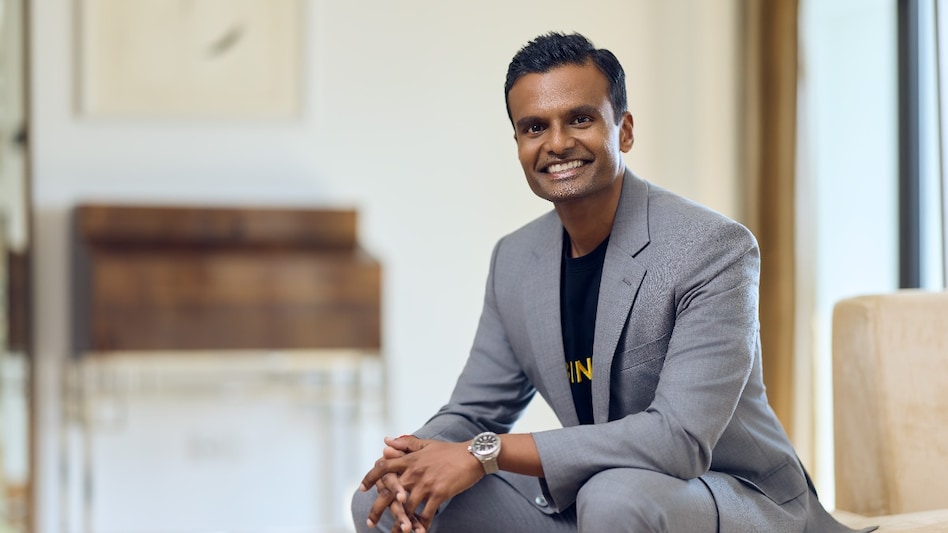 Author: SB Seker, Head of APAC, Binance
 BT Big Story: How the FCNR(B) deluge has created two new problems for the RBI
  Who is Abhishek Manu Singhvi? The veteran lawyer at the centre of Tata Trusts' fight for control
 A look at Harish Salve's career as he advises Tata Sons Chairman
  RBI's forex swap scheme pulls in record $143.6 billion till Sep 18
  A lumpsum is not a paycheck: What Indians get wrong after retirement
 Burqa Ban In Italy? Meloni Pushes New Rules On Face Coverings
 Tata Trusts-Tata Sons Row: Harish Salve Explains RBI Rules, Singhvi Flags Shareholder Rights
 Top Legal Eagles Flock To Tata Sons & Tata Trusts As Boardroom Clash Heads To Court
 Over Next Three Years Company Expects To Invest ₹15,000 Cr For Deepwater Exploration
 Tata Sons Listing Row: Shapoor Mistry Backs IPO As Noel Tata Pushes ₹25,000-Crore Plan
 Manipal Health clears ₹5,310 crore debt using IPO proceeds, eyes expansion & technology push
 NSE IPO subscribed 5.7 times as QIBs lead demand; shares to list on BSE on September 24
 Brokerage sees 96% upside potential in this smallcap stock
 Dr. Reddy’s, Lupin shares among buzzing stocks as pharma sector back in focus
  3 Warren Buffett quotes for Indian stock market investors today
 'Upcoming superpower in Indo-Pacific': V4 countries back India’s UN Security Council bid
 Ultraviolette X47: The electric adventure bike with a surprising feature list
 350 kmph B35: India’s bullet train plan now meets Japan’s next-gen E10
 Ticket rush ahead of festive season: Railways adds special trains linking Delhi, Katra and Varanasi












