





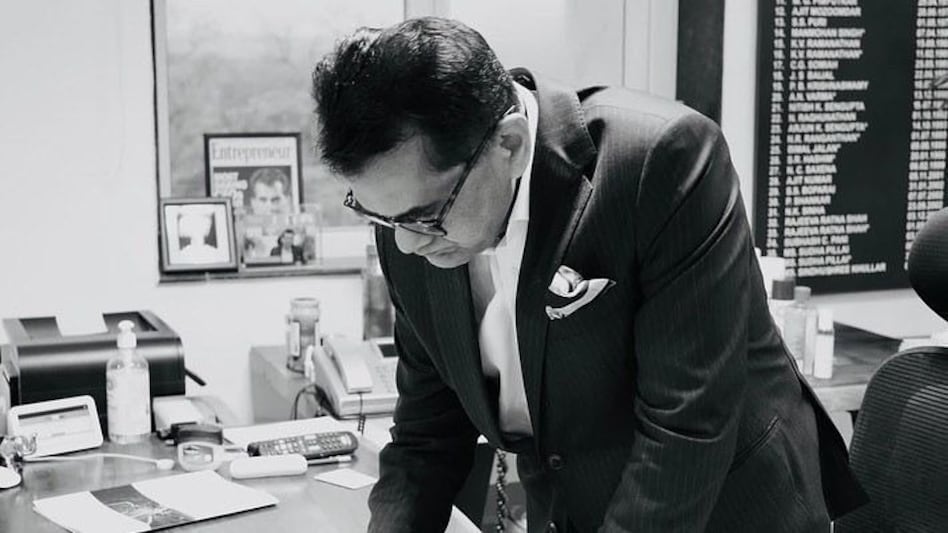
 Amitabh Kant resigns as G20 Sherpa
 Amitabh Kant resigns as G20 Sherpa
Former NITI Aayog CEO Amitabh Kant has stepped down from his role as India’s G20 Sherpa. In a lengthy post on social media Kant thanked Prime Minister Narendra Modi as well as union ministers Nirmala Sitharaman and S Jaishankar. Kant said he would “embrace new opportunities and begin a new chapter” and cheer from the sidelines as India moves forth to achieve its goal of ‘Viksit Bharat’.
“After 45 years of dedicated service to the Government, I have decided to embrace new opportunities and begin a new chapter. I am deeply grateful to Prime Minister Shri Narendra Modi for accepting my resignation as India’s G20 Sherpa and for the trust he placed in me to drive developmental initiatives that shaped India’s growth trajectory. His vision, discipline & commitment to building a stronger, more inclusive India have been a constant source of inspiration,” said Kant.
He said leading India’s G20 Presidency in 2023 was a significant milestone in his long career. Despite multiple challenges, unanimous consensus on the New Delhi Leaders' Declaration was achieved, he said. “We also successfully ensured the inclusion of the African Union in the G20, fulfilling India’s commitment to global equity and the voice of the Global South,” he added.
Kant also spoke of his role as the NITI Aayog CEO, which, he said, led to “path-breaking programs”. “We helped lay the foundations for India’s digital public infrastructure and pushed policy reforms across sectors—ranging from manufacturing through PLI schemes to innovation through the Atal Innovation Mission and sustainability through the Green Hydrogen Mission and Advanced Chemistry Cells. These efforts positioned India as a leader in innovation and climate action,” Kant elaborated.
His long career began in Kerala where the value of grassroots development shaped his career, said Kant. “From the “God’s Own Country” campaign to rejuvenating Calicut city by reviving Mananchaira Maidan, removing vast encroachments, expanding Calicut Airport and working closely with the fishing community -these experiences shaped my career. Later, in the Ministry of Tourism, we initiated the “Incredible India” campaign—born from the belief that travel & tourism has the best multiplier impact on jobs and growth,” he added.
“India has always been, and will always be, Incredible. Humbled to have played a small role. Thank you for being part of this journey,” said Amitabh Kant.
In his long career, Amitabh Kant led key reforms and initiatives during his tenure as the Chief Executive Officer of the National Institution for Transforming India (NITI Aayog) from 2016 to 2022 and as Secretary of the Department for Industrial Policy and Promotion (DIPP) from 2014 to 2016 Kant has been instrumental in driving flagship national initiatives such as Startup India, Make in India, Incredible India, Kerala: God’s Own Country, and the Aspirational Districts Program.
As NITI Aayog CEO, Kant led a wide range of developmental and policy initiatives that catalysed India’s social and economic development and brought a paradigm shift in policy-making. As Secretary of DIPP, Kant promoted the Startup India movement, helping India become the third-best ecosystem for startups globally, with over 70,000 startups and more than 101 unicorns. He focused on facilitating Ease of Doing Business through policy predictability, consistency, and the removal of unnecessary rules and procedures. This effort helped India improve its Ease of Doing Business ranking by 79 positions. He also introduced competition and ranking among Indian states based on their Ease of Doing Business indicators, leading to significant improvements at the state level.
Kant also served as Chairman and CEO of the Delhi Mumbai Industrial Corridor Development Corporation (DMICDC) from 2009 to 2014, now known as NICDIC. The project aimed to develop smart industrial cities in India integrating next-generation technologies across sectors. He has also worked as CMD of the India Tourism Development Corporation and as Joint Secretary of the Ministry of Tourism between 2001 and 2007.
 Mazagon Dock, Cochin Shipyard, GRSE shares slip up to 35% from 52-week highs; more pain ahead?
 Not going the LG way: Samsung rules out India IPO, shifts focus to AI and consumer finance
 ITC shares set to close lower for first time in five years, here's why
 Pain before payoff: OpenAI's Sam Altman explains how AI will reshape careers by 2035
 That ‘easy’ personal loan may cost you more than you think. Here’s how to avoid mistakes in 2026
 Options Trading For Beginners: What To Trade And What To Avoid
 Could Nifty Soar To 29,000 In 2026? Osho Krishan Weighs In
 Gold & Silver For The Long Term: SIP, Physical Or ETFs - What’s The Right Strategy?
 From Volatility To Opportunity: What 2026 Holds For Indian Markets
 “True Nationalism Is Self-Reliance”: Gadkari Pushes Innovation, Defence, Clean Energy
 ITC shares set to close lower for first time in five years, here's whyMazagon Dock, Cochin Shipyard, GRSE shares slip up to 35% from 52-week highs; more pain ahead?
 Shyam Dhani IPO subscribed 918 times, GMP signals 100% listing gains
  Christmas 2025 pick: Brigade Enterprises stock with low debt set for a 52% upside, here's why
  Sensex, Nifty in 2026: Bulls likely to stage a stronger rally, here's why