








 AQI remains ‘poor’ across Delhi-NCR as experts warn of rising health risks from pollution
 AQI remains ‘poor’ across Delhi-NCR as experts warn of rising health risks from pollution
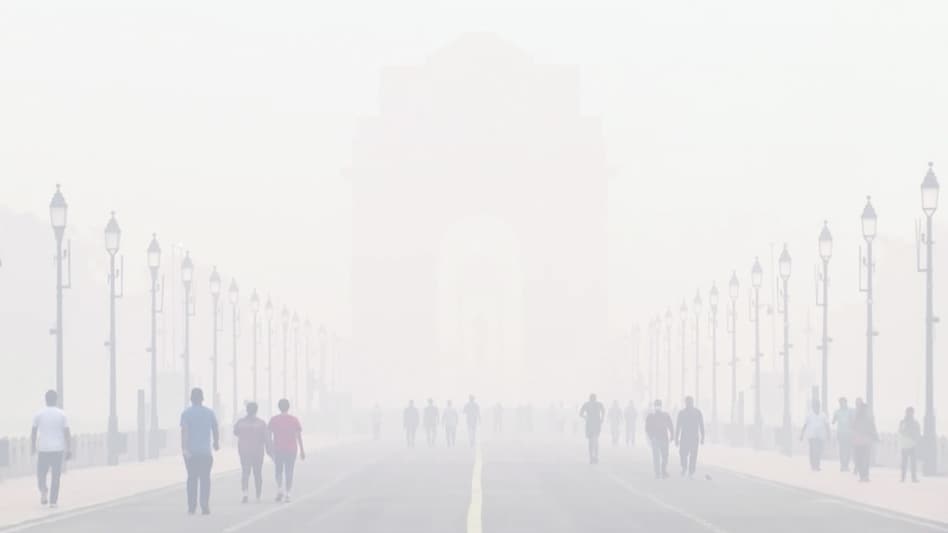
Delhi’s air quality remained in the ‘poor’ category for the fourth straight day on Friday, with pollution levels climbing steadily in the lead-up to Diwali. The Central Pollution Control Board (CPCB) recorded the city’s Air Quality Index (AQI) at 254 at 4 pm, firmly within the ‘poor’ range, as haze blanketed the skyline and visibility dropped across major areas.
Among the NCR cities, Ghaziabad recorded the most polluted air in the country at an AQI of 306 (‘very poor’), followed by Noida (278) and Gurugram (266), both in the ‘poor’ range. Faridabad remained relatively better with a ‘moderate’ AQI of 105. Delhi, Ghaziabad, Noida, and Gurugram all ranked among India’s ten most polluted cities on Friday.
According to CPCB’s classification, an AQI between 201–300 is considered ‘poor’, 301–400 ‘very poor’, and above 400 ‘severe’. Out of Delhi’s 38 monitoring stations, five reported ‘very poor’ air quality: Anand Vihar (382), Wazirpur (351), Jahangirpuri (342), Bawana (315), and Siri Fort (309). The data indicate a consistent decline in air quality since October 14, with pollution worsening by the day.
In central Delhi, AQI levels hovered around 252 near Jawaharlal Nehru Stadium, while Akshardham recorded 230. At India Gate, readings also remained within the ‘poor’ category. Authorities have deployed truck-mounted water sprinklers on key roads to help settle dust and control emissions.
Transport emissions were identified as the largest contributor to Delhi’s pollution on Friday, accounting for 17.9% of total emissions, as per the Decision Support System (DSS). Satellite data also showed stubble burning incidents — 20 in Punjab, 2 in Haryana, and 49 in Uttar Pradesh — adding to the region’s deteriorating air quality.
The Air Quality Early Warning System for Delhi forecasted that the city’s pollution levels would remain in the ‘poor to very poor’ range over the coming days as winter conditions set in.
Meanwhile, the India Meteorological Department (IMD) reported a maximum temperature of 32.6°C, around 0.6°C below normal, and a minimum of 18.4°C, 1.2°C below normal. The relative humidity stood at 74% in the morning and 61% in the evening. A misty morning is expected on Saturday, with temperatures likely to range between 19°C and 33°C.
Health experts warned of the growing health risks linked to rising particulate matter. Pulmonologist Dr. Sharad Joshi told ANI, “Air Quality Index (AQI) has risen significantly, leading to higher levels of particulate pollutants from sources like crop burning, vehicular exhaust, and fireworks. This exacerbates respiratory issues for those with pre-existing conditions such as COPD, asthma, and those who have had tuberculosis, leading to increased symptoms like cough, fever, breathlessness, and chest pain... Even those without prior respiratory issues, especially children and the elderly, are at risk due to weakened immunity.”
Dr. Joshi further added, “The use of ‘green crackers’ during Diwali emit fewer pollutants compared to traditional fireworks but are not entirely harmless... Vehicular exhaust contributes to pollution year-round, but the problem worsens during October and November... To mitigate pollution effects, it is suggested to reduce vehicle use through carpooling, maintain vehicle pollution levels, use air purifiers indoors, ensure proper kitchen ventilation, avoid indoor pollution sources like incense, and for those with respiratory issues, continuing regular medication and considering preventive vaccines. Additionally, wearing N95 or double surgical masks during outdoor activities is advised for everyone to protect against poor air quality.”
 3 reasons why Tata Steel shares in focus today
 Stock market today: Sensex jumps 505 pts, Nifty above 23,700; Bajaj Finance, TCS lead gainers
 IDBI Bank shares tumble over 28% in five sessions; analysts weigh in
 Varun Beverages: El Niño-led heatwaves may drive demand; target price
 ‘Result of a decade-long energy transition strategy’: FM Sitharaman says LPG supply is steady
 Iran Strikes Gulf Oil Hubs: Trump Calls Attacks “Shocking”
 Renault’s Francisco Hidalgo: Focusing On Localisation, Not Impacted By War
 Inside Noida International Airport: India’s Most Advanced Airport Yet?
 LPG Shortage Hits UP As Vendors Turn To Coal Bhattis, Raising Pollution Concerns
 West Asia War Impact: Markets, Crude & What Investors Should Do
 Powerica IPO to open on March 24; check price band, issue size & all key detailsStock market today: Sensex jumps 505 pts, Nifty above 23,700; Bajaj Finance, TCS lead gainers
 BSE, Chennai Petro, ABB India: How to trade these 3 buzzing stocksIDBI Bank shares tumble over 28% in five sessions; analysts weigh in
 Stove Kraft shares down 33% in 6 months; worth a buy?