Iran has pushed back firmly against renewed US pressure to curb its uranium enrichment programme, signalling that military threats and fresh sanctions will not force a policy reversal in Tehran. Speaking at a public forum in the Iranian capital on Sunday, Foreign Minister Abbas Araghchi made it clear that enrichment remains a red line for the country, even as indirect talks with Washington resume after years of hostility.
The remarks come at a sensitive moment, with Iran and the United States reopening negotiations in Oman following a sharp escalation in the Middle East that drew Washington into direct military action alongside Israel.
Enrichment remains non-negotiable, says Tehran
Addressing an audience that included international media, Araghchi said Iran would not accept external dictates on its nuclear programme, framing enrichment as a matter of sovereignty rather than bargaining leverage.
"Why do we insist so much on enrichment and refuse to give it up, even if a war is imposed on us? Because no one has the right to dictate our behaviour," he said.
He disregarded the US military build-up in the region as a pressure tactic, specifically referring to the deployment of the aircraft carrier USS Abraham Lincoln.
"Their military deployment in the region does not scare us," Araghchi told the gathering.
Talks resume amid deep mistrust
While Tehran is seeking relief from sweeping economic sanctions that have strained its economy, Washington continues to press for limits on Iran’s nuclear activities. Araghchi, however, questioned whether the US was genuinely committed to diplomacy, citing ongoing sanctions and military signalling.
He said Iran was open to limited steps that could help rebuild trust, but only if talks were conducted on the basis of mutual respect.
Iran has repeatedly denied allegations by Western governments and Israel that it is pursuing nuclear weapons, insisting its programme is civilian in nature.
"They fear our atomic bomb, while we are not looking for one," Araghchi said. "Our atomic bomb is the power to say 'no' to the great powers."
US shows force as negotiations unfold
Tensions remained elevated over the weekend as senior US officials visited the aircraft carrier stationed in the region. Lead negotiator Steve Witkoff and senior adviser Jared Kushner toured the vessel, underscoring Washington’s military posture even as diplomatic channels reopened.
The US Central Command confirmed the visit, while Witkoff said the carrier group was "keeping us safe" and supporting President Donald Trump’s policy of "peace through strength".
Despite the show of force, Trump later described the talks as "very good", while Iranian President Masoud Pezeshkian said the discussions marked "a step forward".
Fresh sanctions raise doubts over US intent
Soon after the talks, however, Washington announced new punitive measures. Trump signed an executive order imposing tariffs on countries continuing business with Iran, while additional sanctions were slapped on shipping firms and vessels linked to Iranian oil exports.
Araghchi said these actions cast doubt on Washington’s seriousness at the negotiating table.
"The continuation of certain sanctions and military actions raise doubts about the seriousness and readiness of the other side," he said.
"We are assessing all the signals," he added. "We will decide on the continuation of the talks."
Talks shadowed by unrest at home
The renewed diplomatic push is unfolding against the backdrop of severe domestic unrest in Iran. Protests that began in late December over economic pressures and political grievances have spiralled into widespread violence.
Iranian authorities say at least 3,117 people were killed during the unrest, most of them security personnel and bystanders, and have released a list of nearly 3,000 names.
However, the US-based Human Rights Activists News Agency has put the toll far higher, claiming nearly 7,000 deaths, mostly among protesters, with more than 51,000 arrests recorded and thousands of cases still under investigation.



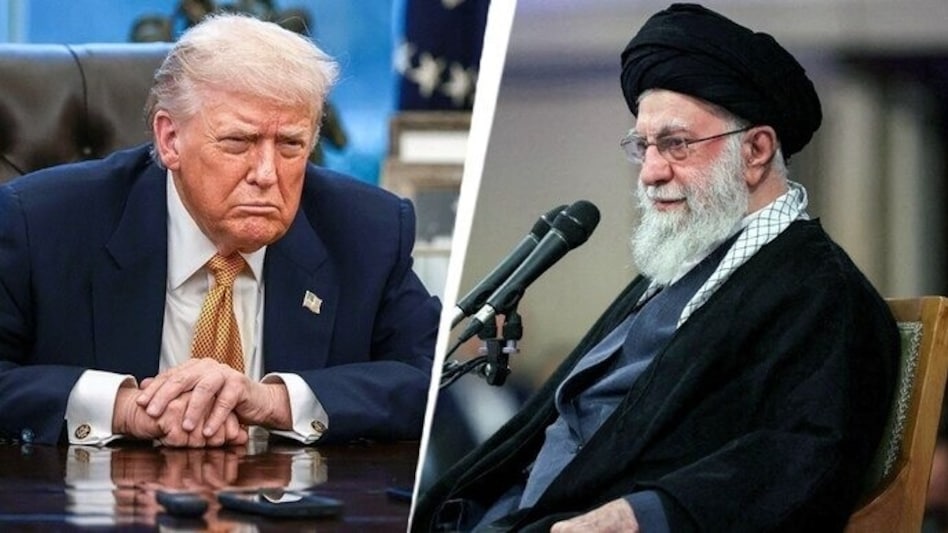 Iran defies US pressure on uranium enrichment as Oman talks resume amid sanctions threat
 Govt starts buffer onion releases as festive demand nears
 India to divert 3.5 lakh tonnes of export sugar to local market as prices surge
 AI boom is helping offset oil shock, but global economy still faces risks, warns IMF
 Apple may manufacture iPads, MacBooks in India, but local components take priority
  'Kirana Hills strike was inadvertent': Ex-Army chief says escalation control could get harder in future
 YouTube, Insta Earnings Are Not Tax-Free: What Freelancers & Content Creators Must Know About Tax
 What’s Hot: Stocks, Gold & Big Money Moves | Daily Markets Show | August 26 | Business Today TV
 Nifty Rally Gets A Boost From Falling Oil: Vaishali Parekh On What Comes Next
 IIT Delhi Protests Over Student Death As Students Demand Accountability And Independent Probe
 How This Fund Manager Turned ₹1 Cr Into ₹7.6 Cr | Abhay Agarwal On Beating The Market by 8.8% A Year
 Tata Capital shares: Nuvama ups target price; says Tata Motors Finance drag largely behind
 ICICI Prudential AMC: Promoter Prudential to sell 2% stake; stock slips
 Adani-backed Cemindia Projects may raise up to Rs 5,000 crore through QIP: Report
 Why did Sensex, Nifty erase gains to settle lower today?
 Piper Serica exits CDSL, CAMS shares; adds Gland Pharma, Astra Microwave
 India emerges as Kenya’s new fuel lifeline as West Asia supply disruptions deepen
 India’s REIT, InvIT market could unlock ₹11.6 lakh crore of fresh capital by 2030: Report
 Certainty or initiative? Zoho's Sridhar Vembu says trying to have both creates the 'worst of both worlds'












