


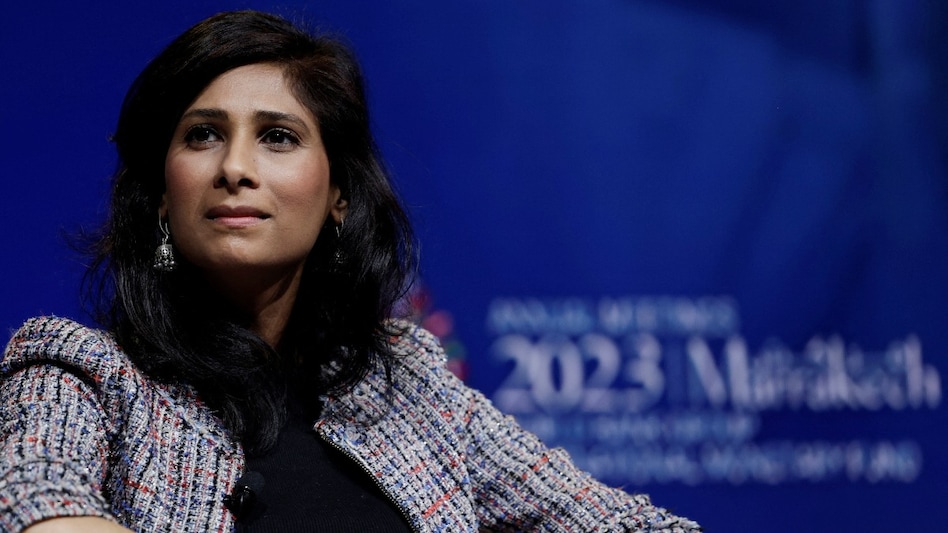
 IMF's former Deputy Managing Director Gita Gopinath
IMF's former Deputy Managing Director Gita Gopinath on Wednesday outlined the steps India must take to establish itself as a major player in global supply chains. She said that while improvements in infrastructure are vital, India's ability to compete on the global stage is hindered by persistent issues in land acquisition and excessive bureaucracy.
"What India needs to do in terms of tapping into the global supply chain is continuing on the path of all the big reforms that it needs for its own internal growth. The improvement that we've seen in physical infrastructure and in digital infrastructure in India is super helpful and that should continue," she said while speaking at the Economic Times' India Economic Conclave.

 'Satcom rules apply equally to all': Govt rejects Musk's claim of Starlink being blocked in India
 BT BIG STORY: India is building the green hydrogen capacity — but where’s the demand?
 Loans get costlier: PNB, BOB others hike rates after RBI’s 25-bps repo rate hike
 Trump’s new $70,000 OPT fee could reshape US jobs path for Indian students. What changes?
 Nana Patekar dies at 75 after collapsing at his Goa home, Bollywood mourns
  GST Council Meeting: Big Changes Beyond Rate Cuts | GST 2.0, ITC, MSMEs & Compliance Reforms
 Elon Musk Accuses "Oligarchs" Of Blocking Starlink In India | Why Is Starlink’s India Entry Stuck?
 Kotak Securities Rebrands Retail Business As Kotak Neo, Bets On Tech And New-Age Investors
 This Week In Cinema: Bokshi, Dongri, Other Mommy And More Hit Theatres This Week
 BT Golf Celebrates 27 Years Of Excellence With New Edition Coming Soon
 TCS shares rise ahead of Q2 results; Mphasis, Coforge, Infosys also gain; here's why
  Sagility, IKS Health shares: Brokerage initiates 'Buy' on US healthcare exposure; check target prices
 Physicswallah, L&T, Tata Consumer shares: 3 Stocks to buy; target price up to Rs 4,400
 Suzlon shares in 'deeply' oversold zone, hit fresh 52-week low; what should investors do?
 Nitya Gems make positive D-st debut; Vishal Nirmiti shares disappoints on listingTCS shares rise ahead of Q2 results; Mphasis, Coforge, Infosys also gain; here's why
  Smarthveer Sidana's HireQuotient close another major partnership. This time it's BambooHR
 How educated was Nana Patekar? Before becoming an actor, he painted film posters for ₹35
  How iD Fresh has mastered the fresh food playbookSagility, IKS Health shares: Brokerage initiates 'Buy' on US healthcare exposure; check target prices












