"I have been telling many people that India has boarded the Reform Express," the prime minister wrote, adding that the primary engine of this reform push is India's young population and the "indomitable spirit of our people".
Modi said 2025 would be remembered as the year India pursued reforms as a "continuous national mission", building on the work of the past 11 years. "We modernised institutions, simplified governance, and strengthened the foundations for long-term, inclusive growth," he said, noting that reforms were aimed at enabling citizens to live with dignity, entrepreneurs to innovate with confidence, and institutions to function with clarity and trust.
GST reform
Listing key measures, the prime minister pointed to GST reforms, saying a two-slab structure of 5% and 18% has been implemented to ease the burden on households, MSMEs, farmers and labour-intensive sectors. The purpose, he said, was to reduce disputes and improve compliance, with the reforms boosting consumer sentiment and festive season demand.
Tax relief for the middle class
Highlighting what he called "unparalleled relief for the middle class", Modi said that, for the first time, individuals earning up to Rs 12 lakh a year faced no income tax. He also flagged the replacement of the Income-tax Act of 1961 with the "modern and simple Income Tax Act, 2025", describing it as a move towards a transparent, technology-driven tax administration.
For small and medium businesses, Modi said the definition of "small companies" has been expanded to include firms with turnovers of up to Rs 100 crore, reducing compliance burdens and costs for thousands of enterprises.
100% FDI in Insurance
On foreign investment, the prime minister said 100% FDI has been permitted in Indian insurance companies. He said this would boost insurance penetration and security, enhance competition, offer better choices and improve service delivery for people.
In capital markets, Modi said the Securities Market Code Bill has been introduced in Parliament to strengthen governance norms at SEBI, enhance investor protection, reduce compliance burden and enable a technology-driven securities market for a Viksit Bharat. He said reforms would ensure savings through reduced compliances and overheads.
Maritime and Blue Economy Reforms
The prime minister also underlined maritime and blue economy reforms, noting that five landmark legislations - the Bills of Lading Act, 2025; the Carriage of Goods by Sea Bill, 2025; the Coastal Shipping Bill, 2025; the Merchant Shipping Bill, 2025; and the Indian Ports Bill, 2025 - were passed in a single Parliament session. These, he said, simplify documentation, ease dispute resolution and reduce logistics costs, replacing outdated laws dating back to 1908, 1925 and 1958.
Referring to the Jan Vishwas initiative, Modi said hundreds of outdated laws have been scrapped, with 71 Acts repealed through the Repealing and Amendment Bill, 2025, marking what he called the end of the era of criminalisation.
Ease of Doing Business
On ease of doing business, the prime minister said 22 Quality Control Orders (QCOs) were revoked across sectors such as synthetic fibres, yarns, plastics, polymers and base metals, while 53 QCOs were suspended across steel, engineering, electrical and consumer product categories. He said this would boost apparel exports, lower production costs in sectors like footwear and automobiles, and reduce prices for domestic consumers.
Labour Reforms
Calling labour reforms "historic", Modi said 29 fragmented labour laws have been merged into four modern codes. "India has created a labour framework that secures the interests of workers while boosting the business ecosystem," he wrote, adding that the reforms focus on fair wages, timely payment, smoother industrial relations, social security, safer workplaces and greater female participation in the workforce. He said unorganised and contract workers have been brought under ESIC and EPFO, expanding formal workforce coverage.
Expanded Markets for Exports
On trade, Modi said India has inked agreements with New Zealand, Oman and Britain, which would add investments, boost job creation and encourage local entrepreneurs. He also said the FTA with the European Free Trade Association - Switzerland, Norway, Iceland and Liechtenstein - has been operationalised, marking India’s first such agreement with developed European economies.
Nuclear Sector Reforms
In energy, the prime minister highlighted nuclear reforms, describing the SHANTI Act as a "transformational step" to meet rising energy demands of the AI era, including powering data centres, advanced manufacturing, green hydrogen and high-technology industries. He said the framework promotes peaceful applications of nuclear technology and opens pathways for private sector participation, innovation and skill development.
Viksit Bharat–G RAM G Act
Modi also cited a landmark reform in rural employment, saying the Viksit Bharat–G RAM G Act, 2025 has raised the employment guarantee from 100 to 125 days to strengthen village infrastructure and livelihoods and ensure higher rural incomes.
On education, he said a Bill has been introduced to establish a single, unified higher education regulator - the Viksit Bharat Shiksha Adhishthan - replacing multiple overlapping bodies such as the UGC, AICTE and NCTE, while strengthening institutional autonomy and boosting research and innovation.
"What makes the reforms of 2025 significant is not only their dimension but also their underlying philosophy," Modi wrote, saying the government has prioritised collaboration over control and facilitation over regulation. He said the reforms were designed with empathy, guided by data and anchored in constitutional values, aimed at building a prosperous, self-reliant India.
"We will continue pursuing the reform agenda in the coming years," the prime minister said, urging investors, innovators and institutions in India and abroad to "keep trusting India and investing in our people".



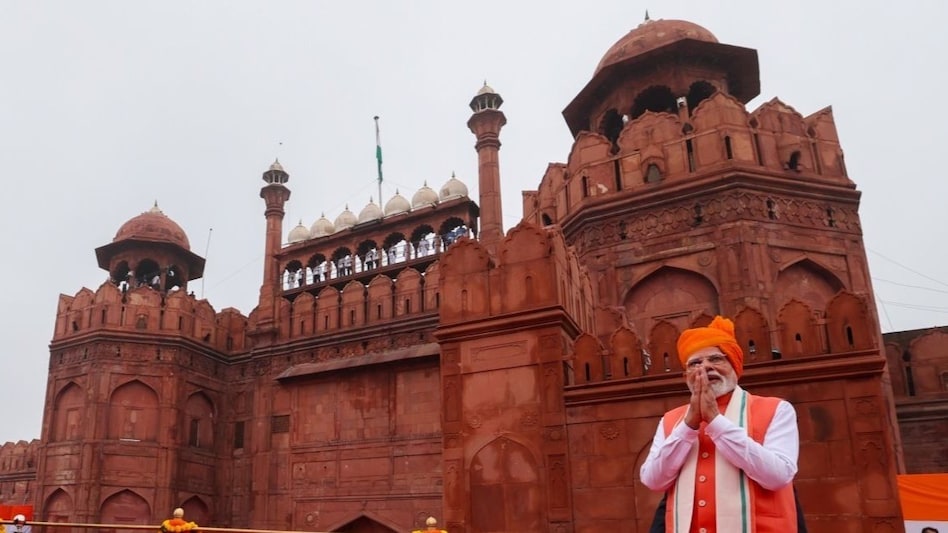 Prime Minister Narendra Modi
 'RBI letter does not mention listing': Noel Tata seeks full briefing on Tata Sons-RBI talks
 Tata Trusts asks Tata Sons to explore options other than listing, says ‘Tata Model has to be saved’
 Tata Trusts proposes ₹25,000 crore plan for SP Group, says Tata Sons listing is not an option
 Chandrasekaran had assured all necessary steps were being taken to remain private: Noel Tata
 'We cannot put the cart before...': Noel Tata's argument against N Chandrasekaran's reappointment
 How India Changed In 12 Years: PM Modi’s Journey From Economic Reforms To Viksit Bharat
 Modi @76: From Twitter To Instagram, How His Digital Outreach Has Evolved
 Stock Picks To Watch: Shibani Kurian Reveals Kotak AMC’s Market Bets
 Gold ETF vs Physical Gold: Know the Tax Rules, Charges and Key Differences
  PPF vs NPS: Tax Benefits, Returns and Lock-in Period Explained for Retirement Planning
 Hero Motors IPO subscribed 3.37 times on Day 2; retail portion subscribed over 5 times
 NSE IPO: India's largest exchange gets 43% subscription on Day 1; NIIs, retail see strong demand
 Rentomojo shares settle maiden trade nearly 32% above IPO price; what should investors do now?
 Sensex slips, Nifty settles higher; Tata stocks gain after N Chandrasekaran reappointment
 Cochin Shipyard, KRBL, RITES, Ramky Infrastructure among stocks to turn ex-dividend on September 18
 Noida Airport commuters can drive through toll plaza without stopping, here’s how it will work
 OTT releases this week (Sept 14- Sept 20): 'Irumudi', 'Thudakkam', 'Lee Cronin's The Mummy' and more to watch this weekend
 NMDC's Panna mine unearths 27.29-carat diamond, second-largest discovery so far
 Flexicap funds: 90.6% large caps vs 55.2% small caps — 10 biggest portfolio differences
 Who is Sethuraman Panchanathan? Chennai-born scientist honoured with NAE’s prestigious Bueche Award












