








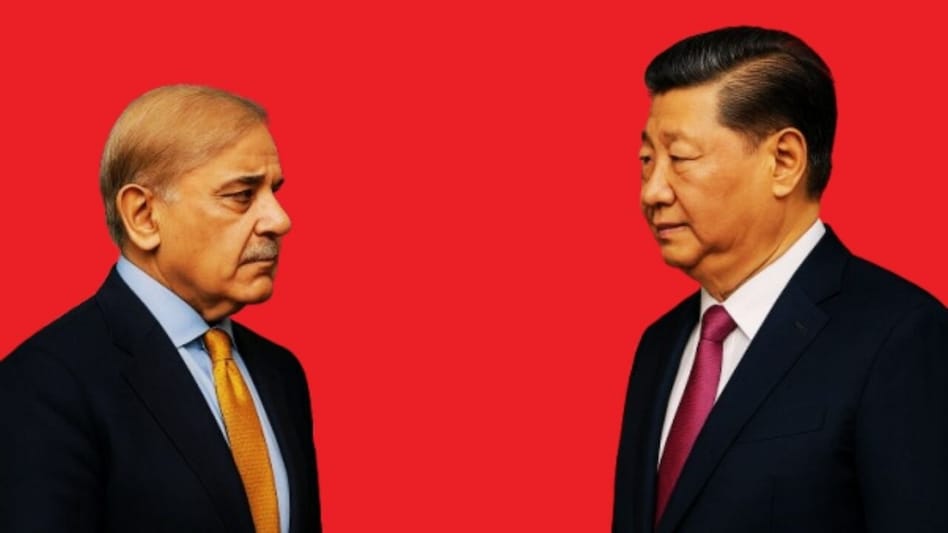
 Pakistan, backed by China and reportedly aided by Turkish drone operators, was waging a new kind of war — remote, fused, and clouded by satellites and encrypted phones.
 Pakistan, backed by China and reportedly aided by Turkish drone operators, was waging a new kind of war — remote, fused, and clouded by satellites and encrypted phones.
In the smoke and fury of last week’s India-Pakistan aerial duels, something unprecedented unfolded. As Indian jets flew standoff missions deep into Pakistani-held territory under Operation Sindoor, Pakistan launched a wave of Chinese PL-15 air-to-air missiles in retaliation.
But these weren’t ordinary launches.
Sources quoted in an India Today TV report say the missiles appeared almost ghost-like on Indian radars, showing up dangerously late.
The reason? A chilling new war tactic called a fusion operation, where Pakistan handed over the management of these missiles to "third party" operators — possibly Chinese experts — guiding them remotely using satellites and Airborne Early Warning & Command Systems (AEW&CS) located outside the active warzone.
It was a game of digital shadows, where Beijing’s eyes and hands reached deep into the battlefield, turning missiles into stealth assassins.
Indian air defence shot down many, but the new playbook had been revealed — and it bore China’s signature.
But this wasn’t the first time the dragon’s fingerprints were visible.
Long before missiles flew, Indian forces probing the Pahalgam terror attack found militants carrying BeiDou-enabled navigation devices — China's answer to GPS, offering pinpoint accuracy across Asia without relying on Indian networks.
The devices allowed infiltrators to cross, communicate, and coordinate without leaving a trace on conventional telecom grids.
Even more sinister was the discovery of a Huawei Mate 60 Pro smartphone near the same attack site. This wasn’t just any phone. The Mate 60 connects directly to China’s Tiantong-1 satellite network, letting users make calls and send messages even during blackouts — all while looking like an ordinary smartphone.
Gone are the days of clunky, suspicious Thuraya satphones. With Huawei’s slick tech in militant hands, Pakistan’s proxies could now stay connected, invisible, and lethal.
As India pushed back with deep strikes on Pakistani airbases and radar hubs — 13 in just 23 minutes — it became clear that traditional air superiority was only half the battle. Pakistan, backed by China and reportedly aided by Turkish drone operators, was waging a new kind of war — remote, fused, and clouded by satellites and encrypted phones.
 Iran's new Ayatollah says Hormuz must remain closed
 'It can't happen now': US Navy not ready to escort oil tankers through Hormuz
 From 20 mn barrels a day to a trickle: IEA says Hormuz closure is biggest oil supply disruption ever
 Mukesh Ambani's refinery deal rekindles momentum in India-US ties
 US-Israel-Iran war LIVE Updates: 'Some units to be released for commercial LPG beneficiaries,' says Petroleum Ministry Secy
 Rahul Gandhi Vs Hardeep Puri In Lok Sabha Over India’s Oil Security
 Induction Cooktop Sales Jump 300% In Delhi-NCR Amid LPG Supply Concerns
 Market Fall Deepens | Oil Hovers Near $100, Nifty Slips - Sanjay Sinha Explains What Next
 Market Crash Amid Oil Surge? Devang Shah Decodes | Live Market Commentary
 #Podcast | #Episode09 | From Bollywood Icon To Entrepreneur: Malaika Arora On Food, Fashion & Fitness
 Brent oil prices above $100 again after Khamenei signals Hormuz will stay shut
 NSE IPO: Leading exchange appoints 20 merchant bankers for its mega issue; check full list
 Sensex tumbles 2,171 pts, Nifty falls over 2% in 2 days; will stock market extend losses?
 Adani Power, Tata Power, Coal India shares jump up to 7%: Jainam Broking's Kiran Jani weighs in
 Iran war, oil-gas crisis: BHEL, Suzlon, Adani Power, Tata Power, AGEL among JM's top picks