


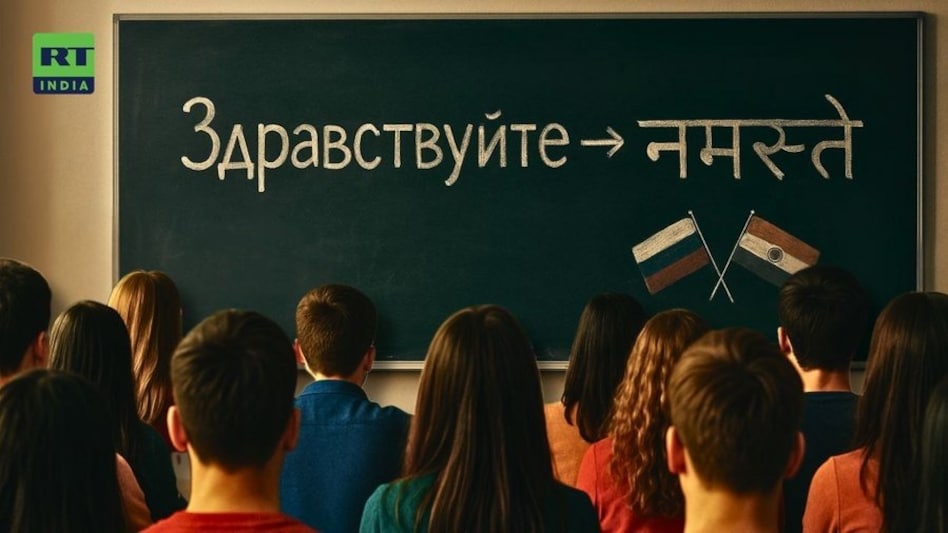
 Moscow wants more students learning Hindi
Russia is expanding Hindi language education at universities as student interest surges and Moscow moves to deepen strategic ties with New Delhi. Deputy Minister of Science and Higher Education Konstantin Mogilevsky called for the expansion, citing demographic and geopolitical shifts.
"We want more of our students to study Hindi," Mogilevsky said in an interview with Russian state agency TASS. He pointed out that India, now the world’s most populous country, has more Hindi speakers using the language in daily life than English. "We need to respond to this."

 Jefferies' Christopher Wood sees gold at $10,000 'sooner or later'; likes India's small, midcaps
 NSE IPO fully subscribed on Day 2; QIB, NII quotas booked 1.3 times each
 Warren Buffett steps down as Chairman after 60 years: What changes at Berkshire Hathaway now
 Net direct tax rises 13% to over ₹12.12 lakh crore till Sept 17
 Satya Nadella highlights India’s AI talent, sees massive developer community emerging by 2030
 BTTV Exclusive | Jefferies’ Chris Wood On AI, US Bonds, Oil & India’s Market Outlook
 LIVE What’s Hot: Stocks, Gold & Big Money Moves | Daily Markets Show | September 17 | Business Today
 From NPAs To Infrastructure: CEA On How India’s Economy Has Changed Under PM Modi
  “PM Modi Is Architect Of Economic Policy”: CEA V. Anantha Nageswaran On India’s Growth Journey
 iPhone Sale Sparks Overnight Rush As Buyers Queue Across Delhi, Mumbai, Bengaluru
 Banks are no more secular growth story, prefer NBFCs: Chris WoodJefferies' Christopher Wood sees gold at $10,000 'sooner or later'; likes India's small, midcaps
 NSE IPO: Applying for short-term gains from share sale? Analyst says this
 STT collections jump 52.9% to Rs 40,214 crore in FY27 so far; key details
 Kaynes Technology stock needs breakout confirmation; Moschip preferred semiconductor pick: Analyst
  India’s first dengue vaccine is coming: Dr Reddy’s ties up with Japan’s TakedaBanks are no more secular growth story, prefer NBFCs: Chris Wood
 Exam reforms: SC to inspect NTA office as Nandan Nilekani-led panel to submit report soon
 Biggest drop since 2009: Rice output faces 10 mn tonne slump amid rainfall deficit, El Niño risk
 West Asia war: Saudi Aramco halts crude shipments to Indian refiners indefinitely after pipeline strike












