


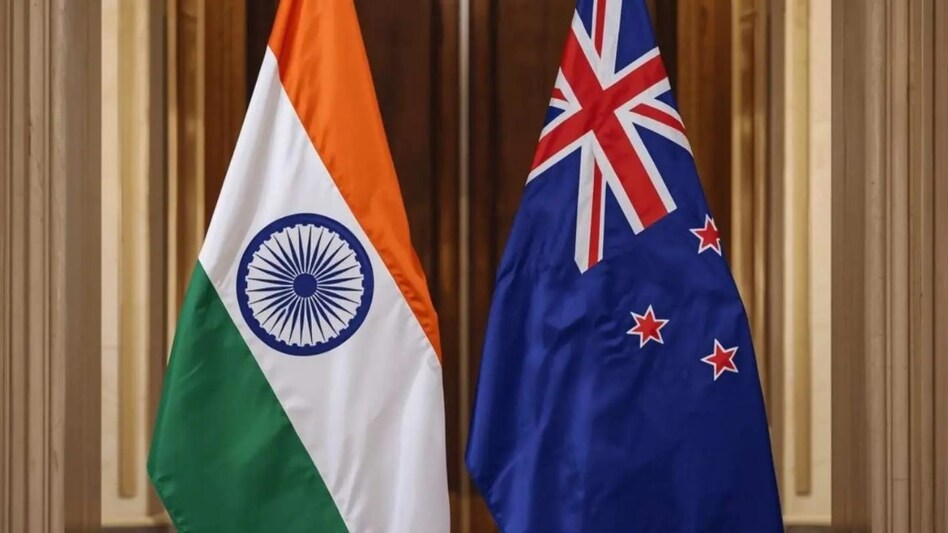
 The FTA is also seen to be beneficial for Indian companies to gain a foothold not only in New Zealand but also the Pacific Island countries as a whole.
India’s free trade pact with New Zealand aims to double bilateral trade to over $5 billion by 2030 and is likely to be operationalised by late 2026, following approval from the New Zealand Parliament.
“The agreement will take about a year to be operationalised as it has to be approved by the New Zealand Parliament, on the lines of what is being done for the India-UK FTA that has to be approved by the British Parliament,” explained an official. The FTA is likely to be signed in the next three months after completion of domestic processes.
Bilateral trade between India and New Zealand in goods and services was $2.4 billion in 2024, with India maintaining a trade surplus. Bilateral merchandise trade was $1.29 billion in FY 25 from just $855 million in FY16.
Under the FTA, New Zealand has given zero duty market access on 100% of India’s exports. India has offered tariff liberalisation in 70% lines covering 95% of New Zealand India bilateral trade. However, India has ensured that sensitive sectors including dairy has been kept out of the FTA to protect farmers and domestic industry.
The products that are kept in exclusion are mainly dairy (milk, cream, whey, yoghurt, cheese), animal products (other than sheep meat), vegetable products (onions, chana, peas, corn, almonds), sugar, artificial honey, animal, vegetable or microbial fats and oils, arms and ammunition, gems and jewellery, copper and articles (Cathodes, Cartridges, Rods, Bars, Coils), aluminium and articles thereof (Ingots, billets, wire bars) among others.
While the FTA has seven side letters including one on consultations related to Dairy Sector in review of FTA, Commerce and Industry Minister Piyush Goyal underlined that India will never open up its dairy sector to any country as part of a free trade pact.
Goyal explained that the side letter was to take care of New Zealand’s concerns that if India ever gave concessions a comparable economy like New Zealand’s in the dairy sector, then the Kiwi nation would also have an opportunity to discuss similar benefits.
As part of the FTA, New Zealand would increase FDI by $20 billion into India over 15 years backed by a rebalancing mechanism to suspend benefits if unfulfilled. Expectations are that much of it would flow into manufacturing and infrastructure, but this has been left open to New Zealand.
The FTA is also seen to be beneficial for Indian companies to gain a foothold not only in New Zealand but also the Pacific Island countries as a whole.

 Exam reforms: Tech titan Nandan Nilekani picked by PM Modi to fix national public examination system
  'Tax officers struggled for own land': Nirmala Sitharaman slams laidback attitude of govt depts
 CBDT issues new crypto reporting guidance: No new tax, but exchanges must track and report all transactions
 Did Cockroach Janta Party's 'Chalo Sansad' 2.0 threat trigger Dharmendra Pradhan's resignation? What we know so far
 'Will discharge my responsibilities with complete humility': Pralhad Joshi after being appointed Education Minister
 AI Data Centers, Aerospace & Gas Turbines: What's Powering Indo-MIM's Future Growth?
 Best Healthcare Stocks: Gaurang Shah's Outlook On Apollo Hospitals, Fortis & The Manipal Health IPO
 Is Indo-MIM's IPO Valuation Justified? Here's Why The Company Sees Strong Growth Ahead
 Treasury Bills Explained: Why T-Bills Are One Of The Safest Short-Term Investment Options
 FDs vs Markets: Where Should You Keep Your Short-Term Money?
 Gland Pharma stock: Price target of Rs 3,250 likely in medium term, says analyst
  Metal recycling stocks to buy: Gravita, Pondy Oxides, Jain Resource among top picks
 TRIL shares: Should you average the falling stock? Here's 'fixed and final' stop loss
 Adani Power: 45 GW target, Rs 2 lakh crore capex plan among conference call highlights
  ITC Hotels, Chalet, Ventive, IHCL, SAMHI: Hotel stocks to buy despite travel disruptions
 Beyond mutual funds: Why analysts see SBI Funds' alternative asset business as a long-term growth engine
 'Ashamed of it...': Manoj Muntashir calls Adipurush his biggest mistake, seeks country's forgiveness Exam reforms: Tech titan Nandan Nilekani picked by PM Modi to fix national public examination system 'Tax officers struggled for own land': Nirmala Sitharaman slams laidback attitude of govt depts
 Delhi targets traffic bottlenecks on Aruna Asaf Ali Marg with ₹1.97 crore elevated road study









