


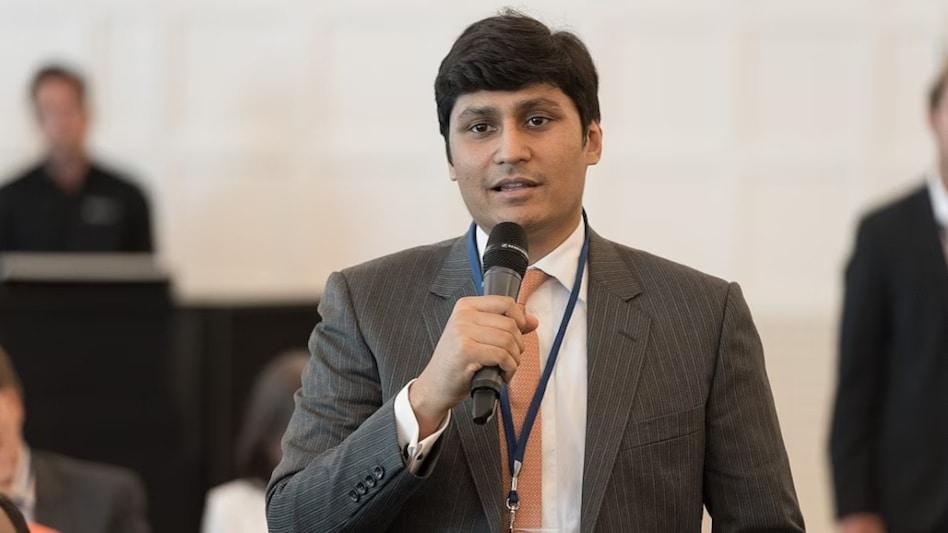
 Navam Capital Managing Director Rajeev Mantri
Navam Capital Managing Director Rajeev Mantri on Sunday raised questions over India's economic competitiveness, linking the growing preference for foreign-made products and overseas weddings to long-standing policy failures and structural hurdles that remain unresolved even decades after liberalisation.
"I am taking the liberty to highlight some reasons why Indians are going abroad for weddings, or why they are preferring to buy foreign-made products," Mantri wrote on X. "The brutal truth is most Indian products and services are simply not good enough compared to those made by foreign companies. They are inferior in quality and reliability, and simply do not provide similar value for money."

 Infosys, Tech Mahindra, TCS, Wipro: Why IT shares are down in a rising market today
  AI safety or market control? Anthropic, OpenAI, Google SpaceXAI accused of slowing AI progress
 Cyber hits to fake news: Vaishnaw warns of foul play against India’s semiconductor push
  Raymond, Welspun Living, Alok Industries shares rise up to 8%; here's why
  IIT-B prof to be summoned by police; Director signs 18-point charter amid students’ demands
 Gold Price Target 2026: Expert Sees MCX Gold At ₹1.8 Lakh By Year-End Amid Strong Demand
 Health Insurance: Why Pre-Existing Diseases And Waiting Periods Matter For Buyers
 Crude Oil Above $100: How High Energy Prices And Rupee Weakness Impact Gold Prices In India
 CEA On India’s Manufacturing Rise, Atmanirbhar Bharat And Modi’s Economic Policy
 Health Insurance Buying Guide: 7 Things First-Time Buyers Must Check Before Choosing A Policy
 NSE IPO: India's largest exchange gets 1.73x subscription on Day 3 so far; retail portion booked 94%
 SAMIL shares: Stock fall 2%; company buys 50.1% stake in aerospace & defence firm
 Airtel, NOCIL, Acutaas among top stocks to buy for short-term gains; check target prices & details
 Dilip Buildcon emerges L-1 bidder for Rs 1,265 crore transmission project; stock reactsRaymond, Welspun Living, Alok Industries shares rise up to 8%; here's why NSE IPO: India's largest exchange gets 1.73x subscription on Day 3 so far; retail portion booked 94%
 Apple layoffs: iPhone maker begins fresh job cuts, second round in two months
 BJP MP Nishikant Dubey issues defamation notice to former Finance Secretary Subhash GargSAMIL shares: Stock fall 2%; company buys 50.1% stake in aerospace & defence firmAirtel, NOCIL, Acutaas among top stocks to buy for short-term gains; check target prices & details












