









 Dredging operations have begun in the Chenab River for the first time.

 Dredging operations have begun in the Chenab River for the first time.
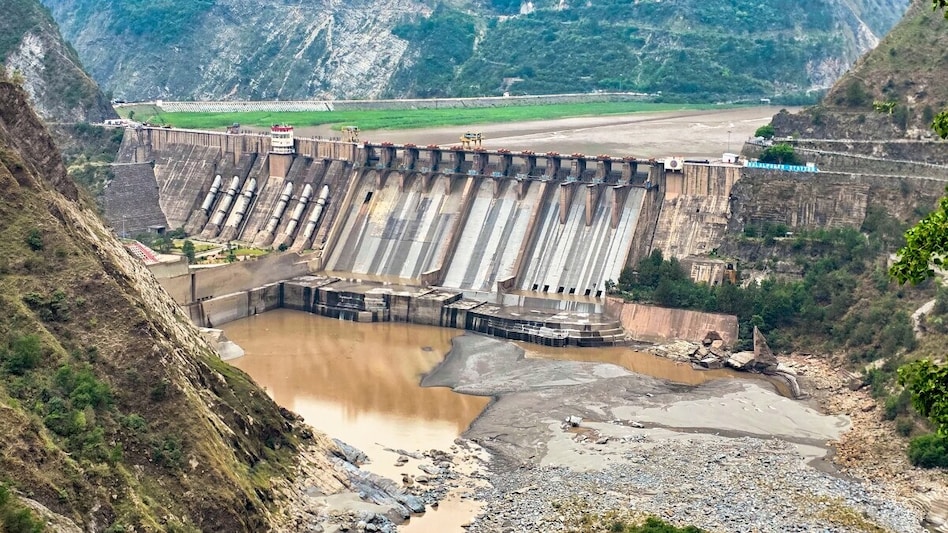
In a significant development following the suspension of the Indus Waters Treaty, dredging operations have begun in the Chenab River for the first time, marking a major shift in sediment management efforts at the Salal Hydroelectric Power Station.
Desilting work has gathered pace across Himalayan rivers covered under the treaty framework, with authorities initiating dredging in the Chenab and floating a tender to reopen 06 under-sluice gates at the Salal Dam, according to ANI. These gates were permanently sealed under the provisions of the 1960 Indus Waters Treaty and a subsequent 1978 agreement.
Impact on Salal Power Station
The impact of the treaty’s suspension is most visible at the Salal Power Station in Reasi, located on the Chenab River. Officials say sediment accumulation over decades had severely affected the plant’s operational efficiency.
Anish Gauraha, Executive Director of the Salal Power Station, said the project has now moved toward a comprehensive sediment management plan. “After the treaty suspension, we have been able to implement measures that were previously restricted. Our focus is on improving operational efficiency through effective silt management,” he said.
He added that while it is too early to estimate the exact increase in power generation, the desilting process will significantly reduce machinery wear and tear. “Dredging is a key component of our strategy. We aim to remove as much accumulated silt as possible to minimise damage. We are also working on plans to manage sediment through controlled flushing,” Gauraha noted.
Earlier, drawdown flushing and other desilting measures were not permitted under the treaty provisions. The Salal concrete dam was originally designed with 06 under-sluice gates specifically for sediment control. However, these gates were plugged, and the operation of silt excluder gates was disallowed, leading to heavy silt buildup.
Steps taken post treaty's suspension
Following the treaty’s suspension, authorities have initiated steps to restore these systems. “We have floated a tender to make the under-sluice gates operational again, and work is currently underway,” Gauraha said.
The reservoir’s storage capacity had reduced from its original 284 million cubic meters (MCM) to just 9.97 MCM, according to a May 2025 bathymetric survey. Since desilting operations began, the capacity has improved to 14 MCM as of January 2026.
Officials have also confirmed that a No Objection Certificate (NOC) has been issued for the desiltation of the Salal dam reservoir, and work is in progress. So far, around 1.7 lakh metric tonnes of sediment have been dredged, out of which 68,490 metric tonnes have been safely disposed off."
 From 'monstrously stupid' to mainstream fuel: Has ethanol proved legendary Charlie Munger wrong?
 Political stability beats high returns: The world's safest countries for investors in 2026
 Centre cracks down on Meta over child sexual abuse ads on Instagram; seeks reply in 7 days
 Mumbai rains: Red alert remains as 300 mm+ rain batters city; BMC urges residents to stay safe
 Super Typhoon Bavi threatens US Pacific islands: What makes it a Category-5 beast?
 TVS Capital Funds’ ₹4,000 Crore Investment Plan
 Mega IPOs To Shake Indian Stock Market? SBI AMC, NSE, Jio Platforms And Liquidity Impact Explained
 Power Demand Is Booming: Market Expert Reveals Why Energy Stocks Could Be The Next Winners
 Lower PF Contribution Ceiling Explained: Will Higher Take-Home Salary Increase Your Tax?
 FMCG Stocks Vs Consumption Plays: Where Should Investors Put Their Money Now? Devang Explained
 Zomato, Swiggy shares: How to play the quick commerce theme ahead of a potential Zepto IPO
 YES Bank, HDFC Bank, Axis Bank, RBL Bank, IDFC First: Banking stocks to buy ahead of Q1 show
 Sterlite Tech, Olectra Greentech, Kaynes Tech shares: Buy, hold or sell? Trading strategy
 HCLTech, Mphasis, Persistent, Tech Mahindra, Zensar Tech: Brokerage revises ratings, share price targets
 Midcap, smallcap stocks offer fresh value as earnings support revival, says Devang Mehta