












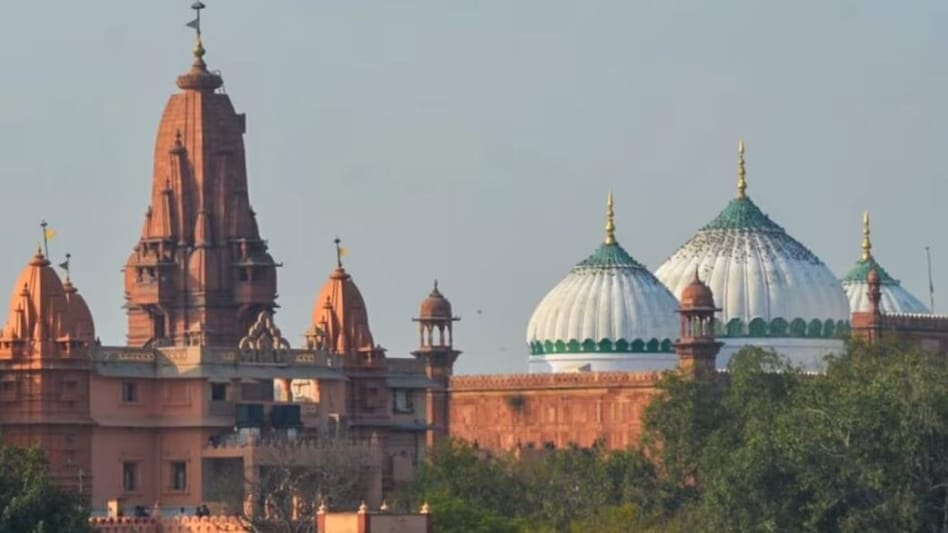
 Several cases have been filed seeking the “removal” of the Shahi Idgah mosque, which stands adjacent to the Krishna temple.
  Several cases have been filed seeking the “removal” of the Shahi Idgah mosque, which stands adjacent to the Krishna temple.
 Upholding the Hindu side’s case, the Allahabad High Court on August 1 ruled against the Muslim side’s plea on the maintainability of the suit in the Krishna Janmabhoomi-Shahi Idgah dispute in Mathura. Justice Mayank Kumar Jain rejected the application moved by the Muslim side and said all the 18 suits are maintainable.
The maintainability of suits filed by the deity and Hindu parties had been challenged by the management of Shahi Idgah Masjid on the ground that the suits are barred by the Places of Worship Act, the Limitation Act and the Specific Relief Act.
The High Court rejected the Muslim side’s plea under Section 7 Rule 11 of the Code of Civil Procedure (CPC), raising grounds of maintainability of the Hindu side’s suit.
The verdict refutes the primary argument from the Committee of Management Trust Shahi Masjid Idgah (Mathura) that the pending lawsuits are barred by the Places of Worship Act 1991, the Limitation Act 1963, and the Specific Relief Act 1963.
Taslima Aziz Ahmadi, representing the Muslim side, had submitted before the court that the provision of the Waqf board would apply, and it was the Waqf tribunal, which has the jurisdiction to hear the matter.
The Hindu side argued that no property under the name of Shah Idgah exists in the government records, alleging illegal occupation. They also contended that if the property is claimed to be Waqf, the Waqf Board must disclose the donor of the disputed property.
The hearing in the case will begin from August 12. On May 31, the high court had reserved its judgment on the maintainability of cases related to the dispute. Several cases have been filed seeking the “removal” of the Shahi Idgah mosque, which stands adjacent to the Krishna temple, with litigants claiming that the Aurangazeb-era mosque was built after the demolition of the temple.
In their suit, the Hindu side has claimed that the 17th-century Mughal-era mosque was built after demolishing a temple. The demand for a survey was admitted by a local court in December 2022, but the Muslim side had filed an objection in the HC.
 ‘WORLD’S MOST POWERFUL RESET’: Trump’s cryptic message raises stakes ahead of Iran talks
 'If they’re gonna try and play us...': JD Vance warns Iran ahead of Islamabad negotiations
  RBI proposes Rs 1 lakh crore asset mark for classifying upper layer NBFCs
 Why 15 lakh engineers aren’t enough for India’s AI economy
 RBI suggests cooling-off period for UPI, bank transfers — what it means for you
 Taigun Facelift Push: Volkswagen Targets Market Outperformance
 No Fuel Crisis: Govt Assures LPG, Petrol & Gas Supply Stability
 #Podcast | #Episode10 | Exclusive: William Bissell, MD, Fabindia On Journey, AI-Transfomation & More
 Market Rally Continues! Nifty Near 24,000, Bank Nifty’s Best Week Since 2021
 Tonight At 7 PM: Fabindia MD William Bissell On Brand’s Success Story & Future Plans
 ITC, HUL shares offer up to 31% upside: Why brokerage sees a 'Buy' opportunity
 'Buy' Suzlon Energy, Paytm & GE Vernova shares: PL's analyst; check price targets
 70% dividend stock: Rs 7/share - Check record date, returns | Do you own?
 Coforge, Persistent Systems, Happiest Minds: Should you buy these IT stocks ahead of Q4 earnings?
 RIIL Q4 results 2026 date and time: Check quarterly earnings schedule of Reliance Group firm