On August 11, Harris had a meet and greet with some high-level donors in the San Francisco Bay Area. She pulled aside one of the most long-standing and generous leaders in Silicon Valley.
"My head close to his ear, I said, 'I'm concerned about Musk. Are you guys on top of it?'" she writes in her memoir, which tracks the most consequential 107 days of campaigning for the Presidency. "I wanted reassurance that the tech people who supported democracy were putting resources into combating mis- and disinformation."
Harris admits that Musk had set off her spidey senses long before his MAGAfication and his endorsement of Trump. According to her, both SpaceX and Tesla sprang to life in California, and millions of the state taxpayers had helped the companies prosper. But, she adds, when Democrats tried to tie electric car subsidies to workplace standards-Tesla had been sued for labor violations, including racial discrimination and suppressing union organising efforts-Musk began a rightward turn.
The tension between the Democratic Party and Musk accelerated during Covid, when he refused to close the Tesla plant to protect the health of his workers.
Harris, who has served as California's attorney general, writes that when Musk moved his operations to Texas, he claimed it was because the state offered more freedom, "which was the height of hypocrisy, since Texas, with its draconian abortion ban and the privacy-shredding policies around it, violated the most basic of human liberties."
Turning to why she felt she lost the elections due to Musk, Harris offers some policy moves and data points. She charges that since he had acquired Twitter and sacked its content moderators and fact-checkers, "the platform had become a den of conspiracy theories and alt-right bile." It had, according to her, become Musk's 'personal megaphone for boosting Trump' and denigrating her.
Musk spent at least $288 million in support of Trump, maybe even more through indirect sources, she writes, citing campaign disclosures. "It is entirely possible that those millions were the deciding factor in the swing states where the money was mostly spent and where Trump's margin of victory was wafer-thin."
To back her arguments, she quotes Musk, who once tweeted: "Without me, Trump would have lost the election." "He clearly thought," Harris declares, "he had bought the presidency and should be able to dictate Trump's agenda-perhaps the most brazen admission of corruption in history."
There are seven swing states - Arizona, Georgia, Michigan, Nevada, North Carolina, Pennsylvania, and Wisconsin - and Trump bagged all.
The former Vice President believes that even if she had won 3, she would be in the White House. "In the Blue Wall states that could have made me president, Trump beat me by just 0.86 per cent in Wisconsin, 1.44 per cent in Michigan, and 1.73 per cent in Pennsylvania. Ours was the third-closest presidential election in a century."
Not just that, Harris charges that Musk misused his X platform to influence voters in swing states. Musk also hired paid door knockers-about four hundred in each swing state-far outpacing the Trump campaign's own listless efforts at mounting any kind of ground game, she writes.
"Musk's notorious $1 million 'random' sweepstakes drove traffic to X, where he could praise Trump and denigrate me with insults and fake images, such as the ridiculous AI-generated picture where I am depicted wearing a cap with a hammer and sickle."
Musk's sweepstakes - a promotional contest - offered daily $1 million prizes to registered voters in crucial swing states. While Musk called they were 'random', Harris, citing his own lawyer, said they were Trump supporters.
Harris says 'Musk lied about his sweepstakes,' saying names would be drawn at random and any registered voter in a swing state who signed a petition supporting the First and Second Amendments could be in the drawing. "But when courts questioned the legality of that, his lawyers admitted that the winners were not random. They were vetted 'spokespeople'."
After Biden dropped out, she says she raised more money more quickly than any candidate ever. But it wasn't from a single billionaire with huge government contracts "who essentially bought himself an unelected co-presidency".
The Democrat leader is unsparing in her criticism of Musk, but she admits that the Tesla boss is a "talented entrepreneur". She, however, also believes that there are genius engineers behind the cars and rockets, such as Tesla's former longtime chief technical officer, JB Straubel, who deserve just as much credit.
Then comes a moment when Harris suggests that it was Biden who had upset Musk. "Despite what I think of Musk," she writes, "I believe Joe Biden made a mistake in not inviting him to the White House in 2021 for an event promoting our electric vehicle policy." Harris shared this view with the President's team.
Behind the President on the lawn that day were electric Fords, Chevys, and Jeeps. However, the American-made Tesla, the world's most innovative and successful electric car, was not there.
Harris suggests that Biden, loyal to the UAW (United Auto Workers), was sending a message about Musk's anti-union stance. But as president of the United States, she writes, if you are convening the nation's manufacturers of electric vehicles and the biggest player in the field is not there, it simply doesn't make sense. "Musk never forgave it."



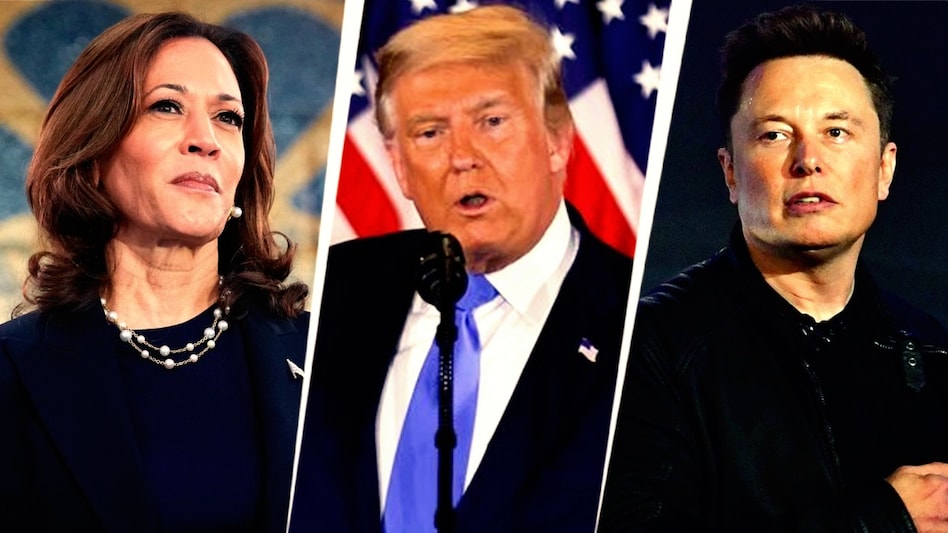 'Ours was the third-closest presidential election in a century,' says Harris in her memoir '107 Days'
 ICAI working out assurance standards for sustainability reporting by India Inc
 US diesel price hits record $6.49: How much prices have surged since Hormuz crisis
 French fuel crisis deepens as one in nine stations run out of stock, diesel prices at record high
  Tata Motors or Ashok Leyland? Analyst reveals his preferred auto stock for near-term gains
 'Enjoy the journey, do not turn confidence into arrogance': Chandrasekaran on life lessons
  Gold Price Target 2026: Expert Sees MCX Gold At ₹1.8 Lakh By Year-End Amid Strong Demand
 Health Insurance: Why Pre-Existing Diseases And Waiting Periods Matter For Buyers
 Crude Oil Above $100: How High Energy Prices And Rupee Weakness Impact Gold Prices In India
 CEA On India’s Manufacturing Rise, Atmanirbhar Bharat And Modi’s Economic Policy
 Health Insurance Buying Guide: 7 Things First-Time Buyers Must Check Before Choosing A Policy
 SpaceX weight in Nasdaq 100 to jump to 2.82% following quarterly index rebalance: Report
 Maharashtra Scooters, Dixon Tech, Bharat Dynamics, Jai Corp among stocks to turn ex-dividend on Monday
 Jindal Supreme, SS Retail, Hero Motors IPOs subscribed up to 181 times on final day; details here
 Sensex, Nifty post sixth weekly loss; TCS, Titan among top laggards, slip up to 4%
 Maharashtra FDA seizes Rs 1.13 crore gutkha after six-hour chase, four people arrested
 Saudi Arabia exits China-backed mBridge platform amid governance and compliance concerns
 Tragedy near Ganesh pandal in Mumbai: 8-year-old girl among 2 dead from electrocution
 ICAI working with TTD to overhaul accounting, gold valuation norms and REITs












