








 India wipes out Chinese-built air defence systems in Pakistan

 India wipes out Chinese-built air defence systems in Pakistan
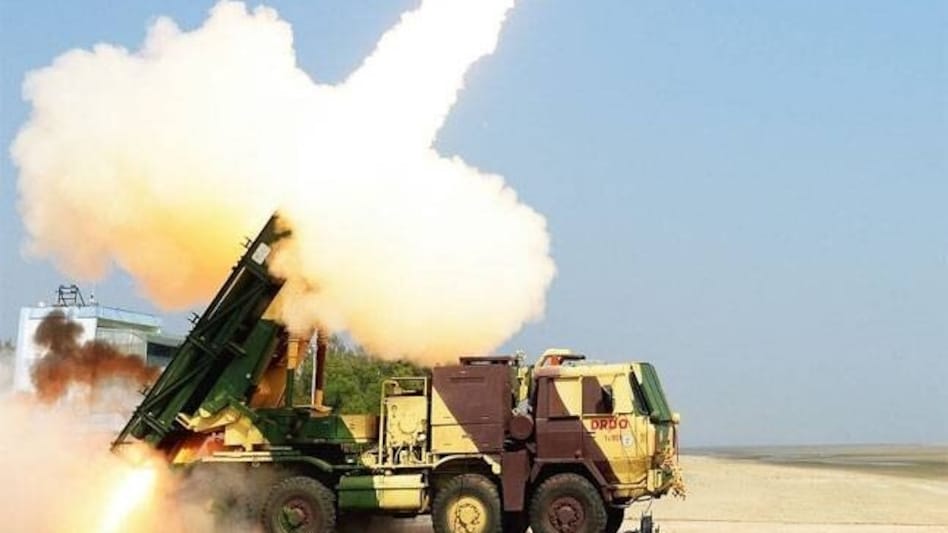
India's precision strikes on Chinese-made air defence systems deployed in Pakistan have triggered reactions far beyond the battlefield. As Indian forces neutralised Chinese-built HQ-9 and HQ-16 surface-to-air missile systems at key Pakistani military installations in Lahore, Chaklala, and Sialkot, social media and strategic circles lit up with commentary.
Kiran Kumar S, a user on X, said that imagine the panic in the defence departments of countries that have bought Chinese Air Defence systems and fighter jets, and Turkish attack drones. "India eliminated 500–1,000 Turkish drones without blinking an eye. India neutralized Chinese Air defence system in 50+ places!"
The comment came after a major strike by India on the HQ-9B system in Lahore, reportedly hit by an Indian Harop loitering munition, and another HQ-16 site in Chakrala. An intact Chinese PL-15 long-range air-to-air missile — fired by a Pakistani jet — was also recovered from Hoshiarpur, Punjab, after failing to detonate.
National Security Affairs Analyst Divya Kumar Soti weighed in: "Believe me. Presently, no one is more dumbstruck than China. As India is delivering blow after blow to Pakistan, the world is getting to know how useless Chinese weapons are. And China doesn’t know what to say."
Julian Ku, professor at Hofstra University, cited NYT data showing 81% of Pakistan's military inventory is Chinese-made, while India relies on a more diverse mix of defence suppliers like Russia, France, Israel, and the United States. "China's military will be watching to see how their fighter jets and other weapons hold up," he noted.
Investor and CFO Robert Sterling pointed to Washington's long-standing funding of Islamabad. "Over the last 20 years, the US has given $32B to Pakistan, including $15B of military aid. Yet Pakistan purchases 80% of its military equipment from China. Why are US taxpayers funding the development of Chinese weapons systems that may one day attack our troops and our allies?"
The air defence strikes were part of a broader Indian operation that included precision attacks on airbases at Rafiqui, Murid, Chaklala, Rahim Yar Khan, Sukkur, and Chunian. India also hit radar sites in Pasrur and the Sialkot aviation base.
The came after Pakistan used “drones, long-range weapons, loitering munitions, and fighter jets to attack India’s military sites” and attempted air intrusions at more than 26 locations, and airbases in Udhampur, Bhuj, Pathankot, and Bathinda.
Foreign Secretary Vikram Misri reiterated India's position: “It is Pakistani actions that have constituted provocation and escalation. In response, India has defended and reacted in a responsible and measured fashion.”
 Stock market selloff ahead? Marc Faber sees 20% downside; here's why
  Why is monsoon stuck? 5 reasons behind the 43% rainfall deficit this June
  From CRED to WhatsApp: Inside Kunal Shah’s net worth, startup fortune and investments
 Monsoon 2026: Dust storms, strong winds sweep Delhi; IMD issues red alert
 Black Tuesday for KOSPI: What led to the nearly 10% plunge in South Korea's stock market?
 LIVE Daily Calls: Ask Your STOCK MARKET TODAY QUERIES | Market Update LIVE | Share Market News Today
 Market Guru: Dinshaw Irani Reveals His Top Market Bets & Investment Strategy
 GST@9: Has India's Biggest Tax Reform Finally Come Of Age? | Deloitte Survey Reveals All
 LIVE What’s Hot: Stocks, Gold & Big Money Moves | Daily Market Show | Business Today TV
 Keir Starmer Resigns As UK PM After Dramatic Fall From Historic Election Victory
 'People are getting restless': Zerodha co-founder Nikhil Kamath says he is fully invested in Indian stock market
 Medanta, Max, Fortis Healthcare shares a play on high Noida, Greater Noida demandBlack Tuesday for KOSPI: What led to the nearly 10% plunge in South Korea's stock market?
 SBI Mutual Fund IPO: Unlisted shares rally after SEBI nod for stock market debut
 Ola Electric shares climb nearly 6% from day's low; here's why