


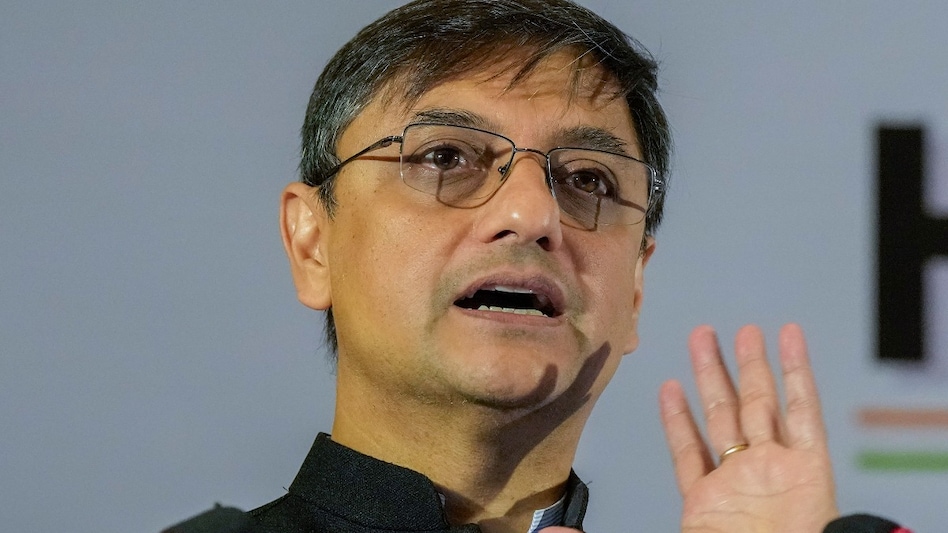
 Highlighting India’s vibrant startup ecosystem, Sanyal contrasted young entrepreneurs with established business families.
Economist and historian Sanjeev Sanyal has said that the issue of millionaires leaving India is not just linked to quality-of-life concerns but also reflects deeper structural problems within the country’s business elite.
Speaking on a podcast with Smita Prakash, Sanyal, a member of the Economic Advisory Council to the Prime Minister (EAC-PM), said, “Quality of life, to some extent yes, I can have some sympathy on air quality and issues like that. But let us also be very, very clear — some part of it is that we are not seeing enough churn in our business elite.”

 BT Big Story: How the FCNR(B) deluge has created two new problems for the RBI
  Who is Abhishek Manu Singhvi? The veteran lawyer at the centre of Tata Trusts' fight for control
 A look at Harish Salve's career as he advises Tata Sons Chairman
  RBI's forex swap scheme pulls in record $143.6 billion till Sep 18
  A lumpsum is not a paycheck: What Indians get wrong after retirement
 Burqa Ban In Italy? Meloni Pushes New Rules On Face Coverings
 Tata Trusts-Tata Sons Row: Harish Salve Explains RBI Rules, Singhvi Flags Shareholder Rights
 Top Legal Eagles Flock To Tata Sons & Tata Trusts As Boardroom Clash Heads To Court
 Over Next Three Years Company Expects To Invest ₹15,000 Cr For Deepwater Exploration
 Tata Sons Listing Row: Shapoor Mistry Backs IPO As Noel Tata Pushes ₹25,000-Crore Plan
 Manipal Health clears ₹5,310 crore debt using IPO proceeds, eyes expansion & technology push
 NSE IPO subscribed 5.7 times as QIBs lead demand; shares to list on BSE on September 24
 Brokerage sees 96% upside potential in this smallcap stock
 Dr. Reddy’s, Lupin shares among buzzing stocks as pharma sector back in focus
  3 Warren Buffett quotes for Indian stock market investors today
 'Upcoming superpower in Indo-Pacific': V4 countries back India’s UN Security Council bid
 Ultraviolette X47: The electric adventure bike with a surprising feature list
 350 kmph B35: India’s bullet train plan now meets Japan’s next-gen E10BT Big Story: How the FCNR(B) deluge has created two new problems for the RBI
  Ticket rush ahead of festive season: Railways adds special trains linking Delhi, Katra and Varanasi












