


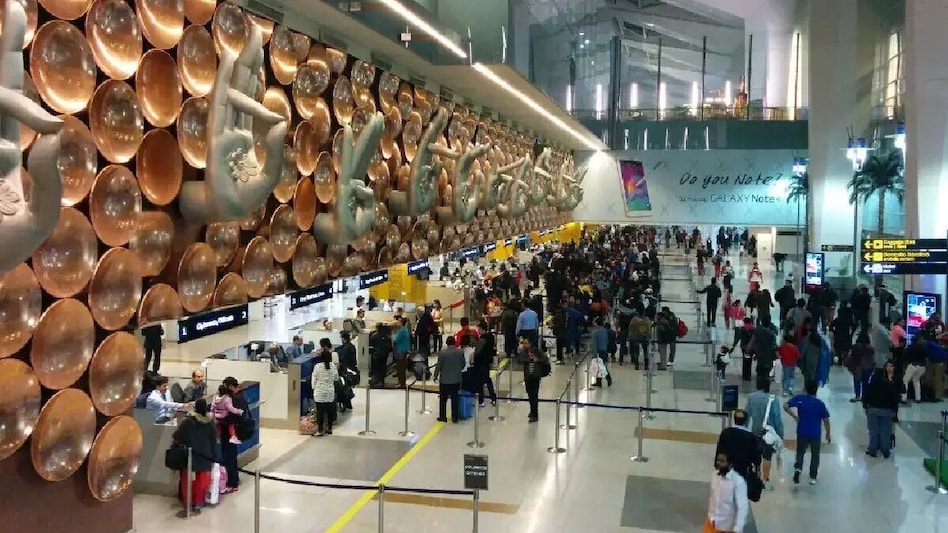
 Technical snag at Delhi ATC triggers chaos, hundreds of passengers stranded
Flight operations at Delhi’s Indira Gandhi International Airport (IGIA) descended into disarray on Friday morning after a technical glitch crippled the Air Traffic Control (ATC) system, delaying more than 100 flights and stranding hundreds of passengers. The snag, traced to a failure in the Automatic Message Switching System (AMSS), the communication network that powers the Auto Track System (ATS) for flight plan generation, disrupted normal air traffic coordination across northern India.
The disruption, which began late Thursday, forced controllers at India’s busiest airport to manually prepare flight plans, a process described as “slow and cumbersome,” leading to widespread delays and airspace congestion. “The issue lies with the AMSS that supplies information for the Auto Track System. Controllers are preparing flight plans manually, which is taking significant time,” a senior airport source said.

 How Tamil Nadu is continuing to lead in manufacturing with factories and factory workers
 Carney strikes back: Canada retaliates against US tariffs with duties on $20 billion of goods
 Get a lifetime membership at Delhi's iconic Roshanara Club; DDA opens 750 slots, check prices
 Did you know India’s cash demand is strong despite the digital payment boom?
 Xi Jinping likely to visit India after 7 years for BRICS summit, may bring 400-member delegation
 Trump Moves To Make H-1B Visa Fee Permanent And Higher: What It Means For Indians
 Market Rally Vs Geopolitical Risk: What Wins From Here? Aditya Agarwal
 Daily Calls: Ask Your STOCK MARKET TODAY QUERIES | Market Update | Share Market News Today
 Symbiotec Pharmalab IPO | Top Management On Growth Plans, Business Outlook & IPO Strategy
 Chennai Second Airport Halted: Parandur Project Faces Wetland Concerns & Political Storm
 Paytm shares up 33% in a month: Time to book profits or is there more upside left?
 Nykaa shares: Elara Capital hikes target price; sees 43% upside potential
 Crompton Greaves shares: Brokerage sees 67% upside potential; check target price
 Dixon Tech, Amber Enterprises: Will they benefit from MPMS? Kotak shares views
 Vodafone Idea, Paradeep Phosphates, Hindustan Copper shares: What expert says
 HDFC Bank, Federal Bank, Slice SFB and ESAF SFB revise FD rates; senior investors can earn up to 8.50%
 UPI accounts for nearly half of global real-time payments: How India became the world leader
 Health insurance waiting periods: Why switching policies mid-year may not solve the problem
 PPFAS GIFT cuts minimum investment in S&P 500, Nasdaq 100 funds from $5,000 to $500
 India’s gold derivatives market crosses ₹2.2 lakh crore in daily turnover; physical deliveries hit 175 tonnes












