What is Bharat Taxi?
Bharat Taxi is a digital mobility platform developed by Sahakar Taxi Cooperative Limited (STCL), a multi-state cooperative society backed by the Ministry of Cooperation. The app allows users to book autos, bike taxis and cabs — including economy, sedan, XL and priority categories — through a single interface. It is available on both Google Play Store and Apple App Store.
What sets Bharat Taxi apart is its operating model. Unlike conventional ride-hailing platforms that typically charge drivers commissions ranging from 20% to 30% per ride, Bharat Taxi follows a zero-commission structure. According to the Ministry of Cooperation, earnings are distributed directly among driver-members, who are also shareholders in the platform.
The cooperative approach is reflected in the platform’s slogan, “Sarathi Hi Malik” (the driver is the owner), positioning drivers not just as service providers but as stakeholders in the business.
Early traction and pilot performance
Government data suggests early traction during the pilot phase. Over 3 lakh drivers and more than 6.7 lakh users have been onboarded so far, with approximately 10,000 rides being completed daily across Delhi-NCR and Gujarat.
According to a PTI report, around Rs 10 crore has already been distributed directly to drivers. In addition to earnings, the platform offers social security benefits such as health insurance, accident cover and retirement savings — areas where gig workers have long flagged vulnerabilities.
The platform has also introduced initiatives like “Bike Didi”, under which over 150 women drivers have joined so far. The programme is aimed at improving safety for women riders while expanding livelihood opportunities for women drivers.
Safety, transparency and driver ownership
For riders, Bharat Taxi is positioning safety and transparency as key differentiators. The app includes a one-tap SOS button linked to local police control rooms, emergency contact alerts, an in-app siren and live ride tracking that can be shared with family and friends.
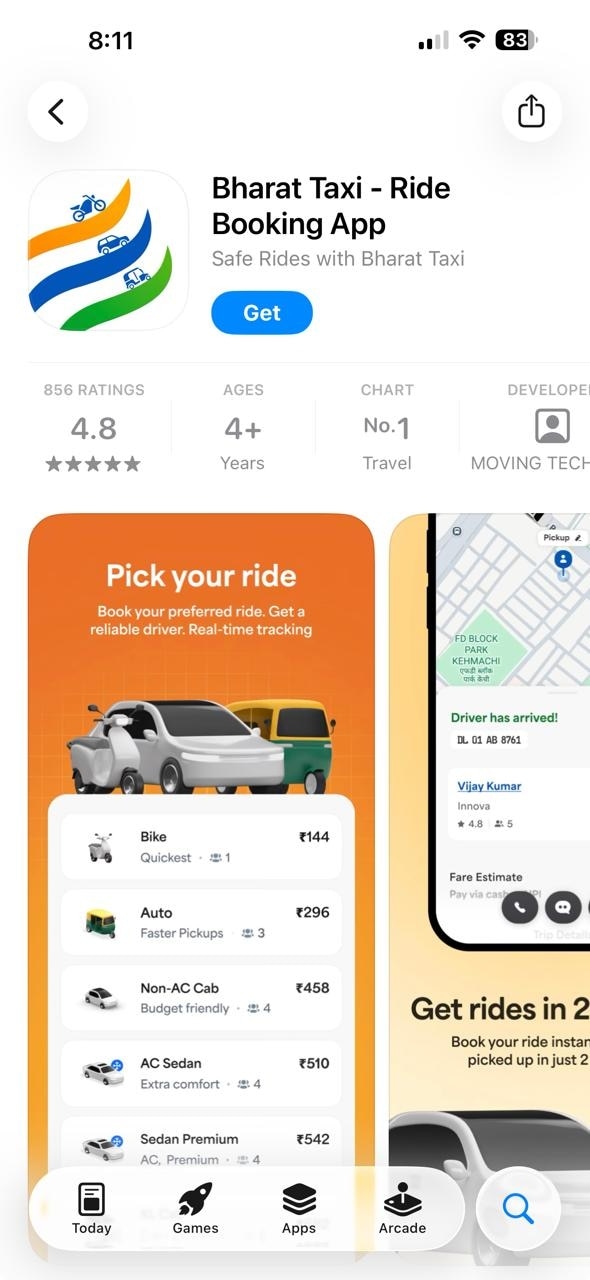
On App Store the app tops the chart with a 4.8 rating and ranks No.2 in Travel category, while in Google Play Store it has over 5 lakh downloads.
However, the platform’s core pitch goes beyond technology. In its launch note, the Ministry of Cooperation described Bharat Taxi as a “community-owned alternative to conventional aggregator-based mobility services,” designed to place drivers at the centre of the ecosystem.
Drivers are allowed to hold shares in the cooperative, and top-performing “Sarathis” were felicitated with certificates during the launch event.
A market at an inflection point
Bharat Taxi’s entry comes at a time when India’s urban mobility market is expanding rapidly, but also facing mounting structural tensions.
India’s taxi market is projected to grow from $21.07 billion in 2025 to $44.3 billion by 2032, at a compound annual growth rate of 11.2%, according to Persistence Market Research. Ride-hailing is expected to account for nearly 58.6% of the market in 2025, driven by demand for last-mile connectivity and app-based convenience.
Yet, this growth has been accompanied by growing dissatisfaction among drivers. A 2023 survey by the Indian Federation of App-based Transport Workers found that 74% of Uber and Ola drivers viewed incentive systems as unfair and confusing, while 65% reported a sharp decline in income compared to pre-2020 levels. High commissions, opaque algorithms and limited grievance redressal have led to repeated protests across cities.
A crowded and competitive landscape
Bharat Taxi enters a highly competitive market dominated by well-funded private players.
Rapido, which began as a bike-taxi platform, claims around 50% market share across categories and operates in nearly 450 cities, with plans to expand to 800 locations by March 2026. Meanwhile, Bengaluru-based Namma Yatri — a subscription-driven, driver-union-backed platform — has shown that alternatives to commission-heavy models can scale. According to Rest of World, Namma Yatri facilitates around 1.9 lakh rides daily and has enabled over 6.38 lakh drivers to earn more than $175 million since launch.
Public-sector mobility experiments are also gaining ground. The Delhi Metro Rail Corporation’s Momentum 2.0 app integrates auto and bike taxi services, while several state authorities have indicated interest in driver-owned or cooperative platforms.
Building institutional support
Bharat Taxi is operated by STCL in collaboration with the National Cooperative Development Corporation, with support from institutions such as Amul and NABARD. Representatives from these bodies form part of the platform’s interim board.
In January, the government formally sought cooperation from central and state ministries, public sector undertakings and autonomous bodies to promote Bharat Taxi within official premises and communication channels, without disrupting routine operations. As of this week, around 4 lakh drivers have joined the platform, and daily ride volumes remain above 10,000, according to a government release.
















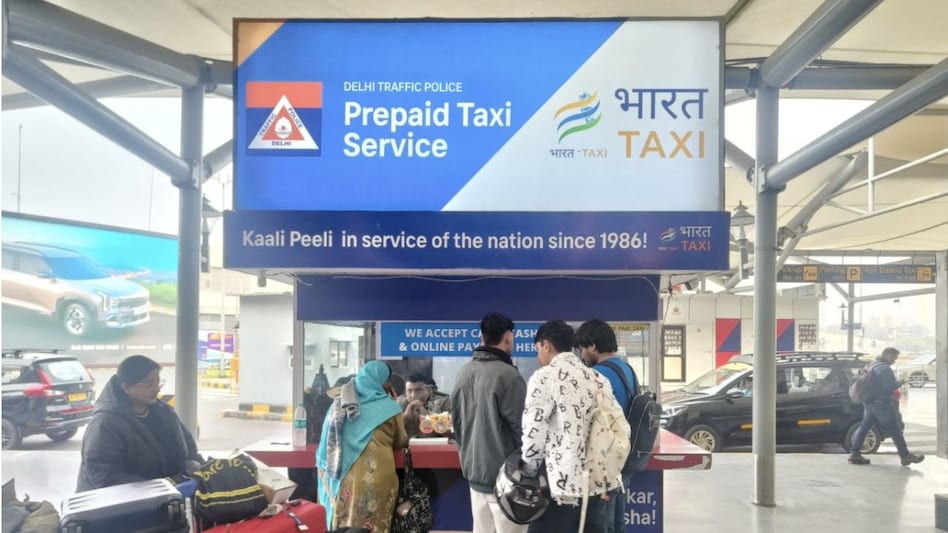 Over 3 lakh drivers and more than 6.7 lakh users have been onboarded so far, with approximately 10,000 rides being completed daily across Delhi-NCR and Gujarat.
 India could raise ₹2 lakh crore through IPOs; 55% of FY27 proceeds already fresh capital: SEBI Chairman
 'I'll be here for 2.5 years': Trump warns Iran against waiting for midterms for a deal
 No prescription, no pills: Govt cracks whip on misuse of painkillers, antibiotics
 SEBI settles proceedings linked to Hindenburg report against 5 Adani firms for ₹1.51 crore
 'No positive response on 5-day banking': Bank unions to go ahead with 3-day strike
 IT Stocks Under Pressure: What Next For Indian Markets? | Chakri Lokapriya
 Karnataka’s Welfare Schemes Under Pressure As Finance Department Flags New Challenges
 Family Disputes Can Hold Businesses Back: Nirmala Sitharaman’s Message To Family Firms
 TRAI New Rules: Voice-SMS Only Plans Mandatory | What It Means For 20 Crore Non-Data Users
 Oil & Gas Capex Boom: Anshul Saigal Names Energy Stock He Owns | Saigal Capital Advisors
 Corporate bonds hit ₹61 lakh crore: SEBI pushes for deeper and more liquid debt markets
 Peshwa Wheat to raise ₹53.52 crore through IPO; funds to go towards expansion
 Balmer Lawrie to demerge Travel & Vacations unit into wholly-owned subsidiary: Report
 Sansera Engineering shares rise 7%; Goldman Sachs raises target; sees further upside
 Tata Aeris: Tigor's replacement gets a feature twist ahead of September 25 launch
 Classic 350 gets a fresh look: New colour, nine variants and more to know
 BT Big Story: Why India Inc is warming up to non-English-speaking executives
  iPhone 17 price during Flipkart sale: Big Billion Days deal teased at around Rs 70,000
 Googlebook is here: Google takes on Mac and Windows with an ₹86,100 Android laptop


