


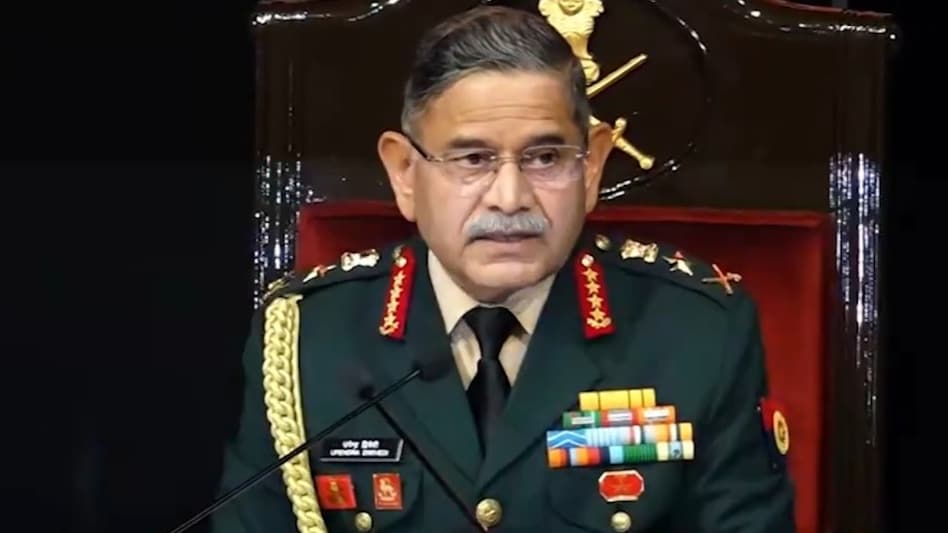
 He emphasised the expansion of India's conventional military scope in the region.
Army Chief General Upendra Dwivedi disclosed in an annual Army press conference India was ready to launch ground operations in response if Pakistan attempted any misadventure during Operation Sindoor. He emphasised the expansion of India's conventional military scope in the region.
Operation Sindoor, launched on 7 May 2025, targeted terror camps in Pakistan and Pakistan-Occupied Kashmir, leading to the elimination of over 100 terrorists. General Dwivedi noted that the operation set a benchmark for tri-service synergy under a clear political directive, maintaining operational freedom.

 Xi Jinping likely to visit India after 7 years for BRICS summit, may bring 400-member delegation
 Bitcoin price today: BTC crosses $80,000 for first time since May, rises 25% in week; what's driving it
 Stock market holiday: Will NSE, BSE remain closed for Raksha Bandhan?
 Did you know India’s cash demand is strong despite the digital payment boom?
 Onion prices soaring: Centre to sell onions at ₹35/kg, sends Kanda Express to boost supply
 Symbiotec Pharmalab IPO | Top Management On Growth Plans, Business Outlook & IPO Strategy
 Chennai Second Airport Halted: Parandur Project Faces Wetland Concerns & Political Storm
 Gurugram Floods: ₹1,400 Crore Spent On Drainage, So Why Is The City Still Sinking?
 Sugar Prices Hit ₹65/Kg: Consumer & Trader Pain Sparks Political Row Ahead Of Festive Season
 Gold Stocks, Jewellery Shares In Focus Ahead Of Festive Season | Expert Reveals Top Picks
 Nykaa shares: Elara Capital hikes target price; sees 43% upside potential
 Crompton Greaves shares: Brokerage sees 67% upside potential; check target price
 Dixon Tech, Amber Enterprises: Will they benefit from MPMS? Kotak shares views
 Vodafone Idea, Paradeep Phosphates, Hindustan Copper shares: What expert says
 Defence stock to buy for 20% upside, a play on defence electronics upcycleSymbiotec Pharmalab IPO | Top Management On Growth Plans, Business Outlook & IPO Strategy
 NBCC sells 111 Amrapali-linked flats in Noida for ₹416.53 croreChennai Second Airport Halted: Parandur Project Faces Wetland Concerns & Political StormGurugram Floods: ₹1,400 Crore Spent On Drainage, So Why Is The City Still Sinking?Sugar Prices Hit ₹65/Kg: Consumer & Trader Pain Sparks Political Row Ahead Of Festive Season












