












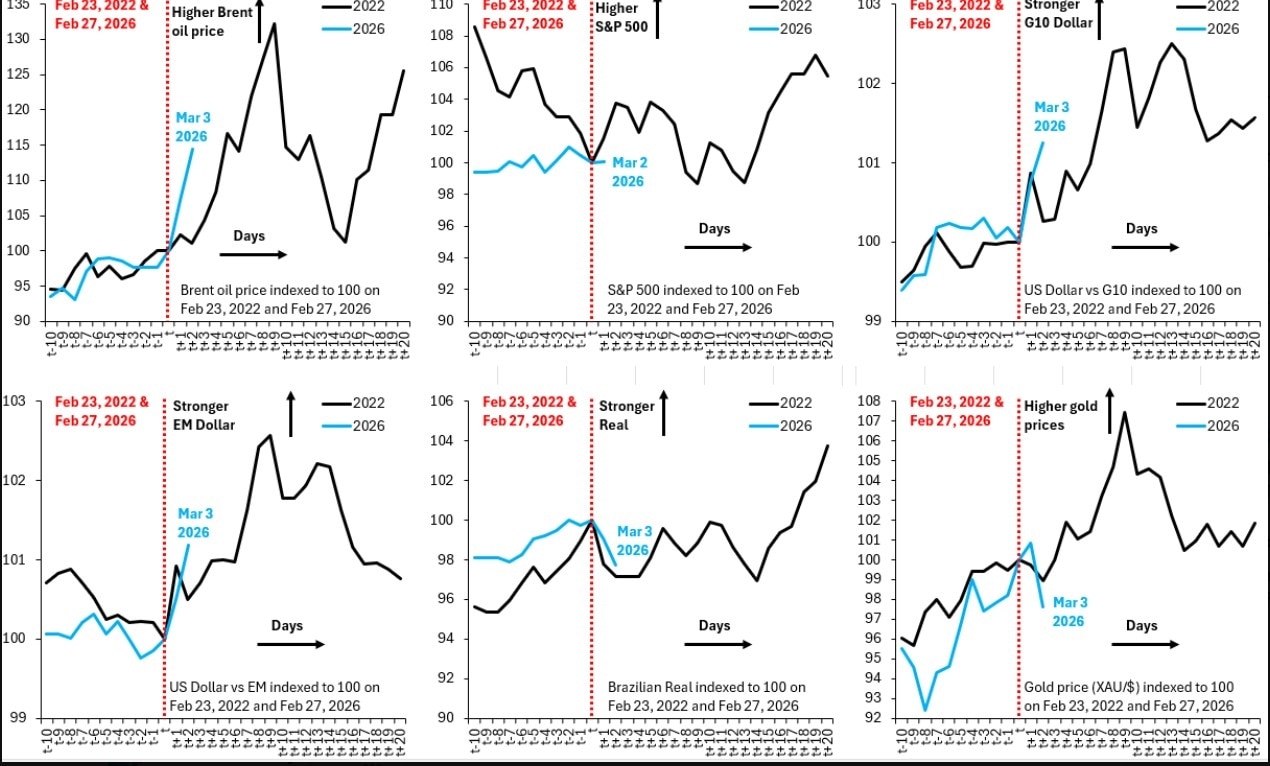



 Robin Brooks noted that Brent crude has climbed 14% since Friday, describing the move as a “stunning” surge.
Global financial markets are facing a significant shock as escalating tensions involving Iran send oil prices sharply higher and trigger broad-based risk aversion, according to Robin Brooks, Senior Fellow at the Brookings Institution.
Brooks noted that Brent crude has climbed 14% since Friday, describing the move as a “stunning” surge. At the same time, the US dollar has strengthened in what he termed a disorderly fashion as investors rush toward safe-haven assets. Even gold, typically a refuge during geopolitical crises, has weakened against the dollar, underscoring the scale of the currency move. He characterised the developments as a major shock to global markets.

 HDFC Bank fast-tracks CEO search: Who could succeed Jagdishan as more names crop up?
 ‘We do not need lower standards but wider lenses’: Gautam Adani calls for new credit framework
 'Thank you for being a constant source of inspiration': Tim Cook bids farewell to Apple as CEO
 ‘I have nothing left to give’: Lionel Messi bids emotional farewell to Argentina after 20 years
 BT Explainer: What are EREVs? Why JSW MG Motor may bring this tech to India next
 Indian Markets Outlook: Is Bear Phase Ending? Maneesh Dangi Sees Better Next 6-12 Months
 This ₹5 Lakh AI Gym Wants To Replace Your Gym
 Nepal Flood Horror: Sadhguru, Manisha Koirala Stand In Solidarity As Rescue Efforts Continue
 Nepal Flood Horror: Children Found Alive After Days Under Debris, Hope Emerges From Devastation
 India’s 6% Growth Trap: Why Manufacturing Still Struggles To Beat China
 Priority Jewels IPO subscribed 21.23 times on Day 2; check latest GMP, other key details
 Ola Electric shares jump 5%; still down 34% in a year; what's ahead?
 Sensex falls 307 points, Nifty settles below 24,100; what happened today
 Market veteran Ajay Bagga on top sectoral picks; impact of oil prices, monsoon on economy
  Nifty Bank jumps over 600 points in last five minutes; CAS in focus
 A family needed a home. Alabama students had 72,000 discarded carpet tiles and a very different idea
 Anthropic warns Claude users as malware steals login sessions and drains account usage
 Weak September rainfall after hottest August since 1901: IMD issues El Niño warning
 Inherited agricultural land sold? 7 tax rules you must know before splitting the money
 Senior citizen FD rates: Federal Bank offers 7.20%, HDFC Bank raises select tenure to 7.10%—should you switch?


