


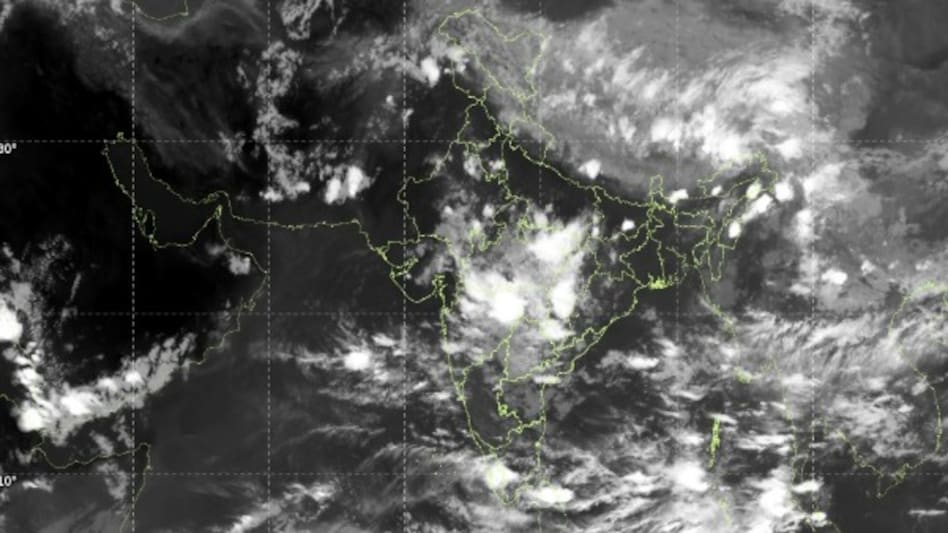
 The latest infrared data captured by the INSAT-3DR satellite exposes a striking anomaly: the deep, convective cloud bands that traditionally fuel the summer monsoon have almost entirely vanished over key agricultural states.
The southwest monsoon made its scheduled arrival over the Kerala coast on June 4, advancing with rapid, promising momentum across the southern peninsula. By late June, the entire country should have been under a thick, sweeping blanket of rain-bearing clouds. Instead, meteorologists and high-altitude imagery are tracking an unexpected atmospheric stall.
Vast stretches of central, western, and northwestern India are currently sitting under clear, dry skies. The latest infrared data captured by the INSAT-3DR satellite exposes a striking anomaly: the deep, convective cloud bands that traditionally fuel the summer monsoon have almost entirely vanished over key agricultural states. While dense cloud covers persist over the northeastern region and sections of the southern peninsula, the country’s interior is visibly bare.

 State finances are turning into a matter of concern. Here’s why
 GE HealthCare targets 2X+ exports from India by 2030
 Hisar to Sohna-Palwal: Haryana approves ₹9,700 crore for five major bypass projects
 ‘No amount of US pressure should justify recklessness’: Sam Altman backs 'slow' frontier AI pace
 NSE IPO: Nithin Kamath recalls how NSE supported Zerodha in its early years
 Amit Shah Hails India’s Rise From Fragile Five To Top Five, Politics Of Performance Since 2014
 MEA Details BRICS Summit Outcomes as India Pushes Practical and People-Centric Cooperation
 Modi@25: Amit Shah Highlights 25 Years Of Leadership, Governance And 2047 Vision
 “Development And Environment Are Complementary”: PM Modi On Sustainability At BRICS
 Modi@25: Amit Shah Announces Seva Sankalp Campaign From Sept 17 To Mark Modi’s 25 Years Of Service
 Solar Industries to acquire South African firm Omnia Holdings for Rs 12,951 crore
  Tata Sons: A look at net worth of the holding company as IPO buzz gains traction NSE IPO: Nithin Kamath recalls how NSE supported Zerodha in its early years
 Tata Sons listing: Tata Steel, TMPV, Tata Chemicals among stocks that could benefit; here's why
 KEC International wins new orders worth Rs 1,303 crore across T&D, cables businessesSolar Industries to acquire South African firm Omnia Holdings for Rs 12,951 crore
  Gen Z drives 79% of new formal job accounts in India in FY26: Quess reportTata Sons: A look at net worth of the holding company as IPO buzz gains traction
  Plan your branch visits: Banks to remain shut in major cities this week; check 4-day RBI holiday list
 Mithun Chakraborty’s lavish Mumbai bungalow is spread across 65,000 sq ft. Here’s what’s inside












