








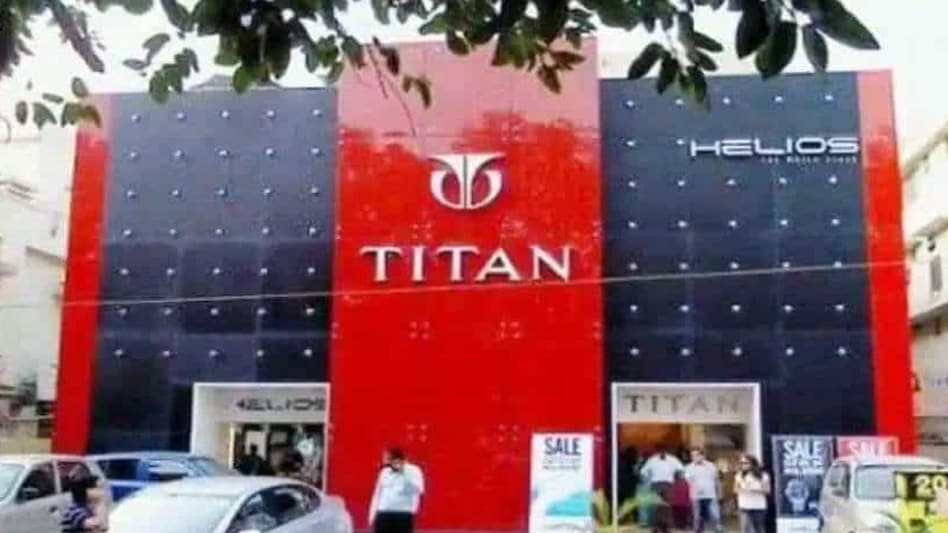
 Since Titan’s business was hit badly in April-June 2020, greater financial control measures were put in place.
 Since Titan’s business was hit badly in April-June 2020, greater financial control measures were put in place.
Record high inflation across categories has left most consumers high and dry, impacting the offtake for a number of consumer goods companies in the last one year. But Titan is surely not one of them. As the steep rise in the cost of materials has brought the consumer goods CEOs back to the drawing board, burning the midnight oil, CK Venkataraman, managing director of the country’s largest branded jewellery player Titan Company, is unfazed by the volatility. Rather, when we met him at his lake-view corner office on a windy Bengaluru afternoon, his elevated energy levels and calm composure transcended across the headquarters.
Two years ago, when the Covid-induced lockdowns had plummeted Titan’s sales and profits in 2020, the mood was different. As the company reported its lowest ever profit, Venkataraman was worried and so was his colleagues. Tension echoed across the ‘glass wall house’ style architectural building at Veerasandra in Bengaluru, as murmurs of faltering sales and profits filled conference rooms and cafeterias.
So what has changed?
The 61-year-old Titan veteran, decked up with a broad smile, said inflation may have hit the common households hard, impacting their monthly budgets, Titan’s premium clientele has played a key role in insulating the company’s business from the menace of inflation and price hikes.
Also read: 80,000% return in 20 years! Atul Suri explains how mentor Rakesh Jhunjunwala spotted Titan stock
“Titan is an upper-middle to upper, rich customer base company. We are playing at the top of the pyramid. Nearly 40 per cent of the inflation that we are facing now is in food and then there is fuel. The impact of inflation on these products and their share in total expenditure for consumers that a company has determined the impact. The share of these basic need items in our customers’ expenditure may have gone up from 10 per cent to 12 per cent and thus, it would have little impact on their buying capacity - unlike a two-wheeler owner for whom this share is much higher,” he told Business Today in an exclusive interaction.
The inflation may have hit hard the common man, but its impact on the consumers at the top socio-economic strata is minimal. As they continue to enjoy a significant margin of disposable income and are secured with hefty savings. Unlike middle and lower-class households, they haven’t cut down on their purchases to meet the surging cost of living.
Moreover, Titan’s significant exposure to the jewellery segment has also helped it recover faster. As nearly 80 per cent of its sales come from jewellery - the war and the economic uncertainty post_COVID have, in fact, boosted its fortunes, Venkataraman says.
“During uncertain times jewellery business tends to benefit as people consider it to be a safe asset class. Therefore, I am much less worried about the war and inflation”, he said, adding “we are a very big jewellery company and a war usually impacts the jewellery business positively. The ongoing war and the inflationary scenario would play up differently for different economic segment of consumers.”
According to him, in the jewellery business, any price increases in precious metals are directly passed on to consumers. And, as his customers “are well-off, that didn’t impact (their) purchases much”.
Additionally, the learnings from the first COVID wave came handy. Since Titan’s business was hit badly in April-June 2020 - sales plunging 62 per cent to Rs 1,979 crore - greater financial control measures were put in place. During the quarter, Titan posted Rs 297 crore net loss - highest in its history - down from Rs 364 crore y-o-y. That set the alarm bell off.
While earlier, only the top executives of the company used to be accountable for its financial performance, now a large number of its employees are directly accountable for its performance. This has also helped it gain greater control not only over its sales but also helped in its forward planning.
“Till 2019, the ownership of profitability, cash-flow, or the balance sheet was only at the CXO level. Now, at the CXO level, the performance was being reviewed on a monthly basis, while in lower levels it was probably being reviewed every week. Therefore it became part of the culture of these 100 people, who now own the responsibility. As a result, even the monthly performance of the company is now more predictable,” he explained.
 'Think about it': Deepak Shenoy warns indices mask stress as majority of Nifty 500 stocks lag
 NSE IPO: NSE board approves long-delayed listing plans; IPO to have equity shares of face value Re 1
 IDBI Bank stake sale: Financial bids received; evaluation underway, says FinMin
 Bitcoin avoids $60,000 breakdown, still down over 50% from record high
  Silver erases 2026 gains as prices crash 45% from peak - what’s behind the wild swing?
 RBI Says Trade Deals With EU, US & Others Strengthen India’s External Sector Outlook
 Jeffrey Sachs Praises Modi On India-US Trade Deal: “Trump Blinked, India Must Not Depend On U.S.”
 Agra’s ₹127 Cr Housing Project In Ruins: Flats For Poor Rot Before Occupation
 RBI Credit Policy LIVE Analysis | Aditya Pagaria Explains Rate Pause Impact
 TeamLease Q3 Results: Profit Jumps 47% As Margins Improve Despite Headcount Loss
 'Think about it': Deepak Shenoy warns indices mask stress as majority of Nifty 500 stocks lagBitcoin avoids $60,000 breakdown, still down over 50% from record high NSE IPO: NSE board approves long-delayed listing plans; IPO to have equity shares of face value Re 1
 Max Healthcare discontinues patented cancer drugs, writes to CGHS to review pricing
 NSE Q3 net profit falls to Rs 2,408 crore; PAT up 15%, total income rises 6% QoQ