

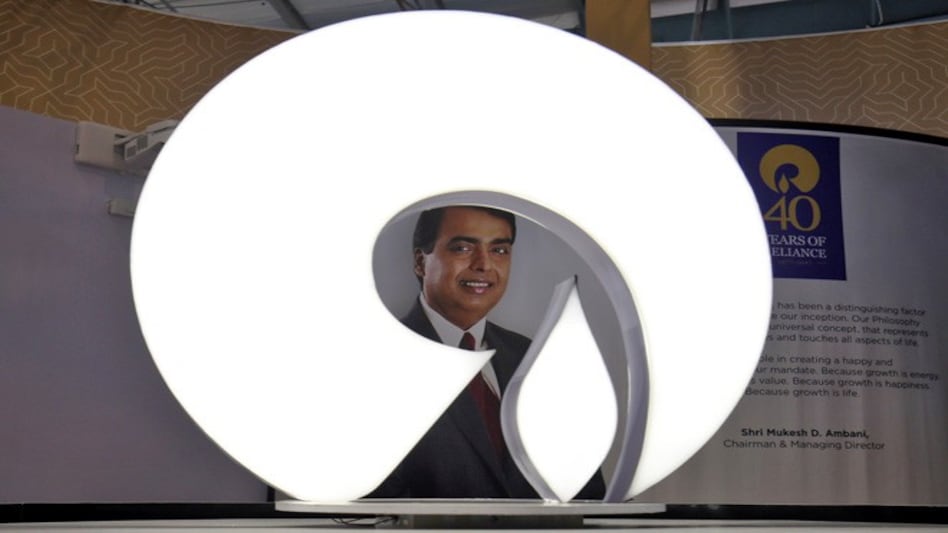
 Relaince Jio board has approved a scheme of arrangement to transfer identified liabilities of up to Rs 1.08 lakh crore to RIL
The board of Reliance Industries has approved the formation of a wholly-owned subsidiary for its digital businesses. The Mukesh Ambani-led conglomerate will invest Rs 1.08 lakh crore in the entity through optionally convertible preference shares (OCPS). The Reliance subsidiary will also acquire its equity investment of Rs 65,000 crore in Reliance Jio, raising the company's investment in digital platforms to Rs 1.73 crore.
"The Board of Directors of RJIL approved: a scheme of arrangement between RJIL and certain classes of its creditors including debenture holders for transfer of identified liabilities of up to Rs 1.08 lakh crore to RIL; and rights issue of OCPS aggregating up to Rs 1.08 lakh crore for the purpose of payment of consideration for transfer of identified liabilities," RIL said in a statement on Friday.
 NSE becomes India's 10th most-valued firm, shares debut at Rs 1,800
 Insurance commissions may fall: What IRDAI’s new distribution rules mean for policyholders
 NSE adds Rs 22,000 crore to m-cap as stock rises 5% over issue price after listing
 'There is no clarity': UFBU questions RBI move to open bank branches on Sunday, September 27
 All about Venu Srinivasan, the 73-yr-old TVS scion at the centre of Tata boardroom showdown
 Delhi Shalimar Bagh Mosque Demolition Triggers Political Row Over Midnight Road-Widening Drive
  Student Housing Faces A Major Shift: Why Organised Campus Accommodation Could Grow
  Ground Report: Sleeper Buses Face Safety Questions After Greater Noida Fire Tragedy
  14 Objections In 10 Months: Two ECs Flag Form 6, Voter Roll Changes Before ECI
  Greater Noida Bus Fire: FIR Alleges Driver Smoked, Ignored Warning Before 9 Deaths
 NSE stock listing a multi-year opportunity in capital markets: Emkay Global
 PB Fintech shares crash 28%: Why Policybazaar parent fell like deck of cards; 1.42 lakh retail investors hit; targets
 Hero Motors, SS Retail, Jindal Supreme shares extend post-listing gains; SS Retail turns multibagger
 PB Fintech shares crack 28% after Irdai consultation paper; is there more pain ahead?
 Exide Industries shares rise after subsidiary commissions Phase-I of lithium-ion cell facility
 AI is already making developers 50% more productive, says Zoho’s Sridhar Vembu NSE stock listing a multi-year opportunity in capital markets: Emkay Global
 Here’s why the PLFS may capture the gig and platform workforce
 Maruti Suzuki commissions 300 kW green hydrogen plant at Manesar
 Insurance penetration at 3.7%: Where India’s biggest protection gap lies












