









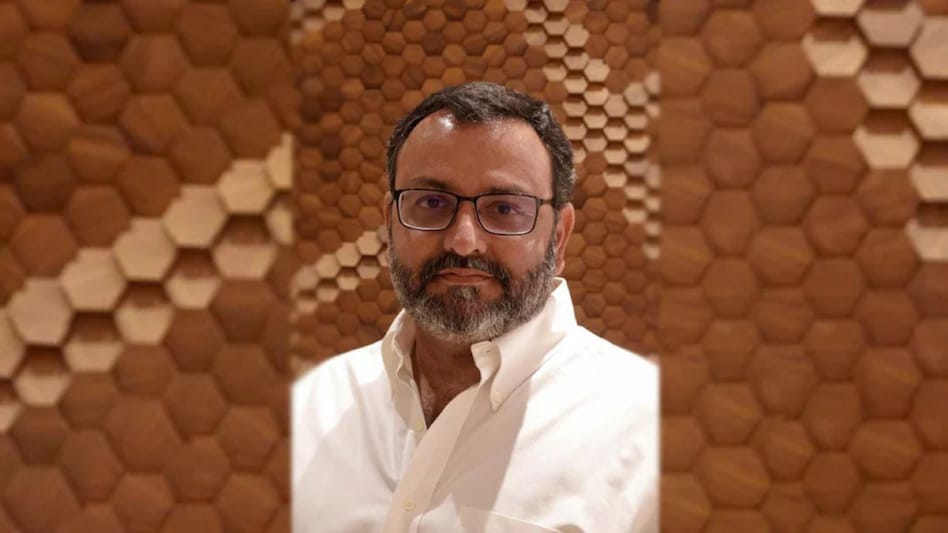
 Cyrus was an inspirational leader and a real gentleman whom I have grown to admire, whose sense of values, commitment to purpose, compassionate ways and clarity of thought stood out in his every word and action.Cyrus was an inspirational leader and a real gentleman whom I have grown to admire, whose sense of values, commitment to purpose, compassionate ways and clarity of thought stood out in his every word and action.
It has been my good fortune and privilege to serve the Tata group and have the amazing opportunity of working very closely with the then Group Chairman, Cyrus Mistry, over a span of four years. Cyrus was an inspirational leader and a real gentleman whom I have grown to admire, whose sense of values, commitment to purpose, compassionate ways and clarity of thought stood out in his every word and action. I must confess, though, that he was easy to admire but impossible to emulate.
On my first day at work in 2013, when I joined the Tata group as the Group CHRO and member of the Group Executive Council (GEC), I asked the Chairman about his expectations from Group HR. He said that all of us are but temporary trustees of this remarkable institution and that our role is to serve, not to rule. Cyrus emphasised that people are everything and that our philosophy must be to ensure wellbeing of every employee, across the group, at every level. We must be a home for the best and the brightest, and focus on their development and growth, to continue the Tata legacy. His thoughts shaped our endeavours in Group HR, at every step.
On the people front, a key initiative was conceptualising and implementing a Quality-of-Life framework based on employee wellbeing and fulfilment at work. In addition, a refreshed leadership competency model for developing future-ready leaders was implemented. We also significantly invested in enhancing diversity and drove affirmative action, which earned recognition and a national award from the Prime Minister. Effective succession planning was foremost on Cyrus’s mind. He added over 60 CEO/CXOs across group companies, with Group HR supporting him. The first preference was home-grown talent, and a search exercise outside where necessary. This infusion of such best-in-class talent was like an Archimedean lever that significantly enhanced the future readiness potential of the group.
Corporate governance was accorded great importance and became a key agenda. Cyrus would often emphasise that “good governance is the conscience of an enterprise”. Enhancing board effectiveness, including architecting a governance manual, which set standards above the legal requirements in line with Tata ethos, was initiated. In addition, Cyrus focussed on ensuring both diversity and a well-balanced representation of all key functions in board compositions. In the four years he was at the helm, as part of an elaborate succession planning exercise, about 40 directors with diverse functional expertise were added to the Tata boards, a quarter of which were women.
He met the senior leadership regularly and listened to them diligently and encouraged dissenting views. I recall that some CEOs of a particular sector came to meet him and expressed that they were facing business challenges owing to some competitors’ questionable practices. His guidance to them was simple: adhere to a “zero tolerance policy” towards ethical transgressions, irrespective of market challenges. His gentle rejoinder was that credibility must be earned, not just inherited. He underscored the need to safeguard the Tata ethos, its abiding values and ensure integrity in our actions. Cyrus shared that it was necessary to do things right, but even more essential to do the right things.
One of the interesting aspects I observed was Cyrus’s speed of response to any message you sent him, be it on WhatsApp or e-mail. I would get a reply in seconds and when it doesn’t come as quickly, you can be assured that he is on a flight or that he hasn’t seen your message. I experienced this not only during my four years of working with him but even the six years thereafter, during which I stayed in constant touch with him. This made you feel that he is always there and reachable when you need him.
Over dinner at Pune Lakehouse a couple of years after he assumed the role of Chairman, I asked him what he felt about the time gone by. It was destiny, he said, that handed him the responsibility of leading such a venerable institution, and that he saw every day as an obligation to fulfil. He had two regrets, though, and lamented that availability of time was the biggest constraint. On one hand, he felt that the quality time he could spend with his loving family, which he was devoted to, and his dear friends has been considerably reduced. His other regret was that the time he had to steer the group was grossly insufficient, given that there was so much to do.
It was his nature to say little and mean much. In a foreword that he gracefully penned for my book, he underscored the need for minimalism and brevity: “I have been accused of keeping speeches rather short. In my mind, the power to make an impact lies in the context and content, rather than length, which may be a poor substitute”.
Cyrus had a great sense of humour and was a voracious reader. Primarily interested in non-fiction, he would say in a lighter vein that there is enough fiction in the world around us. Almost every other weekend, he would finish a new business book and would want to see how it applied to our work on hand. He loved automobiles and when he assumed operational charge of Tata Motors Limited (TML) for two years in the absence of a CEO, he spent considerable time in the design shop and engineering, developing new models for the future. His work commitment as well as his joie de vivre was infectious. He touched many lives in his own unique way. So many owed so much to him and all he expected in turn was their commitment to a purpose, larger than themselves.
Cyrus adored his father. When I shared my condolences on his father’s demise, he wrote back sharing the influence his father had in shaping his thought process: “While at university in London, I never missed coming back to Mumbai every opportunity I got. Most of those days were spent in office sitting beside my father, learning and absorbing the many aspects of our business, but more so experiencing first-hand the way he dealt with people and the values he lived by. Gentle, humble yet strong, empathetic yet fair. He taught that our word means more than any document. I was lucky. These lessons in life are hard to come by… While the world will rightly remember him for the gentleman he was and the Legacy he built… we will equally remember for the strength he exuded and the battles he fought, always silently, always maintaining his dignity.”
As I reflect on my association with Cyrus over the past decade, all that he expressed about his father is equally applicable to Cyrus, too, and befittingly so.
Cyrus was an amazing boss, a dear friend, and a constant guide. It is a deep personal loss for me to see him go, leaving us behind. Gone too soon. Will miss you, boss.
Views are personal. N.S. Rajan was the Group Chief Human Resources Officer at Tata Sons and erstwhile member of the Group Executive Council set up by former Group Chairman Cyrus Mistry. He was conferred the “Distinguished Alumnus Award” by XLRI and serves on its Board of Governors, and is currently authoring a book on happiness at work.
 Inside Zepto’s $1bn IPO: Revenue surge, mounting losses, CAC pressures, ED cloud
 Infosys shares extend losing streak to fifth session; brokerage sees upside - Check share price target
 ‘The biggest worry is…’: CEA Nageswaran on US-Iran war’s impact on India
 BT Explainer: Why Rupee surrendered its RBI-led previous session gains - What's behind the fall against Dollar
 Salary hikes are here: Why electrical engineers and Chennai employees are having a moment
  From PM-KISAN To Lakhpati Didi: How Modi's Schemes Changed Rural India
 How Prashant Shah Filters 750 Stocks To Find Just 20 Winners
 Market Expert Reveals The Strongest Sectors For Medium-Term Wealth Creation
 WWDC 2026: Apple Bets Big On AI With Major Siri Overhaul And New Features
 Weight-Loss Drug Sales Slow In May, Mounjaro Still Leads The Pack
 NLC India shares drop 5%; non-retail OFS portion subscribed 11%Infosys shares extend losing streak to fifth session; brokerage sees upside - Check share price target
 After Bajaj Finance, Rajiv Bajaj to step down from Bajaj Finserv Board
 OpenAI files for IPO, says AI should not concentrate power as it enters ‘third phase’ of growth
 Stocks to buy: BHEL, L&T, Siemens, RITES, Cummins, Titagarh among top capital goods picks