












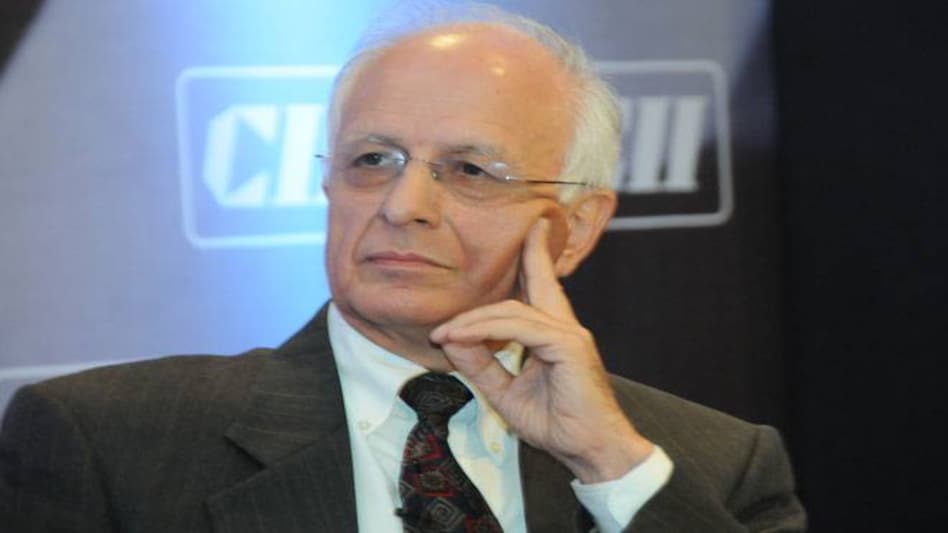
 Arun Maira, Former Member of the Planning CommissionArun Maira, Former Member of the Planning Commission
"Don't tell me what will be the GDP of the country, tell me how many jobs will be created," said Arun Maira, Former Member of the Planning Commission, in his presentation on the Future of Jobs.
It is the issue of jobs that pervaded the one-day conference Million Jobs Mission Conclave in New Delhi on Thursday. The event was organised by Social Venture Partners (SVP), a network of philanthropists focussed on creating livelihoods and improving incomes.
To create more employment in the country, Maira suggested that we have to ease constraints on formation and growth of small enterprises. Also, we have to build and strengthen clusters and platforms to enable them. "We found that India has the weakest clusters when they should be the backbone of our economy, like in countries like Taiwan."
Maira said, the problem with India is there are either urban experts or rural experts. "There is a need to connect the two into one larger system and develop channels using the idea of better enterprises to make the system an urban-rural system, producing more livelihood and jobs for us in India."
Another glaring problem in the country is unequal distribution of wealth. "We have enclaves of prosperity but we also have inequality and social unrest. It can be worse if we don't get lifelong learning systems in place and start changing our orientation and execution to have small enterprises as the backbone of economy, " he said.
Another common misconception he said is "big is good, small is bad. We all overemphasise on the importance of scale where organisations are run by a set of stakeholders." Instead of scale, he said, importance should be given to creating networks, where enterprises function as a large entity with a strong set of networks in the community rather than by a few people at the top.
For that, we need larger participation from employers as they are the ones generating larger number of jobs and know the skills they require which in turn can improve the skilling programmes and generate more employment.
He suggests that to solve the problem of jobs, one has to change the learning systems. There should be life long, just in time learning systems whenever and wherever the learner needs them. This is important, for humans are the only appreciating assets in companies that have the potential to improve their capabilities. Money and machines can't do it by themselves, humans can.
The conference also saw the presence of 15 social organisations from across India that are creating jobs and improving incomes . To form synergies and partnerships with these enterprises, around 100 impact investors, academia, consulting firms, foundations were present. The aim is to enable these firm generate 1,00,000 sustainable livelihoods each in the next five years.
Some of the social enterprises that were present were Ahmadabad-based Self Employed Women's Association (SEWA) that works with 20 lakh women artisans in Gujarat to help them gain full employment and become self-reliant. Their initiatives have helped women to raise their monthly income to Rs 6,000 per month and also stopped the migration of their families to different villages in search for work.
Rope International's co-founder Sreejith Nedumpully shared how with the right market reach a basic bag made from banana fiber is now sold in IKEA in New York. "We got orders from them for four million pieces which created livelihood for 500 artisans that worked on the project" he said. The firm works with 60 million artisans in India to make craft-inspired contemporary products.
 'There will be no exemptions': Trump threatens 50% tariffs on country supplying military weapons to Iran
 RBI found no material concern at HDFC Bank, says Governor Malhotra
 BT EXPLAINER: Kalpakkam fast breeder reactor goes critical: What it means
 GST Council meeting may take place after state polls
 Indian stocks boom as guns fall silent in West Asian ceasefire; oil plunges, Hormuz opens
 “No LPG Shortage In India”: Govt Cracks Down On Black Marketing, Seizes 56,000 Cylinders In Big
 ₹26,000 Cr Kamala Hydro Project Approved | Big Boost For Northeast Power
 India Hits 1 Billion Tonnes Coal Output Again, Says No Power Shortage Ahead
 RBI Policy Decoded After War De-Escalation | What It Means For Your Money
 Where Is The Smart Money Moving In Debt? | Fixed Income Strategy
 Sensex, Nifty outlook for tomorrow: Stock market strategy; resistance, support levels
 DCB Bank shares jump 7%; expert says management has 'HDFC Bank-like pedigree'
 Rs 90,000 crore deployed in markets by mutual funds in March, says Shweta Rajani
 Suzlon, Tata Power, Adani Power, Adani Green, NPTC, Inox Wind: Q4 preview, target prices
 HDFC, ICICI, SBI, Kotak Bank among 23 BFSI stocks to ‘Buy’ - Target prices