

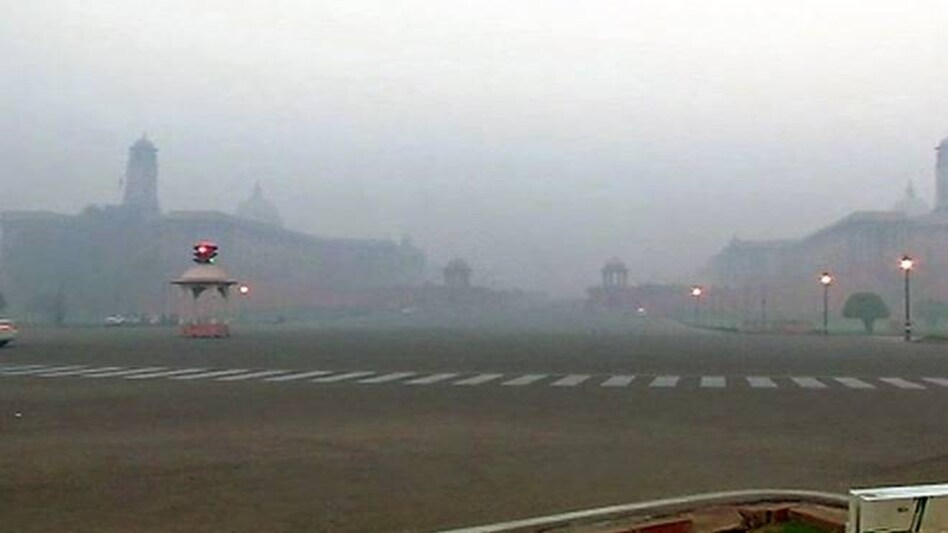
 PC: ANI
As the Diwali evening progressed, celebrations seemed pretty low-key this year. There were only faint sounds of crackers bursting and fireworks. Air pollution levels also seemed to be under control. For quite some time it appeared as if the Supreme Court's ban on sale of crackers was showing its impact. However, what appeared to be a quieter Diwali only a few hours ago soon changed with the incessant bursting of crackers. Rapid deterioration of the air quality started from roughly around 7 pm and reports mention that the online indicators of the pollution monitoring stations showed Delhi suffering 'very poor' air quality on Diwali night.
A 'very poor' air quality index (AQI) essentially means that people may suffer from respiratory illnesses on a prolonged exposure to such air. If the air quality deteriorates further, even healthy people with no respiratory conditions are going to be affected.
 NDA explores holding joint polls in 22 states, UTs in 2029: Report
 ABH Healthcare IPO: Check key dates, price band, issue size, latest GMP, listing details & more
 Cargo vessel with 20 Chinese crew sinks near Odisha; Coast Guard deploys 3 ships for rescue ops
 'Asked too much, offered too little': Carney on why Canada suspended US trade talks
 Trump doubles down on Hormuz claim, shares map calling strait 'NEW US Territory'
 Motor Insurance Add-Ons You Actually Need Explained: Zero Depreciation, RSA & Return-To-Invoice
 No Claim Bonus Explained: When Should You Claim Or Pay For Repairs Yourself?
 Motor Insurance Premium: What Factors Determine How Much You Pay?
 How Is Retirement Income Taxed For Senior Citizens? Key Rules Explained
 Rental Income Tax: 3 Key Deductions Every Senior Citizen and Property Owner Should Know
 Trump made 1,000-plus trades in June: Here's what he bought and soldABH Healthcare IPO: Check key dates, price band, issue size, latest GMP, listing details & more
 India stocks lag global markets in 2026: BofA data shows 9.1% decline in USD terms
 'FOMO, fixed return': SEBI proposes revamped ad code for bond portals from misleading investors
 Crompton Greaves says no plan to sell stake, expects revenue to double by FY31Trump made 1,000-plus trades in June: Here's what he bought and sold
 From Buddhist monk at 16 to Meta engineer : How 30-year-old Lilly Chen built a $25 million startup to challenge AccentureMotor Insurance Add-Ons You Actually Need Explained: Zero Depreciation, RSA & Return-To-Invoice
 ‘F&O trading is bad for almost 99% of retail traders’: Nikhil Kamath draws ITC parallel, says brokers need to diversify
 'My friends ended up seeing psychiatrists': Rajnish Kumar on ixigo's near-death moments and a deal he walked away from












