








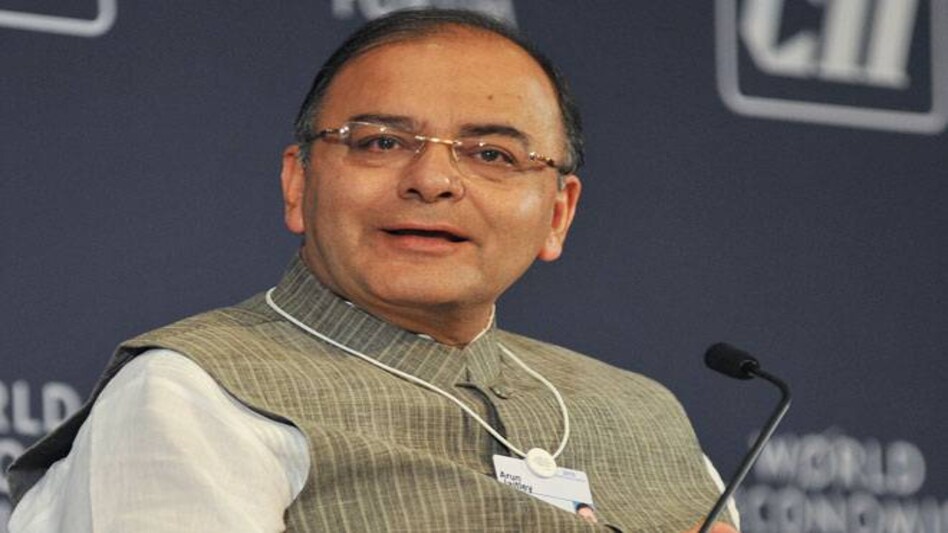
Finance Ministry stated that gifts worth more than Rs 50,000 from employers to their subordinates will attract taxes under Goods and Services Tax (GST). This is to check the prevalent practice of companies giving expensive gifts to their staff to boost business or to pay their staff in ways different from regular remuneration in order to evade taxes.
The services extended by employees to their employers in course of or in relation to employment will be exempt from the scope of the new tax regime, said a tweet by the Arun Jaitley-led Finance Ministry.
A tweet on the Ministry's Twitter handle said, "Services by an employee to the employer in the course of or in relation to his employment is outside the scope of GST."
Services by an employee to the employer in the course of or in relation to his employment is outside the scope of GST.
- Ministry of Finance (@FinMinIndia) July 10, 2017
"However, gifts of value more than Rs 50,000/- made without consideration are subject to GST, when made in course or furtherance of business," said another one in a series of tweets.
However, gifts of value more than Rs 50,000/- made without consideration are subject to GST, when made in course or furtherance of business.
- Ministry of Finance (@FinMinIndia) July 10, 2017
The decision is likely to curb the practice of employees being paid in mean different than what has been agreed upon as remuneration to avoid paying taxes by both employers and employees.
Finance Ministry clarified that perks, like housing and such, provided to employees in accordance to the agreement they entered when taking the job will not be covered under GST.
"Supply by an employer to an employee in terms of contractual agreement entered into between employer and employee, will not be subjected to GST," the Ministry said in a statement.
Prime Minister Narendra Modi rolled out the Goods and Services Tax n July 1 in a bid to unite the nation as one market under a uniform indirect tax regime and neutralise the cascading effect of taxes. Earlier, the Finance Ministry had forbidden taxmen to visit shopkeepers without prior authorisation, after receiving reports of 'some unscrupulous elements posing as GST officers trying to fleece the shopkeepers and customers in the name of GST.'
 Inside the India-US interim trade agreement: Reciprocal tariffs on India to come down to 18%, 0% duty on generic pharma
 BDL, Mazagon Dock, MRF, Hindustan Copper, RVNL, others to turn ex-dividend next week
 Q3 results: HAL, Titan, M&M, HUL, ONGC, Lenskart to post earnings next week; check dates
 India, US to boost trade in GPUs, advanced tech under interim pact framework
 India-US interim trade pact: From diamonds to silk — Full list of products under 18% tariffs
 RBI Says Trade Deals With EU, US & Others Strengthen India’s External Sector Outlook
 Jeffrey Sachs Praises Modi On India-US Trade Deal: “Trump Blinked, India Must Not Depend On U.S.”
 Agra’s ₹127 Cr Housing Project In Ruins: Flats For Poor Rot Before Occupation
 RBI Credit Policy LIVE Analysis | Aditya Pagaria Explains Rate Pause Impact
 TeamLease Q3 Results: Profit Jumps 47% As Margins Improve Despite Headcount Loss
 BDL, Mazagon Dock, MRF, Hindustan Copper, RVNL, others to turn ex-dividend next weekQ3 results: HAL, Titan, M&M, HUL, ONGC, Lenskart to post earnings next week; check dates
 'Think about it': Deepak Shenoy warns indices mask stress as majority of Nifty 500 stocks lag
 Bitcoin avoids $60,000 breakdown, still down over 50% from record high
  NSE IPO: NSE board approves long-delayed listing plans; IPO to have equity shares of face value Re 1