

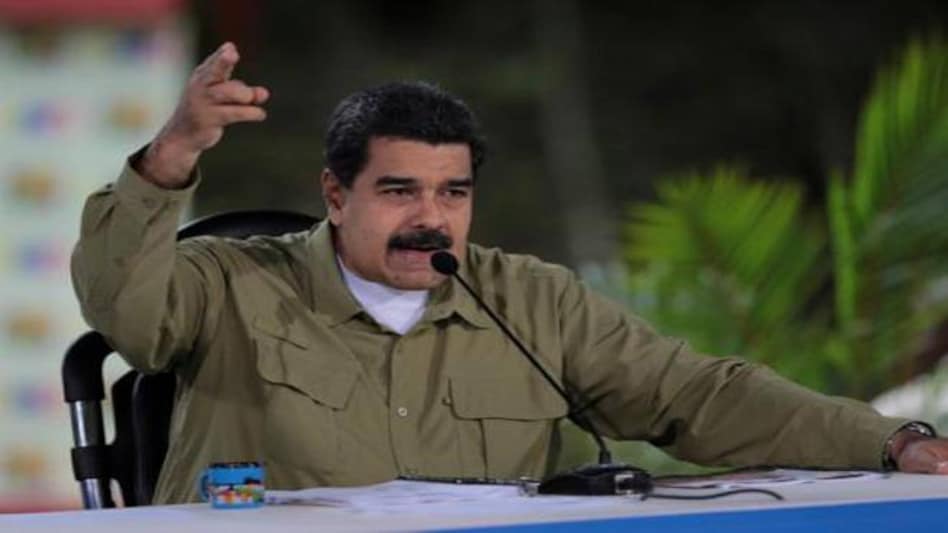
 Photo credit: Reuters
Venezuela, a South American country with the largest oil reserves in the world, has offered India a deal - 30 per cent discount on crude oil only if India decides to buy it through digital currency. The 30 per cent discount on crude oil, which recently touched a whole new high of $75 a barrel, seems attractive, but India's disinterest in promoting as well as trading in cryptocurrency could pose a hurdle.
According to reports, Venezuela's blockchain-based digital Petro is the world's first state-backed virtual currency that recently tied up with a Delhi-based digital currency exchange Coinsecure. The bitcoin trading company will now sell oil-backed cryptocurrency Petro in India. Launched last year by the Venezuelan government, Petro is set to be formally recognised after the presidential elections in the country on May 20. Petro was put on pre-sale on February 20, following which the digital currency has raised over $3.8 billion so far.
 NSE share price target: Macquarie sees 10% upside on 'The Dominator', rates it 'Outperform'
 BT Big Story: Is 66% = zero? The Tata Sons question on everyone’s minds
  Tata Sons plans to hold its AGM within a month amid boardroom tussle: Report
 From Gulf to US: How the Iran war is redrawing India’s LPG import map
 In talks with Marco Rubio, Jaishankar raises India's concerns as Trump’s Russia sanctions put energy security at risk
 India Growth Outlook Gets Major Boost: S&P, Fitch, ADB Raise FY27 Forecasts; OECD Upgrades 2026 View
 A-One Steels IPO Explained: Key Details, Growth Strategy & Future Outlook | Management Live
 Market Commentary: Nifty Outlook, Stocks & Market Strategy | Deven Choksey
 Ignore Large Caps? Why Investors Are Chasing High P/E Mid Cap Stocks Now
 30 IPOs In A Month: Deven Choksey On IPO Flipping And Secondary Market Liquidity
 Sedemac block deal: 48.79 lakh shares changed hands at Rs 3,010 on NSE; here are likely sellers
 Bajaj Finance shares in focus ahead of board meet to raise funds NSE share price target: Macquarie sees 10% upside on 'The Dominator', rates it 'Outperform'
 NSE share price: Expect Rs 50-80 listing premium, says Apurva Sheth; here's his strategy
 NSE IPO listing today: GMP signals 4-5% gains; exchange may enter India’s top 10 by market capSedemac block deal: 48.79 lakh shares changed hands at Rs 3,010 on NSE; here are likely sellersBajaj Finance shares in focus ahead of board meet to raise funds
  LPG, CNG, PNG prices today (September 24): Check latest rates in Delhi, Mumbai, Kolkata, other cities
 Entrepreneur calls Indian passport ‘useless’, says paying up to ₹1 crore in taxes brings ‘zero advantage’
 Claude finds novel enzyme in DNA: Could AI be entering the gene-editing discovery race?












