

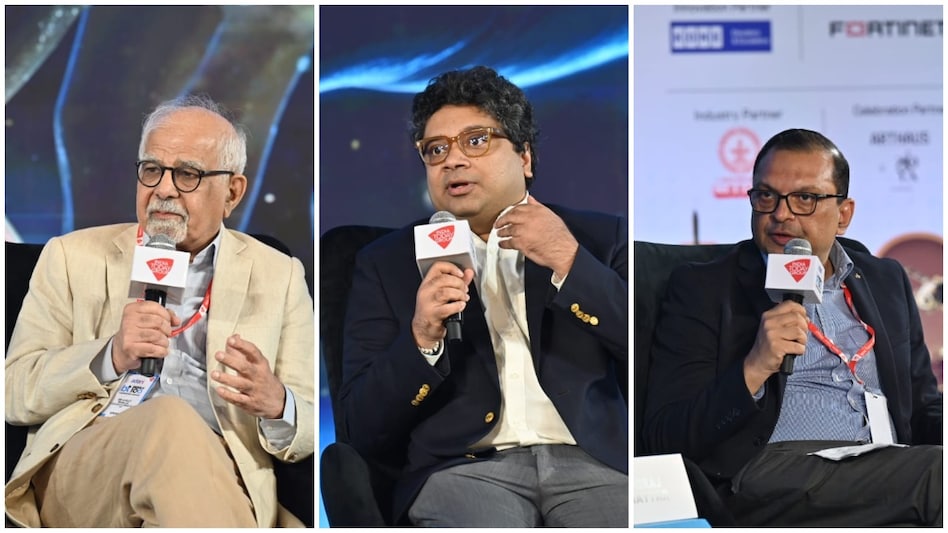
 (From left) Economist and former IMF executive director Surjit Bhalla, Chief Economist at Vedanta Dheeraj Nayyar, and former Chief Economist at HDFC Bank Abheek Barua
 As India navigates its next wave of economic expansion, growing pressure on the middle class and widening inequality remain critical concerns. At Business Today’s India @100 event held on August 8, a panel of experts explored the structural challenges fuelling this inequality and the reforms necessary for inclusive growth.
During a session titled "A Less Unequal India: Growth That Includes Everyone," Dheeraj Nayyar, Chief Economist at Vedanta, underscored the pivotal role of economic growth in reducing inequality. “The only real path to greater equality is through sustained growth,” he stated.
 Capital formation and exports boost Q1FY27 GDP growth to 7.8%
 India braves global headwinds: Q1GDP surges 7.8% as investment and services fire on all cylinders
  Kotak Bank recommends two internal candidates for CEO post: Report
 'Doomsayers were doomed, India bloomed': PM Modi as GDP growth jumps to 7.8% in Q1 FY27
 HDFC Bank races to hire search firm for new CEO: Report
 India GDP Growth At 7.8%: Is India’s Growth Story Getting Stronger? | Top Economists Decode
 Midcap Fund Strategy: Where WhiteOak Capital Sees The Biggest Opportunities
 Adani Stocks Fall Sharply: What’s Behind The Sell-Off?
 EMS Stocks: Can India’s Electronics Boom Drive More Gains?
 HDFC Bank CEO Exit: What Investors Should Know About Succession, Governance & Stock Outlook
 Priority Jewels IPO subscribed 21.23 times on Day 2; check latest GMP, other key details
 Ola Electric shares jump 5%; still down 34% in a year; what's ahead?
 Sensex falls 307 points, Nifty settles below 24,100; what happened today
 Market veteran Ajay Bagga on top sectoral picks; impact of oil prices, monsoon on economy
  Nifty Bank jumps over 600 points in last five minutes; CAS in focus
 GRT Jewellers to acquire 74.12% stake in Tribhovandas Bhimji Zaveri for Rs 1,033.71 crore
 India GDP Growth At 7.8%: Services, Consumption & Investment Drive Q1 GrowthCapital formation and exports boost Q1FY27 GDP growth to 7.8%
 PM Modi Interacts With Students At Mahatma Gandhi Centre In Tashkent, Uzbekistan
 HDFC Group Loses ₹4.4 Lakh Crore In 1 Year: What Went Wrong?












