









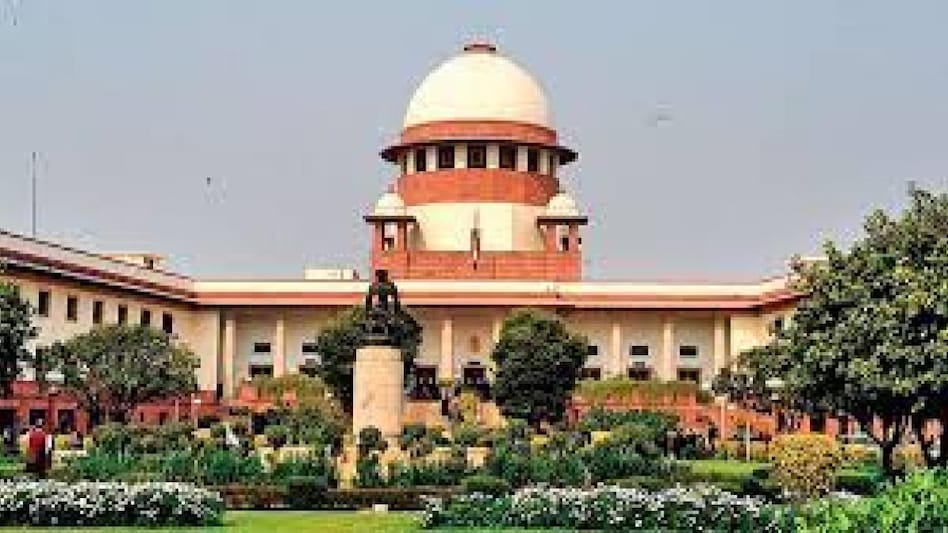
 Notably, Justice Nagarathna pointed out that divorces are not common in Bengaluru, and the couple should give their marriage another try.
 Notably, Justice Nagarathna pointed out that divorces are not common in Bengaluru, and the couple should give their marriage another try.
The Supreme Court has given a piece of advice to a couple, who are seeking a divorce. The apex court asked both software engineers to give a second chance to their marriage. Both of them had asked for divorce as they were not able to give time to each other.
A bench of Justices K M Joseph and B V Nagarathna said, "Where is the time for marriage. Both of you are software engineers posted in Bengaluru. One goes to duty in the day and the other in the night. You have no regret for divorce but have regret for marriage. Why don't you give a second chance to the marriage."
Notably, Justice Nagarathna pointed out that divorces are not common in Bengaluru, and the couple should give their marriage another try.
However, counsel for both the husband and wife told the bench that the parties were sent to the Supreme Court Mediation Centre during the pendency of this petition in order to investigate the prospect of a settlement between them.
The bench was informed that both husband and wife had agreed to a settlement agreement in which they chose to terminate their marriage by mutual consent under Section 13B of the Hindu Marriage Act, 1955 on specified terms and conditions.
The counsel informed the court that one of the terms was that the husband will pay a total of Rs 12.51 lakh as permanent alimony in full and final satisfaction of all monetary claims of the wife.
The bench noted in its order dated April 18, "When queried by this Court, the parties stated that they have indeed agreed to settle their disputes amicably by parting ways and seeking divorce by mutual consent. They also state that the terms of settlement would be adhered to by them and hence the marriage may be dissolved by a decree of divorce by mutual consent."
The bench added that in the circumstances, "we have taken on record the settlement agreement as well as the application filed under Article 142 of the Constitution. We have perused the same. On perusal, we find that the terms of the settlement agreements are lawful and there is no legal impediment for accepting the terms of settlement".
It was also noted that the husband paid a total of Rs 12,51,000 to the petitioner-wife, who acknowledged receipt of the demand draft.
"In the circumstances, we exercise our power under Article 142 of the Constitution and dissolve the marriage between the parties by a decree of divorce by mutual consent under Section 13B of the Hindu Marriage Act, 1955," the top court said.
The apex court also overturned several additional procedures filed by husband and wife in Rajasthan and Lucknow under the Dowry Prevention Act, the Domestic Violence Act, and other related instances.
Also Read: SC must let legislature decide on same-sex marriage, say lawyers' bodies
 Big win for Airtel, Voda as Bombay HC strikes down Centre's one-time spectrum levy
 Why Adani is onboarding L&T for nuclear power projects?
  Ujjwala scheme: Govt cuts subsidised LPG cylinders to 4 for beneficiaries. Here's why
  'Vote of confidence in India': Grasim announces ₹3,094 crore investment to expand sustainable fibre capacity
 'Give us margin support or risk rural stockouts': Distributors warn India's FMCG giants
  How Prashant Shah Filters 750 Stocks To Find Just 20 Winners
 Market Expert Reveals The Strongest Sectors For Medium-Term Wealth Creation
 WWDC 2026: Apple Bets Big On AI With Major Siri Overhaul And New Features
 Weight-Loss Drug Sales Slow In May, Mounjaro Still Leads The Pack
 Forget Stock Picking? Why ETFs Could Be The Smarter Bet
 Centre to offload up to 3% stake in NLC India. Retail investors can bid from June 10 - Check floor price
 Carlsberg eyes up to $700 million India IPO as brewer sharpens growth play: Report
 SpaceX IPO: Can you as an Indian investor participate before listing? Decoded here
 BT Closing Bell | West Asia conflict woes return to haunt Sensex, Nifty but trend reversal likely soon
 CMR Green Energy IPO allotment: What are your odds of getting shares; check here