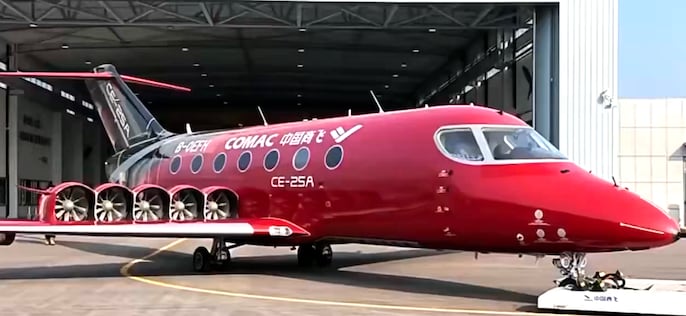
Pilotless surprise
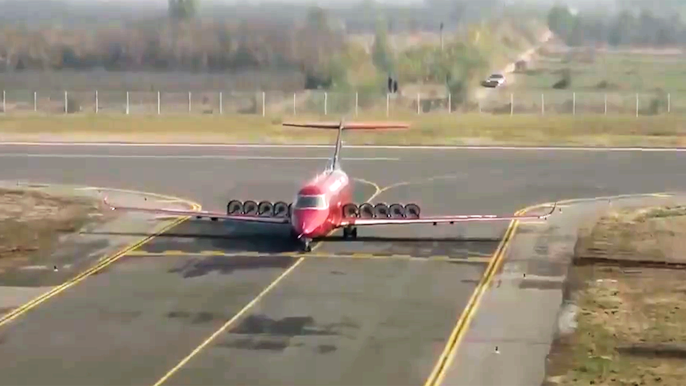
An electric passenger plane that can fly without a pilot? China has developed the CE-25A, a 10-tonne aircraft designed for both autonomous and crewed flight. Built by state-owned aerospace manufacturer COMAC, the aircraft completed its first flight with people onboard on November 14 in Shandong province. It had already completed its first unmanned autonomous flight on February 2. But the bigger surprise is that this experimental electric aircraft is designed to carry 19 passengers on short intercity routes.
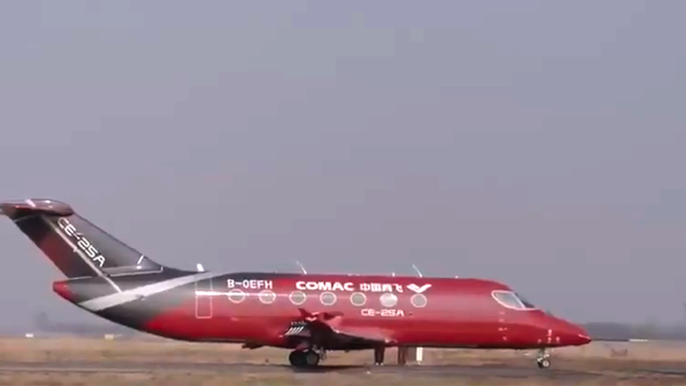
Speed revelation
A battery-powered aircraft capable of cruising at 300 km/h and covering a claimed 400 km? China's CE-25A is designed to bring electric propulsion into regional aviation. The aircraft has a maximum takeoff weight of 10 tonnes and a planned cruising altitude of 2,400 metres. Its specifications suggest potential for short journeys between cities without conventional aviation fuel. However, the 400 km range is a design figure, not a distance demonstrated during its latest flight. Could electric planes eventually become practical for regional travel?
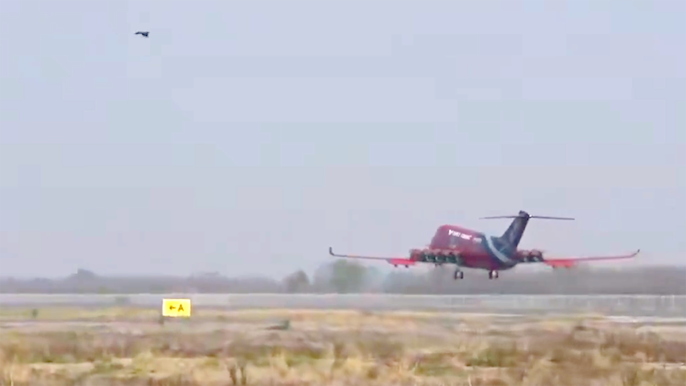
Flight milestone
Two pilots, one flight engineer and a crucial aviation test! On November 14, China's CE-25A completed its first crewed flight at Binzhou in Shandong province. According to the flight details reported by IBC24, the entire test lasted 57 minutes and 46 seconds, including 16 minutes and 38 seconds in the air. The aircraft covered 60.4 km, and COMAC said its systems performed as expected. After 19 unmanned validation flights, this marked an important step towards carrying passengers. But commercial operations remain some distance away.
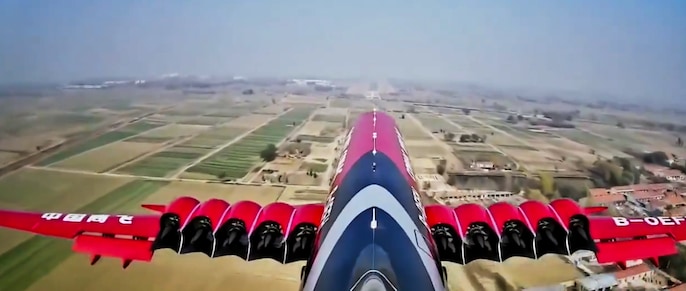
Engine twist
Ten electric fans instead of conventional jet engines! The CE-25A uses a distributed electric propulsion system with five ducted fans mounted along each wing. Developed by COMAC with partners including battery manufacturer CATL and Shanghai Jiao Tong University, the aircraft takes a different approach to powering flight. The design is intended to reduce noise and support operations from shorter runways. But although the aircraft has completed a successful crewed test, its performance in everyday airline operations remains unproven.
Certification hurdle
A 19-seat electric aircraft has completed its first crewed flight, but passengers cannot book tickets just yet! China's aviation regulator has accepted COMAC's application for the CE-25A's type certification, beginning the formal process needed before commercial service. The aircraft's 300 km/h cruising speed and planned 400 km range make it an interesting proposition for short-distance routes. However, further safety assessments, certification and operational testing are required. When will China's experimental electric plane be ready to carry paying passengers?
 Indian I.T. Stocks: Can Infosys, Wipro And HCL Tech Regain Their Growth Momentum?
 PSU Vs Private Banks: Where Is The Growth Opportunity? Chakri Lokapriya Shares His Outlook
 Kaynes Technology Crashes 20% After Q2 Results: Are EMS Stocks Still Worth Buying?
 Indian Pharma Sector Analysis: Mid-Teens Growth, Hospitals And Price-Control Risks
 Rahul Gandhi Charges PM Modi Of Phone-Tapping; BJP Demands Proof, INDIA Bloc Backs Him