


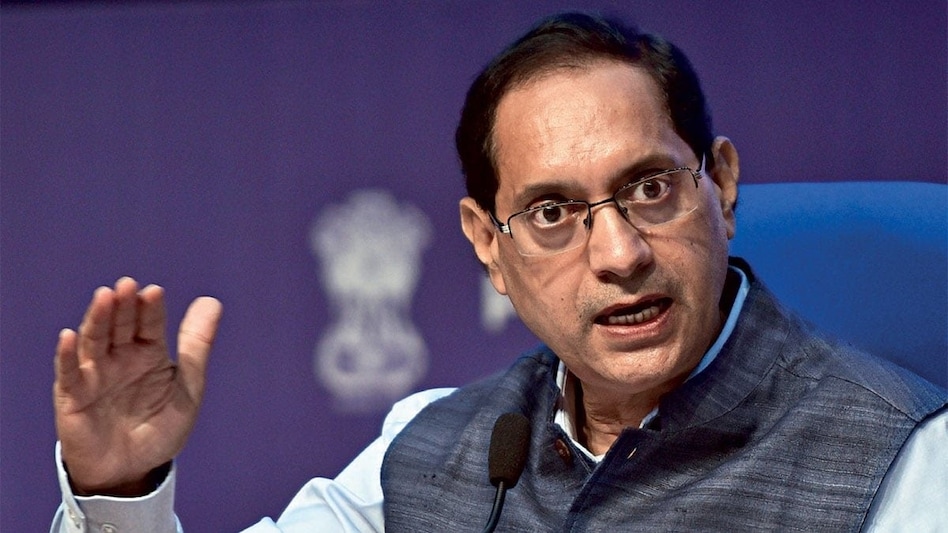
 On ‘Chhota SIPs’, he acknowledged slow progress but assured steps to unlock their potential.
 In a significant step toward deepening foreign participation in India’s capital markets, Securities and Exchange Board of India (SEBI) Chairman Tuhin Kanta Pandey announced that the regulator is prioritising the simplification of Know Your Customer (KYC) procedures for non-resident Indians (NRIs) to enable remote onboarding.
Speaking at an event organised by the Bombay Stock Exchange Brokers’ Forum on October 11, Pandey said SEBI’s immediate goal is to ensure NRIs no longer need to travel to India to complete their KYC requirements.
“We are yet to establish an easy and secure KYC access for NRIs to facilitate their participation in the securities market. This will be an urgent goal for us,” Pandey said.
Remote KYC for global Indian investors
SEBI is currently in discussions with the Reserve Bank of India (RBI) and the Unique Identification Authority of India (UIDAI) to build a framework allowing NRIs to complete KYC verification remotely. With over 3.5 crore Indians living abroad and $135 billion in remittances flowing into the country in FY25, SEBI believes that easing market access for the diaspora could unlock significant investment potential.
The move comes amid a recent slowdown in retail investor activity, marked by a dip in Systematic Investment Plan (SIP) inflows.
Push for faster FPI registration
Pandey also announced measures to simplify the registration process for foreign portfolio investors (FPIs) through a single-window, digital portal.
“We are already consulting stakeholders to implement it... we would like to be among the best in the world in terms of facilitating registration,” he said, adding that the process should be “fast, efficient, and secure.”
He clarified that these are largely “process issues” and do not entail significant risks. SEBI is working with the RBI and the Income Tax Department to digitise FPI registration and compliance systems.
Cybersecurity & Market resilience
The SEBI chief underlined ongoing reforms to bolster cybersecurity and market infrastructure resilience. The regulator is introducing new “air gap” security guidelines in collaboration with market infrastructure institutions (MIIs) and has launched live disaster recovery drills and redundancy models for clearing corporations.
“MIIs are being stress-tested with live disaster recovery drills,” Pandey said.
Predictive surveillance & Algorithmic oversight
On market supervision, Pandey said SEBI is moving toward predictive surveillance using advanced data analytics to detect fraud and market manipulation.
“We are developing role-based alerts to identify pump-and-dump patterns and fraudulent trades in bulk deals,” he noted, referring to the growing role of algorithmic and high-frequency trading in India’s markets.
Pandey also highlighted SEBI’s efforts to review the Stock Lending and Borrowing Mechanism (SLBM) to ensure better risk management, while promising a consultative approach to policies governing short-term derivatives.
He urged stakeholders to drive innovation in capital markets, noting that diversity in financial instruments is key to resilience. On ‘Chhota SIPs’, he acknowledged slow progress but assured steps to unlock their potential. Pandey also said SEBI is addressing tax, delivery, and GST challenges in the commodity derivatives segment to spur growth.
“These reforms reflect SEBI’s commitment to creating a fair, transparent, and resilient market,” Pandey concluded.

 Dharmendra Pradhan to not resign, issues with NTA to be resolved: Govt sources
 Why Wipro Consumer is betting Rs 256 crore on two FMCG brands
 India's next 'eyes in the sky': Adani-DRDO seal landmark AEW&C Mk-II deal for IAF
 Indian govt orders GitHub to block access of Jack Dorsey's messaging app, Bitchat amid CJP protest
 'My partner is half-Indian': Elon Musk rejects racism claims; why his son is named after Chandrasekhar
 PM Modi Announces Fast-Track Courts Amid NEET Row, CJP Continues Demand For Pradhan's Resignation
 Sona Comstar Q1 Results | Profit Jumps 47%, EV Business Drives Record Revenue
 IIT Madras Incubated Startup Unveils e200X: World's Most Compact Passenger eVTOL Air Taxi
 Fractal Q1 Results | CEO Srikanth Velamakanni On 92% Profit Jump, AI Demand & Growth Outlook
 Stop Predicting Markets! Focus On These Long-Term Investment Themes
 Sensex, Nifty extend losing streak to fifth day; analysts see cautious trend ahead
 Bank of Baroda Q1 profit slumps 72% to Rs 1,278 crore after one-time exceptional loss
 Tata Consumer Products Q1 earnings: Net profit rises 29%, revenue at Rs 5,349 crore
  Suzlon shares: Is the multibagger's dream run over? What investors should expect next
 PVR Inox shares jump 6% after Q1; Nuvama cites continued debt reduction
 Honda India's big plan: Elevate facelift, 0 Series electric SUV and Prelude Hybrid Coupe — all 3 upcoming cars explained
 SBI Circle Based Officers recruitment: State Bank selects 1,930 for customer-first banking
 Delhi Metro's biggest expansion ever: 217 km, 123 new stations, 16 corridors planned under Phases 4, 5A and 5B
 Vikram-1 success opens orbit for startups, delivering raw space data and key lessons
 Education, career, controversies: Everything you need to know about Union Minister Dharmendra Pradhan









