

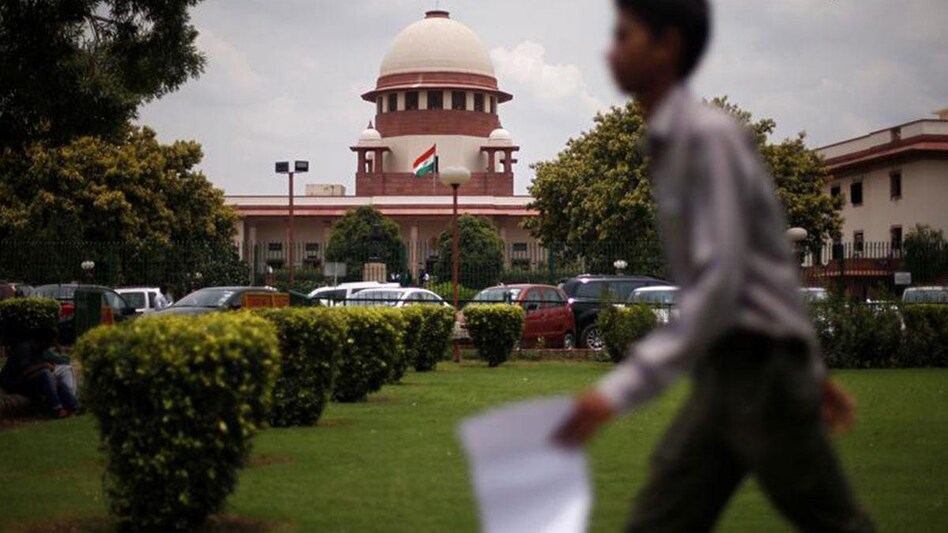
 Women have the right to abort, said Supreme Court
The Supreme Court today said that all women are entitled to safe and legal abortion. The apex court observed that all women in India have the right to choose, and that unmarried women have the right to get an abortion under the Medical Termination of Pregnancy Act (MTP). No distinction will be made between married and unmarried women under the abortion law in India, said the apex court. For purposes of abortion, rape will include marital rape too.
In what is a seen as a significant judgment, the apex court stated on Thursday that unmarried women are also entitled to seek abortion in the term of 20-24 weeks arising out of a consensual relationship. It also called the exclusion of unmarried women conceiving out of a live-in relationship from the MTP Act ‘unconstitutional’.
 US pays out $100 billion in tariff refunds after Supreme Court struck down Trump's IEEPA duties
 Proposed deal to end US-Iran war could give control of inbound traffic in Hormuz to Tehran
 Zerodha's Nithin Kamath explains CAS, flags market limitations, rollout timing
 Juniper Green, MV Electro IPO shares to listing; should you expect any surprise, check GMP
 RBI keeps repo rate steady: Experts reveal where debt investors should put their money now
 RBI Governor Explains Why India Expects Strong FDI, Stable Rupee & Healthy Capital Flows
 Siemens India MD & CEO Sunil Mathur On AI, Smart Factories & India's Infrastructure Revolution
 LIC OFS Fully Subscribed! Should Retail Investors Buy Now Or Wait Before Investing?
 This Sector Could Lead The Next Rally! Vaibhav Sanghavi Reveals 3 Biggest Market Bets
 Oil Prices May Fall To $60? Expert Explains How Middle East Tensions And OPEC Could Impact Crude
 Premier Energies Q1 preview: Shares up 30% in six months; here's what to expect
 Nifty, Sensex, Nifty Bank outlook for today: GIFT Nifty up 20 points; key levels to watchZerodha's Nithin Kamath explains CAS, flags market limitations, rollout timingJuniper Green, MV Electro IPO shares to listing; should you expect any surprise, check GMP
 Top stocks in news: Juniper Green, Auro Pharma, Hindalco, Cummins, PB Fintech MV Electro
 USCIS changes rules: Your visa, green card immigration applications can now be denied without warning
 BT EXPLAINER: What Ajinkya Rahane will get from BCCI after his retirement from int'l cricket? Details here
 As wealth grows, why real estate is becoming a core asset in HNI and UHNI investment portfolios
 LPG, CNG, PNG prices today, August 6: Check latest rates in Delhi, Mumbai, Chennai, other citiesPremier Energies Q1 preview: Shares up 30% in six months; here's what to expect










