
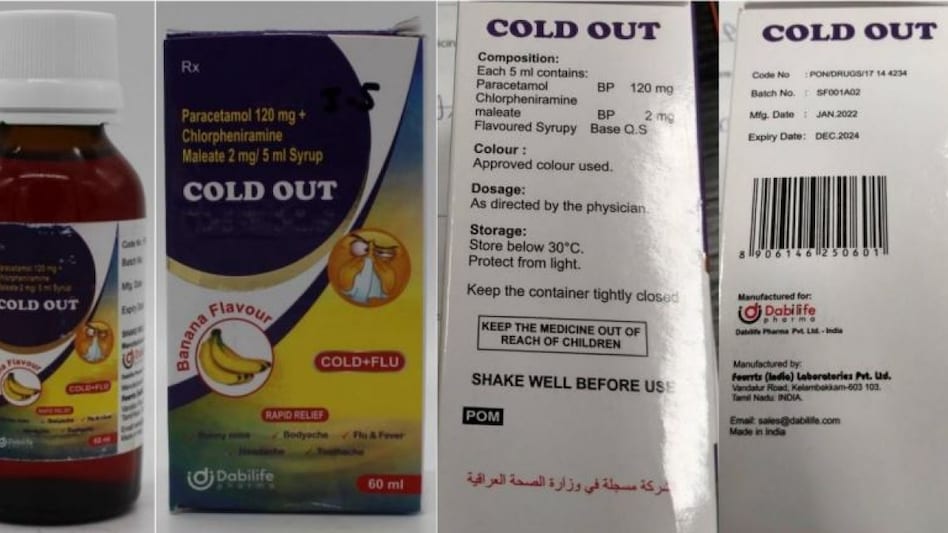
 The syrup is manufactured by Chennai-based Fourrts (India) Laboratories for Dabilife Pharma
The World Health Organization (WHO) on Monday issued an alert over another India-made 'substandard' syrup used in Iraq. The common cold syrup, Cold Out, is 'contaminated' and is not safe to use, the global health organisation said in its medical alert issued on Monday. The WHO said that a sample of the Cold Out sysup was obtained from one location in Iraq and submitted for laboratory analysis.
"The sample was found to contain unacceptable amounts of diethylene glycol (0.25%) and ethylene glycol (2.1%) as contaminants. The acceptable safety limit for both ethylene glycol and diethylene glycol is no more than 0.10%," the United Nations agency said.

 Kotak Mahindra Bank leadership change: Affluent banking, digital channels, payments in focus from January 1
 Pacific Ocean warms to 30°C as El Niño strengthens; India faces weather concerns
 Onion, tomato, potato prices: Which months see the biggest jumps, and why?
 India needs to focus on securing strong, durable growth with more reforms, says IMF top official
 Tata Sons may have to list as upper-layer NBFC; RBI Governor Sanjay Malhotra signals
 Trump Says Europe Is In ‘Big Trouble’, Blames Immigration For France’s Unrest And Violence
 Renting Vs Buying A House: Gauri Chaddha Explains Tax Benefits And The Smarter Financial Choice
 Home Loans For Tax Savings? Why Buying A House Needs More Than Tax Benefits
 How To Choose The Right ETF: Sector Outlook, Risk, Benchmark Selection And Long-Term Investing Tips
 LIVE: How Women Leaders Are Taking Legacy Businesses Into The Future | MPW Awards 2026

 Jio Platforms IPO GMP at 21%: What could investors earn on listing day?
 Jio Platforms IPO: Record Rs 4.90 lakh crore in bids, 1.35 cr applications; check allotment odds
 IndusInd Bank Q2 profit at Rs 1,242 crore; NII up 4% YoY
 2. JSW Steel, Jindal Steel Q2 results: Revenue, profit rise; margins tell different stories
 Infosys Q2 profit rises 6% YoY to Rs 7,823 crore; announces Rs 26 dividend per share
 These 7 destinations will take you on a journey through the world's finest scents
 Starbucks stores worldwide: Top 15 countries with the most outlets, US leads with 16,933
 'Gouravshaali moment': Internet celebrates as Saif Ali Khan finally gets his promised ghee
 Beer, soft drink makers get more time as Govt extends aluminium can certification deadline
 'Go back to where it all began': Anand Mahindra recommends Chor Bizarre in Delhi