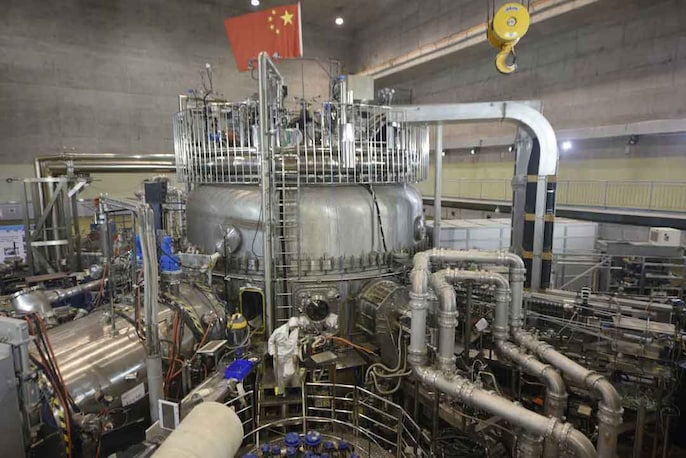
China has completed and tested the world's largest superconducting fusion magnet — a key component needed to generate clean, virtually limitless energy through nuclear fusion, marking a major step in China's ambition to produce fusion electricity by around 2030.
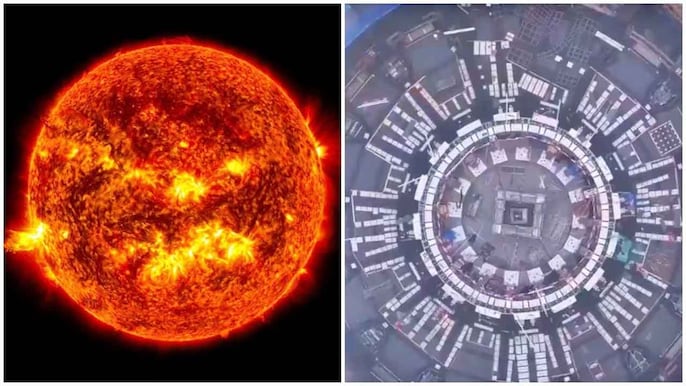
The newly accepted toroidal field superconducting magnet was developed by the Institute of Plasma Physics under the Chinese Academy of Sciences. Measuring 21 metres in length, 12 metres in width and weighing 582 tonnes, it is 1.3 times the volume and has three times the stored energy of similar magnets developed for the ITER project.
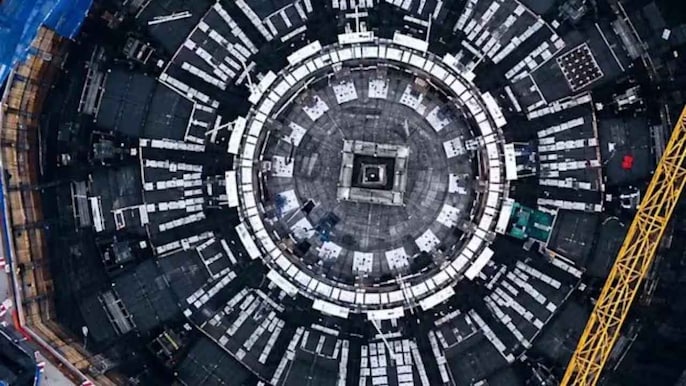
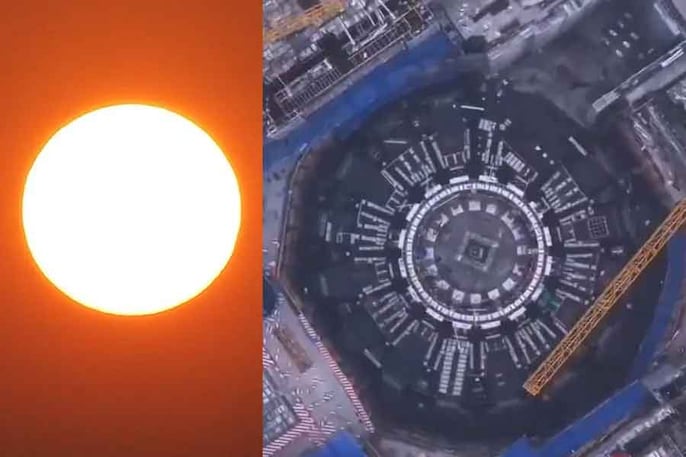
An artificial sun is a nuclear fusion reactor that copies the same process that powers the Sun — where hydrogen atoms fuse together and release large amounts of energy. Unlike fossil fuels, fusion does not produce carbon dioxide during operation, making it a potential source of virtually limitless clean electricity.
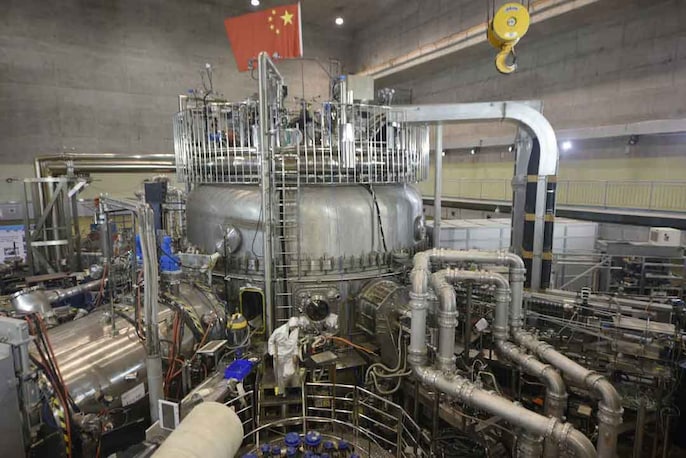
Earlier this year, China's Experimental Advanced Superconducting Tokamak (EAST) sustained plasma at 100 million degrees Celsius for 1,066 seconds — setting a global benchmark for long-duration fusion plasma operation that no other country has matched.
China says both the superconducting magnet and the high-temperature solenoid coil were developed entirely with domestic materials and manufacturing capabilities. The six-year programme has produced 47 patents and 25 industry standards — with electrical resistance in key joints reduced to near zero.
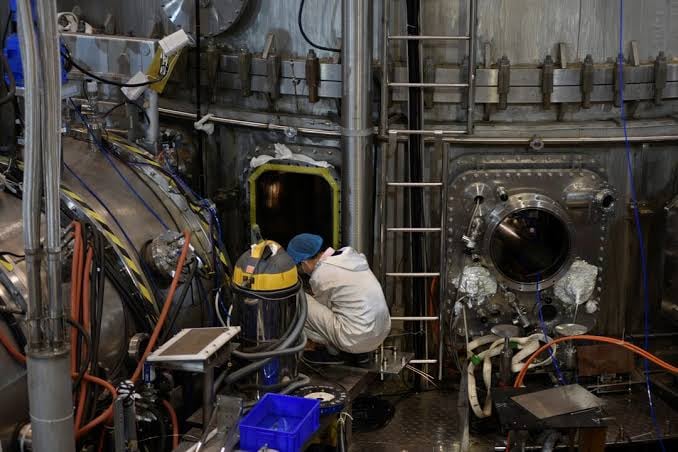
China has laid out a three-stage fusion roadmap — its Burning Plasma Experimental Superconducting Tokamak expected by end of 2027, first fusion power generation around 2030, and a China Fusion Engineering Demonstration Reactor that could become the world's first fusion demonstration power plant.
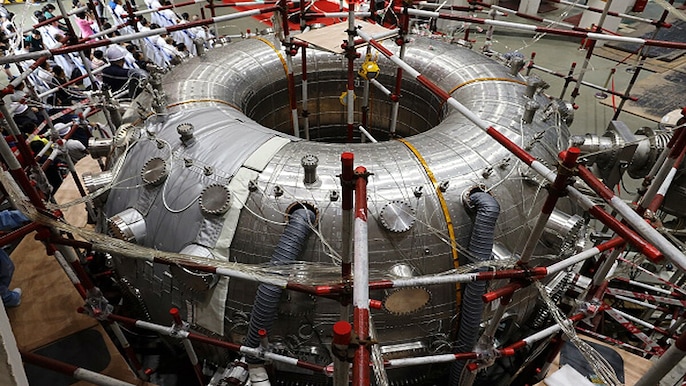
Despite the milestone, researchers caution that fusion power is still not ready for commercial use. Full reactor assembly, long-term durability testing and proof that the technology generates more energy than it consumes are still major hurdles — but scientists say each advancement brings fusion meaningfully closer to reality.
 YouTube, Insta Earnings Are Not Tax-Free: What Freelancers & Content Creators Must Know About Tax
 What’s Hot: Stocks, Gold & Big Money Moves | Daily Markets Show | August 26 | Business Today TV
 Nifty Rally Gets A Boost From Falling Oil: Vaishali Parekh On What Comes Next
 IIT Delhi Protests Over Student Death As Students Demand Accountability And Independent Probe
 How This Fund Manager Turned ₹1 Cr Into ₹7.6 Cr | Abhay Agarwal On Beating The Market by 8.8% A Year