


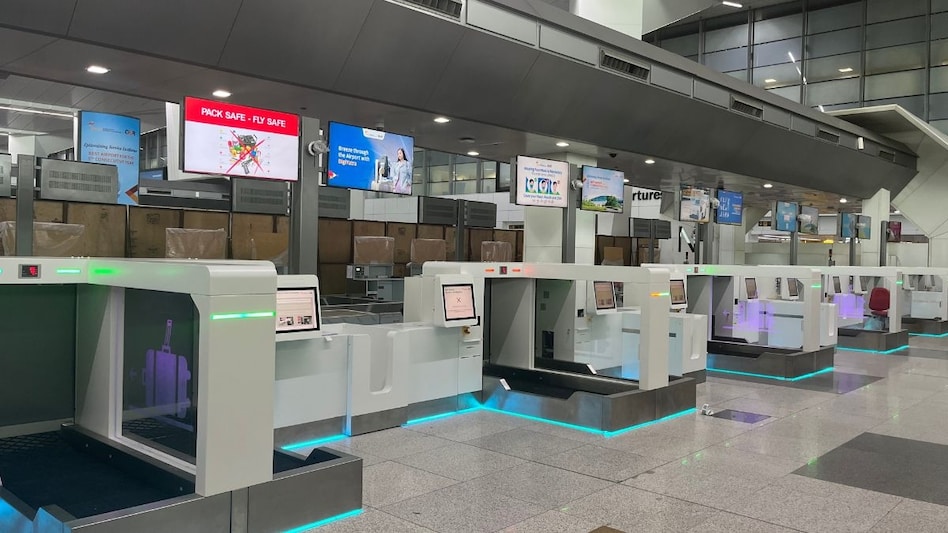
 For travellers, the self-baggage drop facility involves a two-step process.
Delhi International Airport Limited (DIAL),a GMR Airport Infrastructure Limited-led consortium that operates and manages Delhi’s Indira Gandhi International (IGI) Airport, has introduced a self-baggage drop facility at Terminal-3 of IGI Airport. This facility allows passengers to check in their own baggage without the help of airport staff.
The step has been taken to streamline the baggage drop-off process, reducing the wait time for passengers by approximately 15-20 minutes.

 The GDP conundrum: Economists split over India's faster-than-expected 7.8% GDP growth rate
 Subhash Chandra insolvency case: 'I've been vilified across country over ₹6.5 crore repayment plan,' says media baron
 Tata Sons chairman succession delayed as Sir Ratan Tata Trust seeks approval to join search panel : Report
 DGCA notes ‘serious findings’ in India’s top airlines during safety audits: Report
 John Ternus salary: How much will he earn as Apple CEO?
  India’s 7.8% Q1 GDP Under Scrutiny: Subhash Garg Vs Sanjeev Sanyal On The Numbers
 Piyush Goyal Says India Could Become The World’s Data Centre Hub With $200 Billion Investment
 Meet John Ternus: The Engineer Taking Over Apple After Tim Cook’s 15-Year Reign
 Do You Really Need A New Phone Every Year? The Smartphone Upgrade Truth
 Nepal Flood Miracle? One Turquoise House Stands As Family Survives Deadly Trishuli Disaster
 Ujjivan SFB stock: Brokerages share price targets as near-term uncertainty likely to persist
  BEL, AEL, ICICI Bank, Eternal, BSE, Dixon Tech, Coforge, RBL Bank: MOFSL's top picks
  GPT Infraprojects shares rise over 9% on fresh order win, check details
  Vadilal, Nirlon, Action Construction Equipment, Birla Precision Technologies among 12 stocks to turn ex-dividend tomorrow
 Nifty mover | ICICI Bank eyes top heavyweight spot as HDFC Bank, RIL slideUjjivan SFB stock: Brokerages share price targets as near-term uncertainty likely to persist
  India must cut $1.4 billion auto-component trade deficit by building advanced tech: Hyundai Motor India's Tarun GargIndia’s 7.8% Q1 GDP Under Scrutiny: Subhash Garg Vs Sanjeev Sanyal On The NumbersPiyush Goyal Says India Could Become The World’s Data Centre Hub With $200 Billion InvestmentMeet John Ternus: The Engineer Taking Over Apple After Tim Cook’s 15-Year Reign












