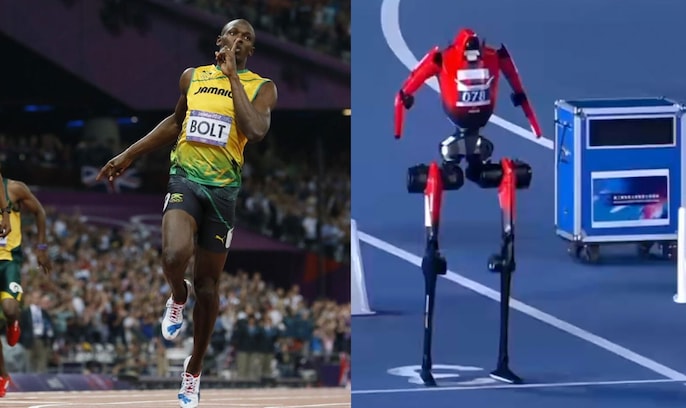
Bolt eclipsed
Usain Bolt’s legendary 9.58-second benchmark suddenly has robotic competition. Tiangong Ultra completed a 100-metre preliminary heat at Beijing’s World Humanoid Robot Games in 9.39 seconds, while rival Lightning clocked 9.47 seconds—both quicker than Bolt’s human world record time.
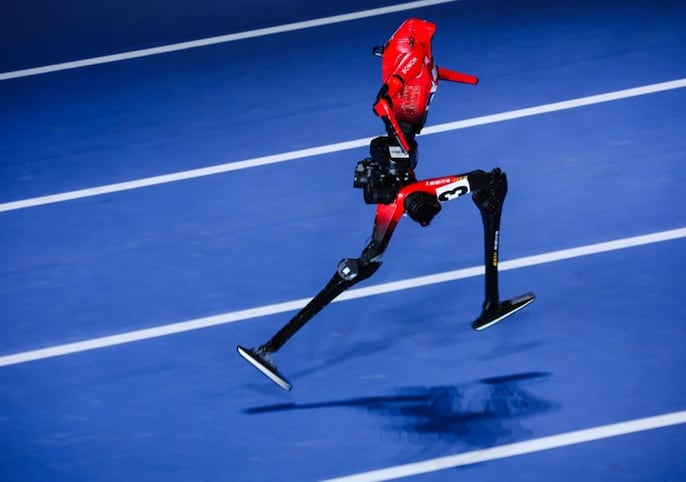
Robot duel
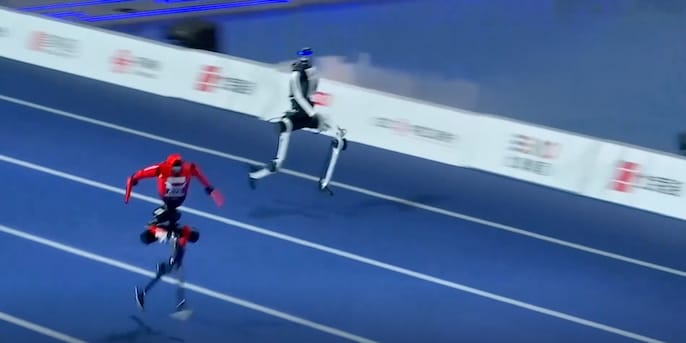
Tiangong Ultra did not have the race entirely its own way. Honor’s Lightning surged ahead early before Tiangong chased it down near the finish to win the heat. The machines crossed in 9.39 and 9.47 seconds respectively, turning a technology showcase into an unexpectedly dramatic sprint battle.

Chaotic finish
The robots had extraordinary speed, but stopping proved less graceful. Both slammed into a thick safety mat after crossing the line, with Tiangong stumbling towards the sidelines and forcing spectators to move away. Lightning collapsed after finishing and was eventually carried away on a stretcher.
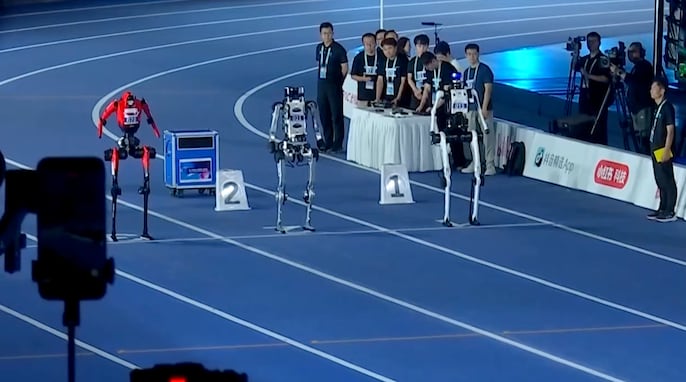
Speed explosion
The progress in just one year is startling. Tiangong Ultra won the 100 metres at last year’s inaugural games in 21.50 seconds; this time it clocked 9.39 seconds. Lightning went even faster during a preparatory test, reportedly covering 100 metres in 9.32 seconds and hitting 14.5 metres per second.
China bets
Behind the spectacle lies a much bigger Chinese technology push. China views humanoid robots as a strategic emerging industry, with potential applications spanning manufacturing, logistics and consumer services. This year’s Beijing games feature 2,056 robots from 666 teams across 16 countries, up sharply from 280 teams last year.
 Gold Price Target 2026: Expert Sees MCX Gold At ₹1.8 Lakh By Year-End Amid Strong Demand
 Health Insurance: Why Pre-Existing Diseases And Waiting Periods Matter For Buyers
 Crude Oil Above $100: How High Energy Prices And Rupee Weakness Impact Gold Prices In India
 CEA On India’s Manufacturing Rise, Atmanirbhar Bharat And Modi’s Economic Policy
 Health Insurance Buying Guide: 7 Things First-Time Buyers Must Check Before Choosing A Policy