Taneira has been expanding steadily, which regions or cities have emerged as the key growth drivers during this journey?
We are in a growth phase and currently, we have 80 stores across 40 cities. We are present in all the Metro cities, all the mini metros and also a lot of tier one cities. South is certainly the largest, because for sarees, the salience is very high in the region. East is again very high on sarees when it comes to that category, but what we're really surprised by is the West. So West has done very well for us and we had not expected sarees to do so well in the region. North is also a very steady region for us.
What has the impact been of the recent GST rationalization especially on the price points? Will the end customer get the benefits?
There's no material impact on our business because what has been impacted is only some of the price points in the ready-to-wear category, and we will do all that is required to pass on the benefits to our customers and not raise prices. We are still discussing the best way ahead.
What are the kind of consumer trends that you're observing in this particular festival season?
Well, the festival season is set to kick off. I think we're just waiting for a few more days, but we've recently launched our festive collection called Miara of handcrafted designer sarees, and the traction has been very good. The customers are really loving that collection, and we expect to grow by 30% in this cluster.
Consumers are looking at you know, newer designs. They're always looking for that, and we are always, you know, trying to meet their demand on freshness in terms of designs and. overall look of the sarees, and that's what Miara is all about. It's a designer collection, it’s very festive, and there are a lot of art forms that are part of this collection.
You have mentioned a 30% target as the expectations during this festive season, how confident are you given some macro elements like inflation, consumption being down. What strategy is Taneira adopting to rise above these macro factors?
So far, this year has been pretty good for us. Our like-for-like sales have been in the double digit, and we are very hopeful that the traction that we are seeing in our new collection will really help us drive that 30% growth that we're looking at from our festive season from our stores. We are very confident and the response that we are getting from the customers is very encouraging.
The Golden Cocoon initiative seems like an extension of what the Tata Group does with the Golden Harvest scheme for its jewellery brands. What is the current status of the adoption and where was the pilot done for this particular initiative?
Golden Cocoon is actually a way where customers can plan their purchase. So they can put in a small amount of money in EMIs for six months and they can then make a purchase in the seventh month and on their first EMI, we give them a 25% off. If it's a nine month plan, then on the first month’s EMI, you might be getting a 50% off. The EMI starts from Rs 1,000 and goes up to Rs 20, 000. So if there's a wedding later in the year, the customers can start saving for the big purchases. That's worked wonders for our jewellery division, and we plan to achieve the same at Taneira. We launched the pilot in the South at some stores in Tamil Nadu and there was very good traction. So now it's a national rollout. We already have people who are enrolling every day into the program.
Is it mostly the physical stores that are driving the growth versus the online platforms?
We are an omnichannel player, and we've seen that a lot of customers discover us online, and then they visit the stores, and once they are assured that what we are serving is of great quality and. We are seeing very good traction, both on our website as well as the marketplace. E-commerce sales are growing by 50% over last year, and the contribution is also going up. We are currently ranging between six to eight percent, but we expect to hit the double digit mark by the end of this year for online sales.
Weavers are often overlooked and may not be part of the larger brand story. How does Taneira hope to change that with its Weavershala programme?
We have the Tata legacy, and in any business that we do, we look at uplifting the whole ecosystem, and especially the community, which is supporting that, and in our case, it's the weavers. We are working with about 5,000 weavers directly and overall indirectly, we are touching about 12,000 weavers and artists across the country. We source from over 100 weaving clusters directly. Through our programme Weavershala, we upgrade the whole infrastructure of the weaver’s workplace. We give them frame loops with ergonomic seating, a very hygienic work environment, a well ventilated and well lit workplace, which is quite in contrast with where they were working earlier. We also provide them with ID cards and uniforms so that they feel that there is a pride in weaving these masterpieces. We want to restore their respect, what they rightfully deserve for keeping this whole tradition alive. We have 18 such centres across the country now.
Is there an upskilling aspect to the programme? What are the tech innovations and interventions?
What we have done in our back end is that we have now provided an app for our weavers. through which they can collaborate seamlessly with our designers and with our sourcing team. The designers can share the designs with the weavers on the app and the weavers can produce the samples, get it approved on the app. Weavers can also keep us updated on the production status of the orders that they have, and also keep track of their payments. It took us a lot of training for the weavers to be able to use the app. We are very glad that almost 100% adoption is there for this app across the country.
We have now GI approval for quite a few of our clusters, like Banarasi, Chanderi, and Maheshwari. You will see GI tags on these sarees, which proves that this has been sourced from the origin and from these clusters and these are hand woven by weavers. We're working on getting more GI approvals for other clusters and hopefully we will have more clusters added to it. So, when we get this approved for GI, it's not just for us, it's also for the weaver. Whenever the weavers are selling their products to other buyers or brands, they can always say that they are GI approved.
Taneira also sells vegan sarees? Who's the customer for such sarees?
We have a lot of young consumers, around 20 to 25 years of age, who are buying vegan sarees. The vegan collection that we have is actually made from this yarn called tencel luxe, which is imported from Lenzing in Austria. We get the saree produced in India. It's plant-based, made from wood bulb, so it's very sustainable, and a lot of customers who are adopting a vegan lifestyle prefer this collection.
When it comes to sustainability and also a greater adoption and interest in Indian fabrics, is Taneira looking to branch out overseas? Is there any expansion plan internationally or stores you may be targeting?
Our collection is available on our official website Taneira(dot)com for even international customers. We mostly cater to the US and have also found customers in Japan surprisingly. Right now we don't have any plans of expanding into international markets via physical stores but maybe in a couple of years, we'll think about it.
What is Taneira’s approach to Gen Z customers? Is there any specific product lines catering to them?
About a year and a half back, we brought in a lot of accessible price points in ready to wear, mainly with kutas and kurta sets. We priced it starting at Rs 999, especially the short kurtas. We saw a lot of young customers buying that collection, and basically those were aimed at workwear, and we saw a lot of young customers buying that. We have also introduced lehengas for festive wear, and that is also seeing good traction. The whole idea was to recruit new customers, younger customers, and once they like the product, and like the whole experience, they will definitely graduate to sarees eventually.



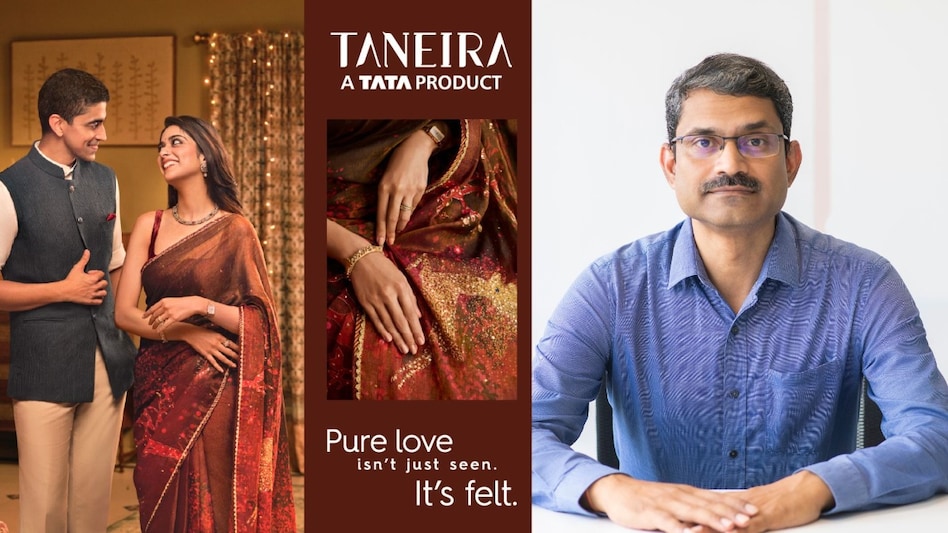 Taneira CEO Ambuj Narayan believes in balancing heritage with innovation and empowering weavers through sustainable growth initiatives.
 Hormuz crisis exposed world's energy weak spots: Why the next shock could hurt more
 Battle lines are drawn: Tata Trusts prepares to challenge N Chandrasekaran’s reappointment in the court
 'Hormuz will never be...': Qatar Energy chief dismisses Bessent's 'worthless in 2 years' claim
 Welspun Corp stock in focus as arm wins 'large' order from Saudi Aramco
  HDFC Bank shares: Buy, hold or sell? Bear case scenario in the price, says UBS
 Gold Price Target 2026: Expert Sees MCX Gold At ₹1.8 Lakh By Year-End Amid Strong Demand
 Health Insurance: Why Pre-Existing Diseases And Waiting Periods Matter For Buyers
 Crude Oil Above $100: How High Energy Prices And Rupee Weakness Impact Gold Prices In India
 CEA On India’s Manufacturing Rise, Atmanirbhar Bharat And Modi’s Economic Policy
 Health Insurance Buying Guide: 7 Things First-Time Buyers Must Check Before Choosing A Policy
 SS Retail IPO: How to check allotment status on BSE, NSE & Kfin; odds of getting shares & GMP
 Accel, Tiger Global-backed Moneyview IPO opens on Sept 24; check price band, size & all key details
  SoftBank plans $11 billion junk bond sale to fuel multi-billion dollar OpenAI bet: Report
 Apollo Pipes shares in focus on entry into tiles business
  Hero Motors IPO: How to check allotment status on BSE, NSE & Kfin; odds of getting shares & GMP
 Surprise surge in Indian electronic exports to China, shipments rise nearly 40%: Report












