













At Hero Motocorp, India’s largest two-wheeler manufacturer by volume, sustainability is a key metric that’s incorporated in every employee’s performance goals.
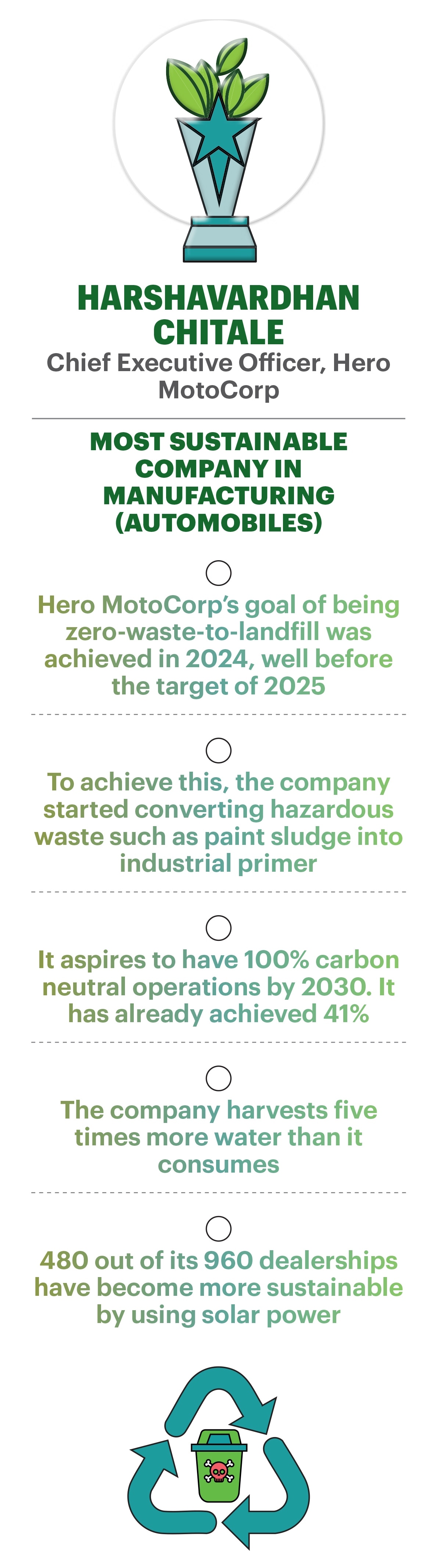
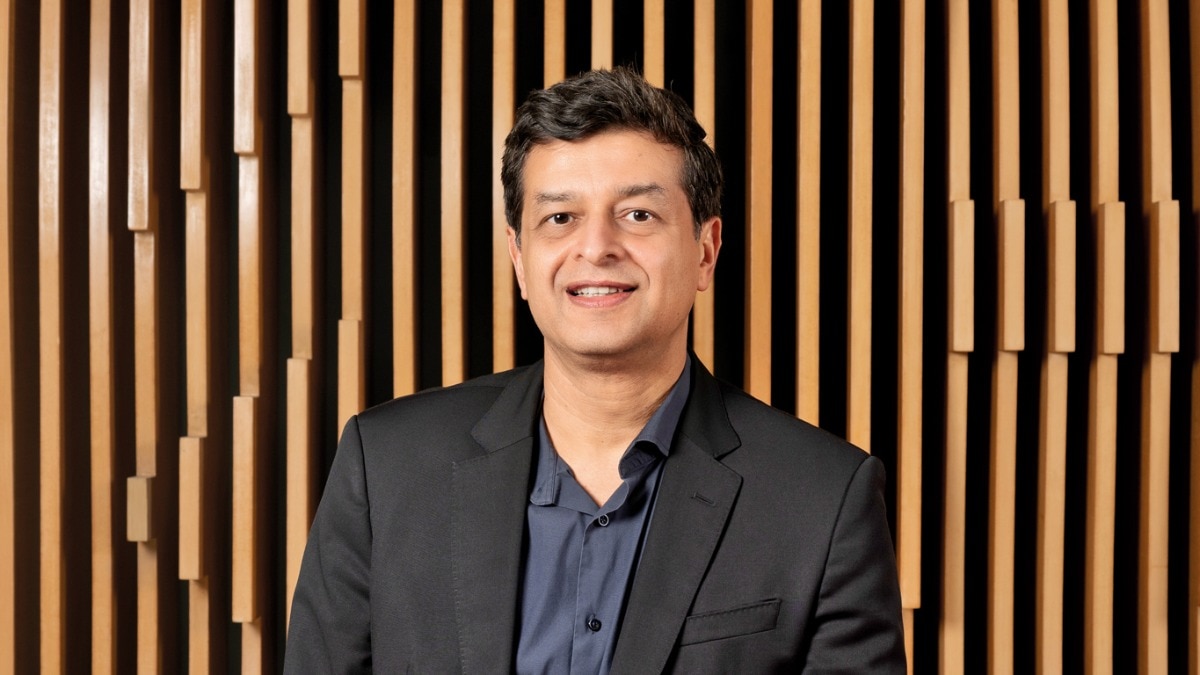
“In a way, everybody’s compensation is linked to this. All people managers track these goals as part of KPIs (key performance indicators),” Harshavardhan Chitale, who took over as the CEO of Hero MotoCorp in January, tells BT. It has been recognised as the Most Sustainable Company in Automobiles in the category of Sectoral Excellence in Manufacturing in this year’s BT India's Most Sustainable Companies.
Even the company’s board reviews sustainability targets every quarter, he adds.
It’s no wonder then that Hero MotoCorp’s ambitious goal of being zero-waste-to-landfill was achieved in 2024, well before the target timeline of 2025. For an automaker with a footprint of six manufacturing plants, that is no mean feat. To achieve that goal, the company started converting hazardous waste such as paint sludge into industrial primer.
The company also achieved its target of a water positivity rate of 500% in 2025, thanks to its pond development initiatives. “Hero MotoCorp harvests five times more water than it consumes,” he says. The water positivity rate refers to the amount of water replenished. In this case, the company says it has replenished more water than it consumes.
To reduce its carbon footprint, Hero MotoCorp plans to use more renewable energy going forward. About 40% of its energy needs are met through renewables, either on premises or through a tie-up with a solar power generator. The company is also working on adding battery energy storage systems. It aspires to have 100% carbon-neutral operations by 2030.
Hero has 11.5 megawatt-peak of internal renewable energy power capacity through distributed captive solar installations across India. The company plans to double it over the next two to three years, says Vikram Kasbekar, Executive Director and Chief Technology Officer of Hero MotoCorp. To promote circular economy, the company has also achieved 95% recyclability for 80% of its products, adds Kasbekar.
Hero MotoCorp’s sustainability efforts are not just limited to manufacturing. The automaker introduced the Green Dealers Development Programme (GDDP) to make its dealerships more sustainable by using solar power. “We want 960 dealers to operate on green electricity. We are exactly halfway there; 480 dealerships are green,” Chitale says.
Apart from focusing on sustainability in manufacturing operations and retail network, the company is also betting big on electric vehicles (EVs). Even though it was a little late to the EV race, it is rapidly gaining market share. Electric two-wheeler sales nearly trebled year-on-year to 144,000 units in FY26.
In the current financial year, it has left Bhavish Aggarwal-led Ola Electric, which was an early leader, behind in sales to take the fourth spot. Hero is also the largest shareholder in Ather Energy, India’s third-biggest electric two-wheeler maker. If Hero and Ather sales are combined, it adds up to the highest in the EV segment.
Hero has also forayed into the electric light commercial vehicles segment by becoming the largest stakeholder in Euler Motors in 2025. “Apart from investments we have made in our own brand, we are the largest shareholder in Ather Energy and Euler Motors. Last year, our market share in electric two-wheelers went up by 700 basis points. Our associate company Ather also increased its market share by 600 basis points,” Chitale explains, adding that driving electrification is also part of the sustainability effort.
As it gears up to introduce electric motorcycles, Hero, along with Ather, is building a fast-charging network, the only legacy two-wheeler maker to do so. “There are over 5,000 fast chargers that we and Ather have put up together. We have made it open and created a consortium called LEAF (Light Electric-Vehicle Acceleration Forum). We are getting other companies also to join it. There are 20 members now,” says Chitale.
In an industry where each original equipment manufacturer sells vehicles with its own proprietary charging ports, Hero’s efforts to bring several companies together to adopt a uniform standard could help create a sustainable charging infrastructure and give the segment a boost in the process.
@karandhar11


